nn
Skip to content
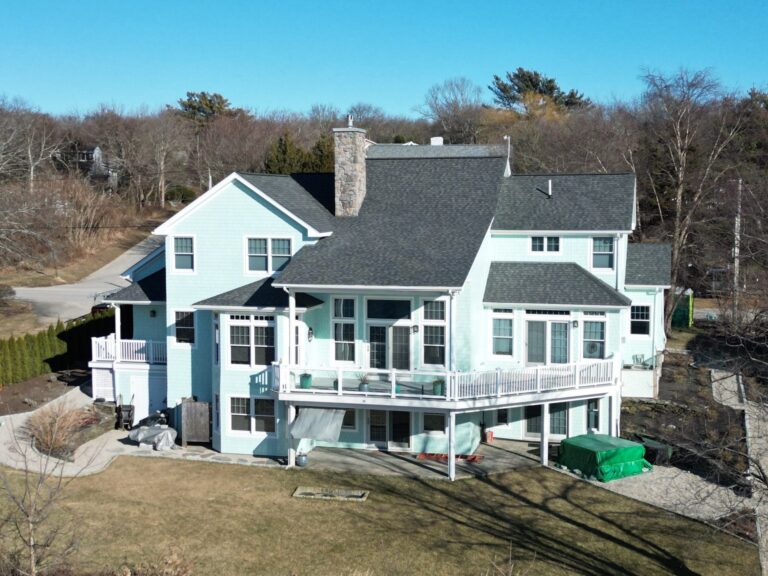
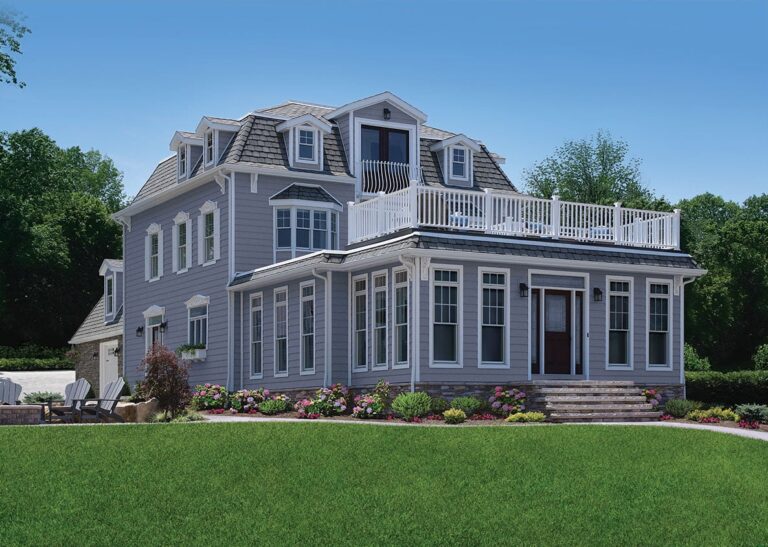
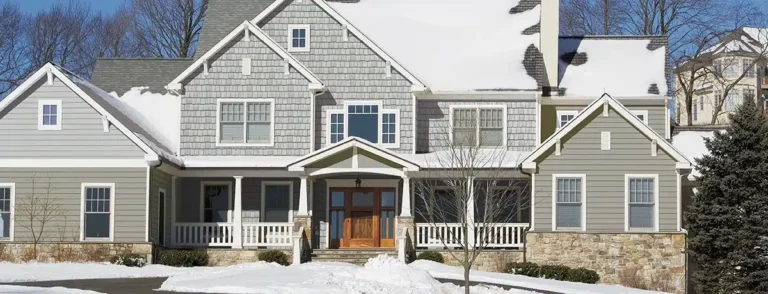
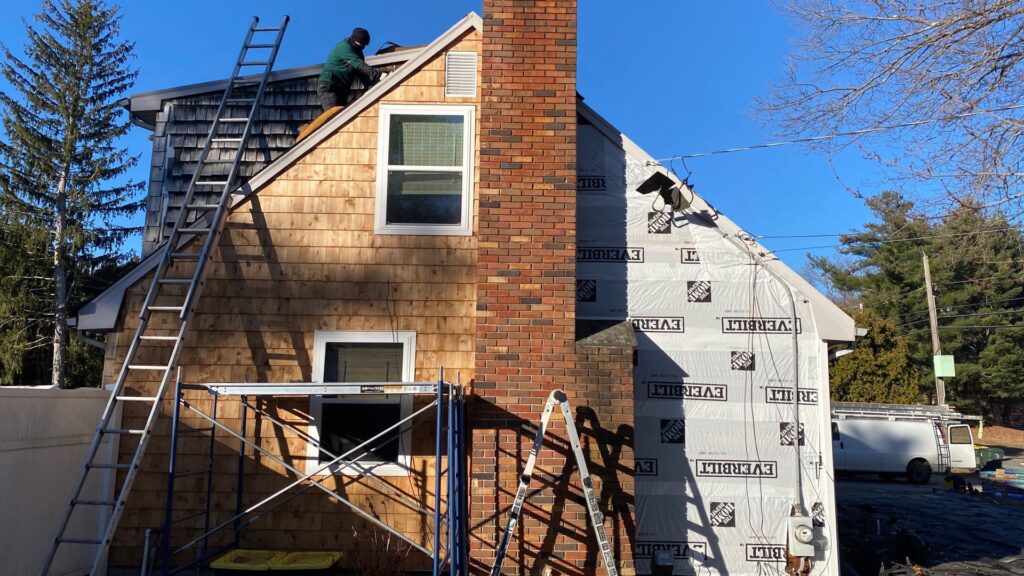
Every Hope Valley project is different, and this siding was no exception. This village home required materials and methods tailored
Working near Main Street village in Hope Valley, we completed this residential siding on schedule, leaving the property cleaner than
In Hope Valley, siding projects often involve homes that have been dealing with moisture for years without proper management. Our inspection looks for rot behind existing siding, checks soffit ventilation, and evaluates whether the current wall assembly allows moisture to escape. We install ventilation strips (furring) behind siding to create the air gap that prevents condensation and allows drying. New England storms create additional pressure on walls — proper flashing and drainage prevent meltwater from finding its way inside. For homes near Wooded lots, we pay particular attention to north-facing walls where shade keeps surfaces damp longest. For Southern Rhode Island area throughout Hope Valley, proximity to Local ponds means dealing with moisture from shade, falling debris, and reduced airflow behind siding panels.
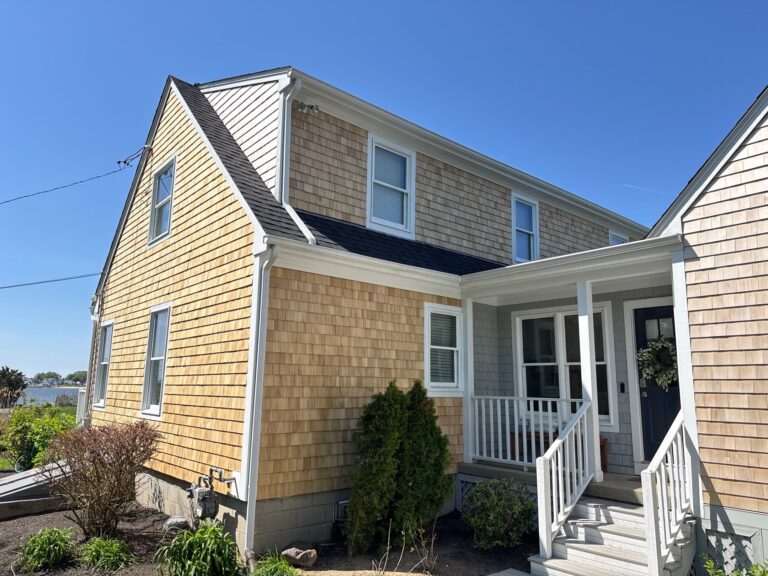
In Hope Valley’s wooded setting, cedar shingles are a popular choice for homeowners who value natural appearance. The material weathers to a silver-gray that blends with the surrounding landscape, though Hope Valley’s shade and moisture conditions require careful installation. For Riverfront homes in Hope Valley facing pine needle accumulation, cedar shingles offer both aesthetic appeal and proven weather resistance.
In Hope Valley, cedar shingle installation requires extra attention to moisture management because of the tree shade and ground-level humidity common on rural properties. We install ventilation strips behind every cedar project, creating airflow that prevents the dampness that causes premature rot and mold growth. Each shingle course overlaps the one below by at least 1.5 inches, with exposure set between 4 and 6 inches. We fasten with stainless steel or hot-dipped galvanized nails — never standard steel, which rusts and stains the wood. For north-facing walls where Wooded lots keeps surfaces damp longest, we sometimes recommend tighter shingle spacing for additional water shedding. Cedar left to weather naturally turns silver-gray within 2-3 years; staining extends color life but requires reapplication every 5-7 years. Hope Valley homeowners near Local ponds face heavy snow loads that creates persistent moisture conditions requiring siding with superior drainage capability.
Fiber cement siding combines the appearance of painted wood with the durability of concrete and cellulose fiber. For Hope Valley homeowners, James Hardie products deliver low-maintenance performance in a material that handles the Rhode Island climate well. In Hope Valley, fiber cement siding stands up to pine needle accumulation better than many alternatives, making it a smart investment for Riverfront homes.
Fiber cement siding is installed as planks, panels, or shingle profiles over a weather-resistant barrier. In Hope Valley, we follow James Hardie’s installation specifications precisely — proper gapping between boards (typically 3/16 inch), correct fastener placement, and flashing details at every transition point. The material comes in smooth or textured finishes that replicate wood grain without the maintenance requirements. Heavy snow loads demands materials that handle temperature swings and moisture cycles without warping or cracking, and fiber cement delivers. ColorPlus factory finish is baked on under controlled conditions, providing better adhesion and color consistency than field-applied paint. Rural properties in Hope Valley near Rockville often have more exterior square footage and greater wind exposure, which influences both material choice and installation approach.
Composite siding is gaining popularity in Hope Valley among homeowners who love the look of cedar shingles but don’t want the maintenance that comes with real wood in a shaded, humid environment. Properties near Hope Valley village in Hope Valley benefit from composite siding’s engineered resistance to moisture, insects, and temperature extremes.
Composite siding addresses the specific challenges Hope Valley homeowners face with wood in moisture-heavy environments. Everlast uses zero wood fiber in its composition, eliminating the mold and rot risk that affects cedar and wood clapboard in shaded areas. CertainTeed Cedar Impressions provides the look of hand-split cedar shakes without the maintenance cycle of staining and sealing. Both products install over standard drainage planes and ventilation strips. In Hope Valley’s climate, these materials maintain their appearance through Winter ice dams without the surface degradation that sends homeowners back up on ladders with stain and sealant. Properties in Hope Valley along Rockville are surrounded by natural features that hold moisture against exterior walls longer than open suburban settings.
Vinyl siding offers Hope Valley homeowners an affordable, durable exterior option that requires virtually no maintenance beyond occasional cleaning. Modern vinyl products have improved significantly in appearance and performance. Hope Valley properties near Hope Valley village can benefit from vinyl’s lightweight installation and proven performance against pine needle accumulation.
Modern vinyl siding comes in thicknesses ranging from .040 to .055 inches, with profiles including Dutch lap, clapboard, board and batten, and shingle styles. For Hope Valley homes, we recommend .044-inch minimum thickness for durability and appearance — thicker vinyl has deeper shadow lines and better impact resistance. Installation requires precise nailing (centered in the slot, not driven tight) to allow thermal expansion and contraction. Heavy snow loads make proper installation technique critical — vinyl installed too tight buckles in summer heat. Behind the vinyl, a weather-resistant barrier manages moisture that inevitably penetrates at joints and around accessories. Insulated vinyl options add R-2 to R-5 of insulation value and reduce the hollow sound that standard vinyl can produce. For Southern Rhode Island area throughout Hope Valley, proximity to Local ponds means dealing with moisture from shade, falling debris, and reduced airflow behind siding panels.
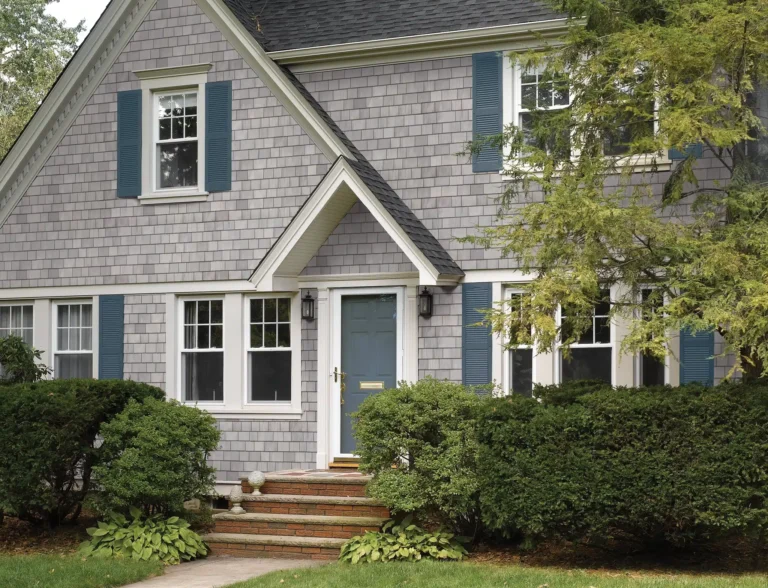
For Hope Valley homeowners seeking the warmth of cedar shake siding without ongoing maintenance, CertainTeed Cedar Impressions offers a premium polymer alternative. Properties near Wooded lots benefit from TrueTexture technology that reproduces authentic wood grain detail while providing superior resistance to Rhode Island’s rural weather patterns.
For Hope Valley homes near Wooded lots that deserve a premium exterior finish, CertainTeed Cedar Impressions offers polymer shake siding that reproduces authentic cedar character in a virtually maintenance-free material. TrueTexture molding from real cedar shingles gives every panel realistic grain patterns and depth. The system is available in three profiles — Perfection, Rough-Split, and Half-Round Scallop — covering architectural styles from traditional colonials to coastal cottages. CertainTeed offers an extensive color palette including Ageless Cedar blends that replicate natural color variation. The polymer construction resists rot, insects, moisture absorption, and UV fading, all of which affect natural cedar in Rhode Island’s Heavy snow loads. Panels feature a double-thick nailing hem and Molded Perimeter Lock rated for 110 mph winds, with back ribs that prevent warping. Homeowners in Hope Valley enjoy the look of hand-split cedar with no staining, sealing, or periodic shingle replacement — just occasional cleaning with a garden hose keeps the exterior looking new.
Siding material selection in Hope Valley depends heavily on your property’s tree coverage, sun exposure, and how much maintenance you’re willing to do. Each material handles moisture and shade differently. In Hope Valley, where Riverfront homes are common near Hope Valley village, this directly affects how siding performs over its lifespan.
Cedar fits Hope Valley’s aesthetic naturally but requires more maintenance in shaded environments where moisture and mold accumulate faster. Fiber cement handles moisture well and provides a painted-wood appearance without the rot risk. Composite products resist mold and moisture completely with zero maintenance — a strong choice for homes surrounded by Local ponds. Vinyl is the budget option but can trap moisture behind it without proper drainage details. For Hope Valley properties with significant tree canopy, we often recommend composite or fiber cement with enhanced ventilation behind the cladding. For Southern Rhode Island area throughout Hope Valley, proximity to Local ponds means dealing with moisture from shade, falling debris, and reduced airflow behind siding panels.
James Hardie is the leading fiber cement manufacturer, and their products are engineered specifically for different climate zones — HZ5 for freeze-thaw regions like Rhode Island. CertainTeed offers both vinyl and composite (Cedar Impressions) products with strong color and texture options. Everlast composite siding uses zero wood content for complete moisture immunity. In Hope Valley’s moisture-heavy environment, we follow manufacturer ventilation and drainage specifications closely to maintain warranty coverage. Properties in Hope Valley along Rockville are surrounded by natural features that hold moisture against exterior walls longer than open suburban settings.
For Hope Valley homes surrounded by trees and shade, the wall system behind the siding determines whether moisture gets managed or trapped. Rain screen technology solves this problem at the source. Hope Valley homeowners near Hope Valley village benefit from this knowledge because pine needle accumulation creates specific demands on exterior cladding.
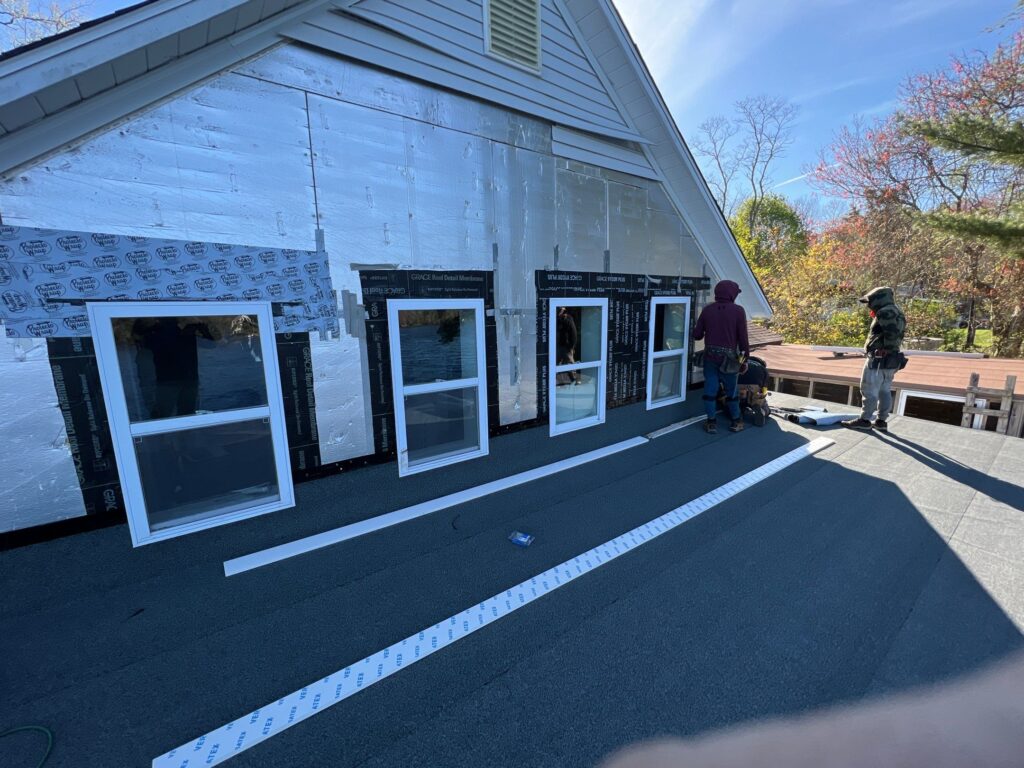
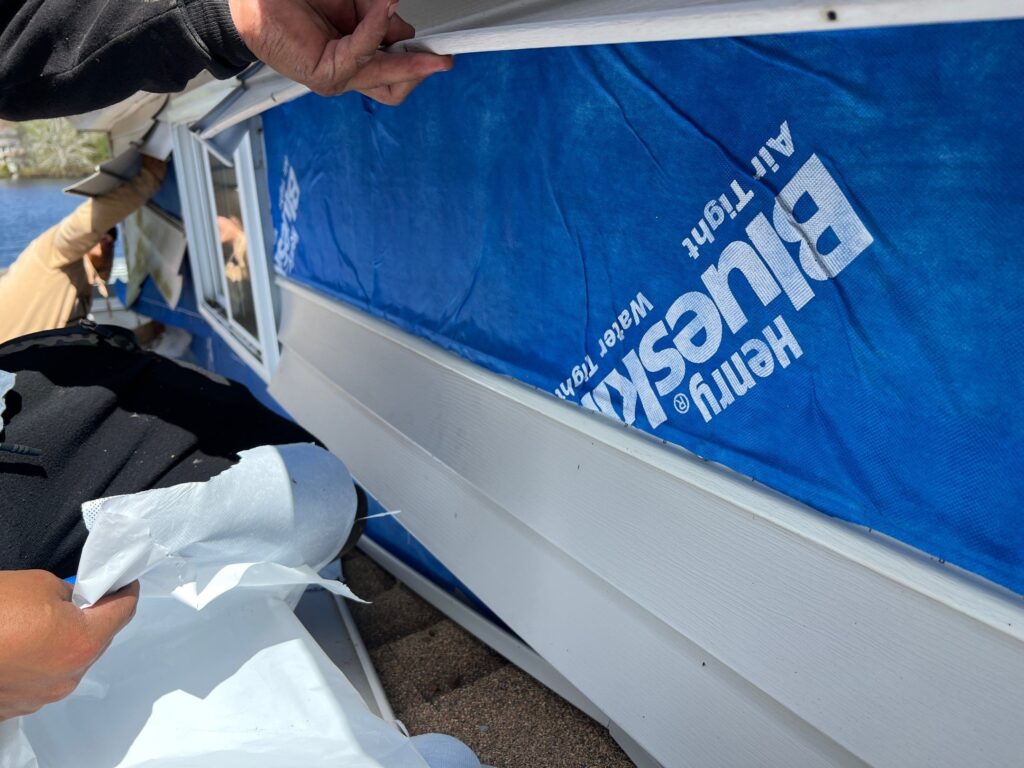
The wall system we build for Hope Valley homes addresses moisture from every direction — rain from above, ground humidity from below, and condensation from temperature differentials. The assembly starts with sealed sheathing and a quality weather-resistant barrier, then adds 3/4-inch furring strips to create a ventilated air cavity. This cavity is the critical component for homes in Hope Valley’s environment — Wooded lots and New England storms mean the wall needs active drying capacity, not just passive resistance. Vented starter strips at the base allow air to enter the cavity; vented trim at the top lets moist air exit. The result is continuous convective airflow that removes moisture before it can damage the wall structure. Properties in Hope Valley along Rockville are surrounded by natural features that hold moisture against exterior walls longer than open suburban settings.
Our process for Hope Valley homes starts with a free exterior inspection where we evaluate your current siding condition, check for moisture damage, assess ventilation behind the cladding, and review flashing details at windows and doors. We present options based on what your home actually needs — not a one-size-fits-all recommendation. After approval, we order materials (typically 2-3 week lead time for specialty products) and schedule installation. Our crew removes all existing siding, inspects and repairs the wall structure, installs the weather-resistant barrier and drainage system, and applies new siding with proper fastening, gapping, and trim details. We clean the site daily, remove all debris, and walk you through the finished project. Most Hope Valley homes take 1-2 weeks for complete siding replacement. For Southern Rhode Island area throughout Hope Valley, proximity to Local ponds means dealing with moisture from shade, falling debris, and reduced airflow behind siding panels.
Homes in Hope Valley’s wooded environment develop siding problems related to moisture, shade, and organic debris that accumulate over time. Many of these issues are hidden behind the visible surface. Hope Valley homeowners near Hope Valley village benefit from this knowledge because pine needle accumulation creates specific demands on exterior cladding.
Mold and algae growth on exterior surfaces is common on Hope Valley homes where tree shade keeps siding damp for extended periods. This surface issue often indicates a deeper problem — trapped moisture behind the cladding that has no way to dry out. We find rot behind siding on north-facing walls and under eaves where Local ponds accumulate and hold moisture against the surface. Ice dam damage at the wall-to-roof transition occurs when snow melts, refreezes, and forces water behind the siding. Woodpecker damage is another issue specific to wooded areas — they target cedar and wood siding where insects have established colonies behind the cladding. For Southern Rhode Island area throughout Hope Valley, proximity to Local ponds means dealing with moisture from shade, falling debris, and reduced airflow behind siding panels.
In Hope Valley’s wooded environment, siding lifespan is affected by moisture exposure, shade, and maintenance habits. Materials that resist moisture inherently last longer in this setting than those that depend on surface protection. For Riverfront homes near Wood River in Hope Valley, these considerations directly impact the longevity and performance of your siding investment.
Cedar shingle siding in Hope Valley: 20-40 years with proper maintenance, though homes in heavy shade may see mold-related issues sooner without regular cleaning and staining. Unfinished cedar weathers to gray in 2-3 years and lasts 10-15 years before structural deterioration in shaded settings. Fiber cement: 30-50+ years — the material resists the moisture and mold conditions that affect wood products in Hope Valley’s environment. Factory finish lasts 15+ years. Composite: 30-50+ years with zero maintenance — ideal for Hope Valley homes where moisture and shade would require constant upkeep with wood. Vinyl: 20-40 years, though its appearance can decline faster in shaded areas where algae and mildew discolor the surface. Rural properties in Hope Valley near Rockville often have more exterior square footage and greater wind exposure, which influences both material choice and installation approach.
Knowing when to replace siding saves Hope Valley homeowners from spending money on repairs that don’t address the real problem. These are the signs that replacement is the better investment. For Hope Valley properties exposed to pine needle accumulation, this matters more than many homeowners realize when planning a siding project.
Replace siding when you see: persistent warping, buckling, or cracking that is not limited to a few panels; rot in wood siding that extends beyond surface damage; mold or mildew that returns within weeks of cleaning; paint that peels within 2-3 years of application; loose panels that shift in wind; water damage on interior walls; energy bills increasing without other explanation; and soft spots when pressing on the wall surface. If your Hope Valley home’s siding is 20+ years old and showing multiple symptoms, replacement typically makes more financial sense than ongoing repair. Out in Hope Valley, Southern Rhode Island area near Local ponds sit on larger lots where wind exposure and tree canopy create specific siding challenges that suburban homes rarely face.
Hope Valley homeowners who research siding contractors find that our approach — thorough inspection, honest recommendations, and installation details that go beyond code minimum — stands out. Hope Valley homeowners along Hope Valley village face pine needle accumulation that puts extra demands on siding systems throughout the year.
Pinnacle Roofing & Skylights (RI Reg #39446) understands the moisture challenges that Hope Valley’s environment creates for homes. We build every siding project with the ventilation and drainage details that prevent the rot and mold problems common in shaded, humid settings. Our manufacturer certifications ensure your installation activates full product warranties, and our workmanship guarantee covers the installation details that make the system work. We’ve completed projects throughout Hope Valley on Capes in every condition. Rural properties in Hope Valley near Rockville often have more exterior square footage and greater wind exposure, which influences both material choice and installation approach.
Siding costs in Hope Valley depend on material choice, home size, structural condition, and installation complexity. We provide detailed estimates based on your specific property — not ballpark numbers from a website. Homes near Wood River in Hope Valley face pine needle accumulation that makes this especially important for long-term exterior protection.
For a typical Hope Valley home (1,500-2,500 sq ft of siding area), expect vinyl siding replacement to run $7,000-$14,000, fiber cement $14,000-$28,000, composite $12,000-$25,000, and cedar $16,000-$30,000+. These ranges include complete removal of old siding, sheathing inspection and repair, weather barrier and drainage plane installation, new siding with trim and accessories, and full cleanup. Actual cost depends on your home’s specific size, condition, and material choice. We provide detailed written estimates after on-site assessment. Financing is available — see financing options for details. Out in Hope Valley, Southern Rhode Island area near Local ponds sit on larger lots where wind exposure and tree canopy create specific siding challenges that suburban homes rarely face.
Storm-Damaged Roofs Require Fast Action
When you find storm damage on your roof in Rhode Island, swift action can be crucial. Contacting trusted roofing professionals like us for a thorough inspection. Our expert team will assess the damage and determine if roof repairs or roof replacement is recommended. With New England’s predictably unpredictable weather, it is important repairs happen quickly to prevent further loss.