nnn
Skip to content
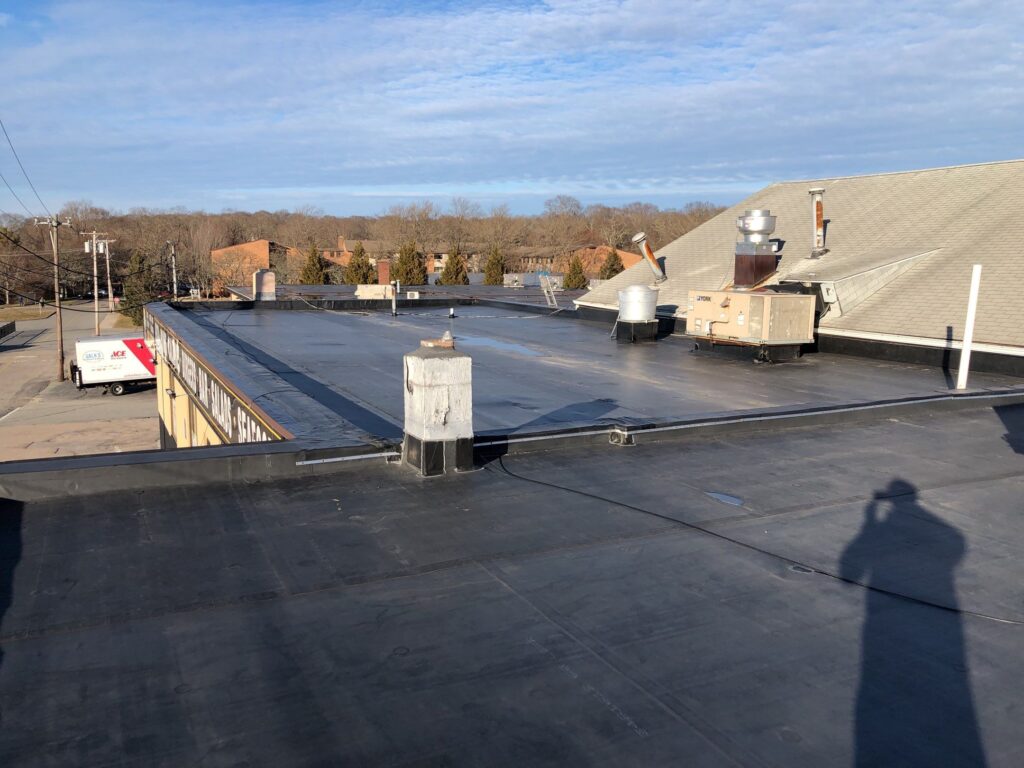
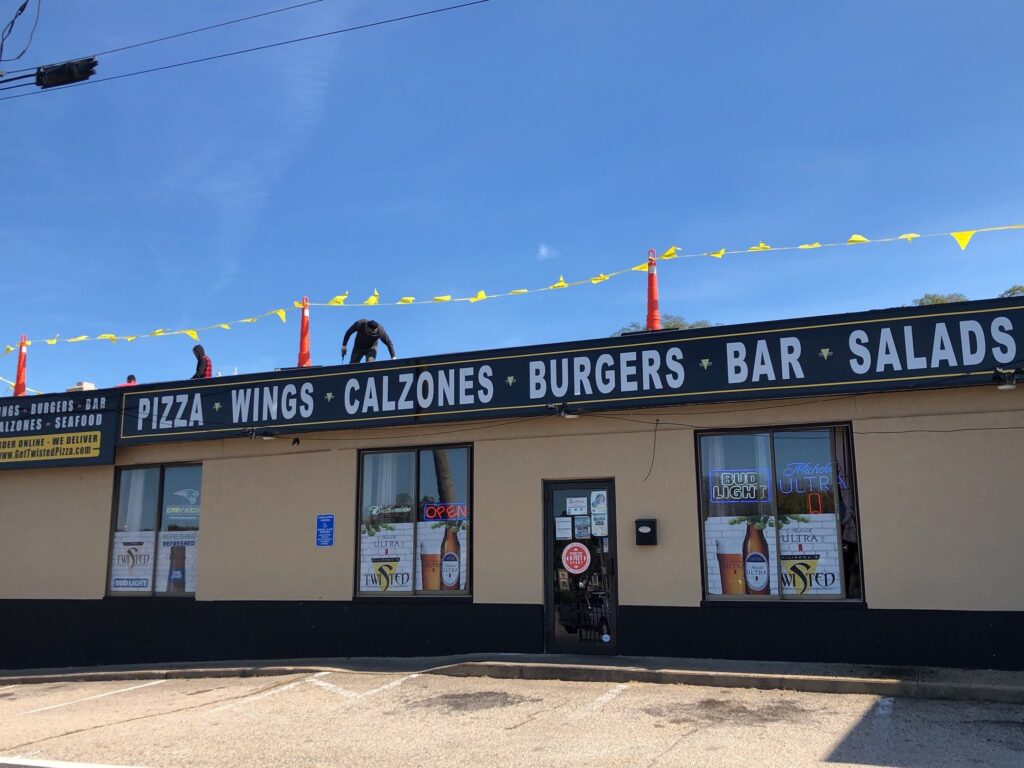
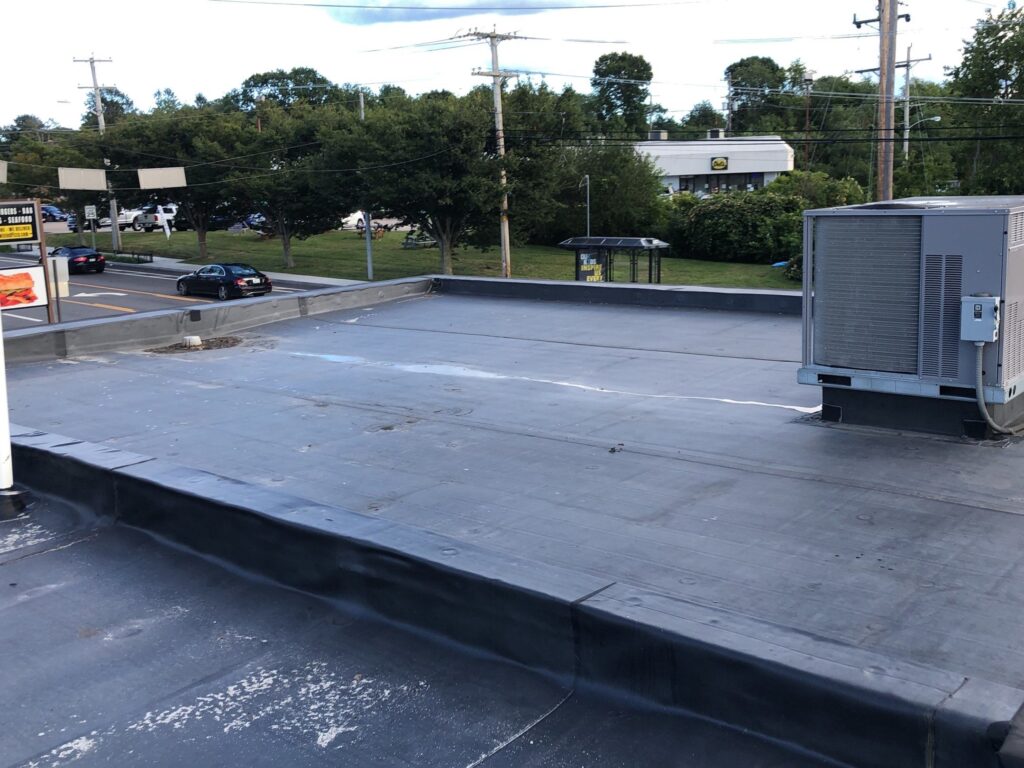
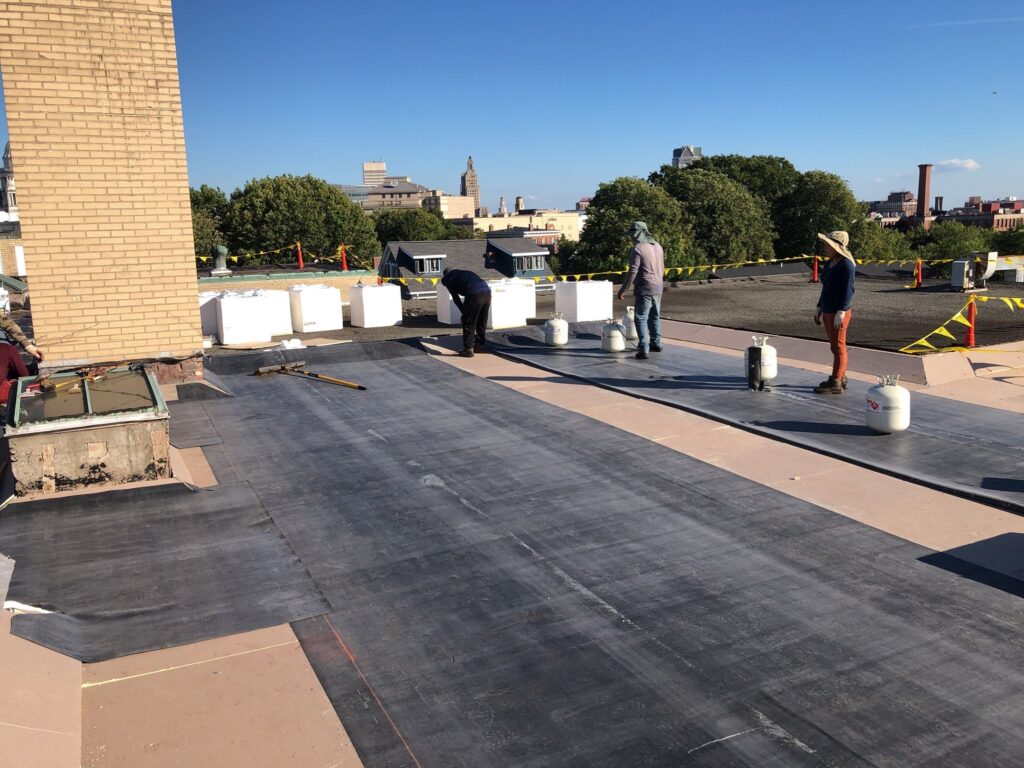
Completed in Wakefield, RI: a Commercial EPDM Roofing by the team at Pinnacle Roofing & Skylights. At Pinnacle we know
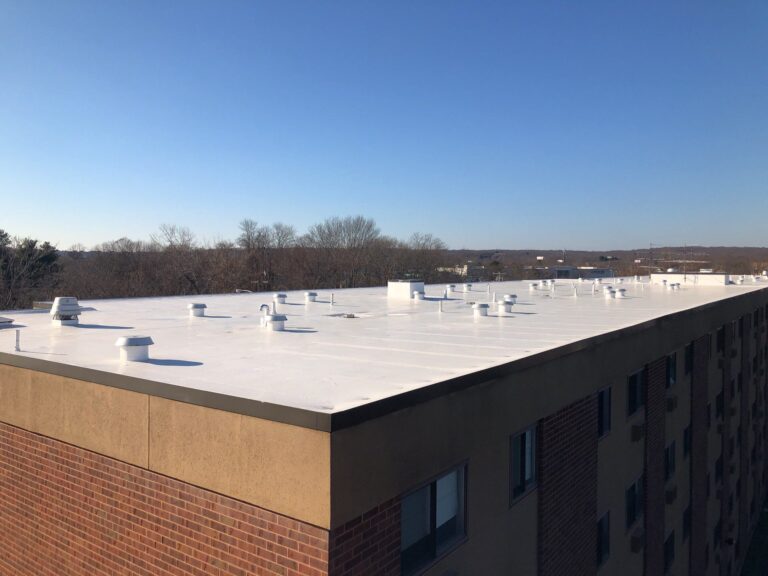
Completed in Wakefield, RI: a Commercial Roofing by the team at Pinnacle Roofing & Skylights. At Pinnacle we know how
Just wrapped up in Wakefield, RI: a Commercial EPDM Roof Replacement completed by Pinnacle Roofing & Skylights. At Pinnacle we
Rhode Island’s climate presents specific challenges to commercial roofing materials that vary significantly from the conditions that residential roofers typically manage. The freeze-thaw cycling that occurs across Wakefield’s moderate coastal influence with seasonal storms creates particular stress on roof membranes, sealants, and flashings. Water enters small cracks, expands during freezing, and accelerates material degradation. Modern flat roof membranes handle this stress differently depending on their composition – some become brittle in extreme cold, others remain flexible. HVAC equipment on retail, restaurants, professional offices, and service businesses roofs creates vibration that can damage sealants and cause accelerated wear at penetration points. The moderate coastal influence with seasonal storms also affects how water behaves on flat roofs during heavy precipitation events – material drainage performance varies enormously based on membrane texture, slope achievement, and drain sizing. Coastal Wakefield properties face salt air exposure that degrades certain materials while leaving others largely unaffected. Interior vs. exterior applications have different moisture exposure patterns. Commercial roofers select materials not just for their general characteristics but for how they specifically perform under Wakefield’s particular environmental conditions. This level of climate-specific material science is not part of residential roofing training.
For Wakefield’s commercial properties with concrete, metal, or older membrane decks that have lost weatherproofing, silicone coating restoration is increasingly practical.
A fundamental advantage of silicone coating is that it can be recoated at the end of its service cycle without tearing off the original system. This recoatability creates a renewable investment model unavailable with membrane replacement. A Wakefield commercial building owner coating a roof at year zero can recoat at year fifteen for an additional fifteen-year service cycle, then potentially recoat again at year thirty. Each recoating costs substantially less than initial coating application because substrate preparation is simplified. There is no disposal of old material, no multi-week roof vulnerability, and no business interruption comparable to replacement. Over a fifty-year building ownership, this renewable approach often delivers better financial outcomes than replacement-level capital expenditures. Pinnacle contractors in Wakefield can advise building owners on the long-term coating and recoating schedule best suited to their ownership timeline and budget. The renewable investment model appeals particularly to Wakefield commercial property owners with multi-decade holding periods.
Wakefield commercial property owners choose EPDM for replacement projects when they prioritize system reliability and long-term cost predictability.
Wakefield’s freeze-thaw climate creates stresses that eliminate some roofing membrane options but where EPDM excels. When water enters a membrane seam or penetrates a damaged area and then freezes, it expands and creates mechanical stresses that can cause cracking or adhesion failure. Rigid membranes like PVC become brittle at low temperatures and are vulnerable to cracking under freeze-thaw stress. EPDM rubber maintains elasticity well below freezing, allowing it to accommodate expansion and contraction without failure. This property is particularly important at seams, where EPDM’s flexibility prevents the stress concentration that causes failures in less flexible membranes. Wakefield commercial buildings subjected to winter conditions experience daily freeze-thaw cycling during shoulder seasons (November and March), creating particular stress on roofing systems. EPDM’s cold-weather flexibility is one reason it has proven so durable on Wakefield commercial buildings since the 1960s. The polymer’s ability to flex at temperatures approaching minus forty degrees makes EPDM uniquely suited to New England’s climate volatility. Buildings in Wakefield that need roofing with proven cold-weather performance increasingly specify EPDM for this climate-specific reason.
Wakefield commercial buildings constructed with elevated mechanical equipment loads benefit from modified bitumen’s ability to absorb physical abuse.
Modified bitumen installation on Wakefield commercial buildings is highly dependent on weather conditions, particularly for torch-applied systems. Optimal installation conditions are warm and dry, ideally spring or fall with stable air temperatures. Wakefield’s winter weather (cold, potentially wet) is suboptimal for modified bitumen installation because the cold reduces bitumen activation temperatures and moisture compromises bitumen bonding. Rainy periods in Wakefield make adhesive-based installation challenging because substrate moisture reduces adhesive effectiveness. Wakefield commercial roofing contractors plan modified bitumen projects during favorable weather windows, often requiring scheduling flexibility and potentially extending project timelines during Wakefield’s wet season. Improper installation timing (attempting torch application in cold weather, adhesive application in damp conditions) results in weakened seams and accelerated failure. Wakefield property managers should discuss installation timing expectations when soliciting modified bitumen bids, understanding that premium contractor rates for off-season installation may be justified by improved workmanship and durability compared to weather-compromised installation.
Mixed-use and architectural buildings in Wakefield with steep-slope roofing specify commercial-grade shingles to meet enhanced performance and appearance standards.
Commercial shingles in Wakefield are rated for wind speeds up to one hundred thirty miles per hour, with ratings determined through standardized testing (ASTM D3018 or equivalent). Wind rating in Wakefield commercial applications is not aesthetic but rather critical structural performance: improper wind rating installation can result in shingles tearing off during seasonal storms, exposing the building to weather damage and water penetration. Wakefield buildings in exposed locations (hilltops, coastal areas, open fields) face higher wind uplift stresses than sheltered urban or wooded locations. Commercial shingle installation in high-wind Wakefield locations requires increased fastening (more nails per shingle, smaller nail spacing) to achieve the specified wind rating. Buildings in low-wind Wakefield locations may use standard fastening. Wakefield coastal buildings in particular face wind stresses exceeding one hundred ten miles per hour during occasional nor’easters, making high wind-rating shingles essential. A Wakefield commercial building rated for eighty-five-mile-per-hour wind exposure using only eighty-five-mile-per-hour-rated shingles will fail during rare but periodic coastal storms. Pinnacle specifies wind-rated shingles appropriately for each Wakefield building’s exposure level and fastens them to achieve the specified rating.
Standing seam metal roofing provides Wakefield commercial property owners with the lowest lifecycle cost when decades of ownership are planned.
Metal roofing on Wakefield commercial buildings requires minimal maintenance: periodic inspection of fasteners, seals, and panel connections, occasional cleaning to remove debris, and prompt repair of any damage from impact or environmental exposure. Annual inspections (typically three hundred to five hundred dollars) are adequate to identify issues before they become problems. Metal roofing does not require recoating, re-fastening, or membrane patching that some single-ply systems require. The simplicity of metal maintenance appeals to Wakefield property managers prioritizing low operational complexity. A Wakefield commercial building with metal roofing can operate for decades with minimal roof-related maintenance costs and disruption. By contrast, some membrane systems require regular inspection, periodic spot repairs, and eventual recoating or replacement, generating recurring operational demands.
Choosing the right commercial roofing system for a Wakefield property depends on the building’s design, current condition, budget, and ownership timeline.
Metal standing seam provides Wakefield commercial buildings the longest service life (forty to seventy years) with the lowest maintenance demands of any option. The upfront cost is premium (eight to fifteen dollars per square foot), but amortized over the system’s service life, lifecycle cost is often the lowest available. Metal’s longevity advantage is decisive for Wakefield buildings planned for multi-decade ownership. The reflective properties reduce cooling costs significantly, providing energy recovery benefits over the system’s lifetime. Concealed fastener design eliminates leak points, delivering superior wind resistance and weather performance. Wakefield coastal buildings benefit from material options (aluminum, Galvalume) providing corrosion resistance unavailable in other systems. The premium upfront cost is justified for Wakefield property owners prioritizing lowest total cost of ownership and minimal maintenance demands.
The manufacturers partnered by Pinnacle continue to invest in research and development addressing emerging Wakefield commercial roofing challenges. Climate change impacts on Wakefield weather patterns (increased precipitation, temperature extremes) drive manufacturer innovation toward membranes and coatings with enhanced water management and thermal stability. Sustainability considerations increasingly influence Wakefield commercial building specifications, encouraging manufacturers to develop products with lower environmental impact, improved recyclability, and extended service life. Smart roof technology integration – sensors and monitoring systems – represents an emerging frontier that manufacturers are exploring for Wakefield commercial buildings. Energy efficiency priorities motivate manufacturer work on improved insulation integration and reflective coatings. Wakefield property owners choosing Pinnacle benefit from access to manufacturers actively developing solutions for tomorrow’s Wakefield commercial roofing challenges.
The interaction between roof system layers on Wakefield commercial buildings determines whether the roof functions properly or prematurely fails.
The roof membrane represents the critical waterproofing barrier protecting every Wakefield commercial building’s interior from water infiltration. EPDM, modified bitumen, TPO, PVC, and silicone coatings all function as the waterproofing layer in different Wakefield system types. The membrane must span across thousands of square feet on Wakefield commercial buildings without punctures or gaps, creating a complete barrier against water entry. Seam locations represent vulnerability points where two membrane pieces join – improperly sealed seams are the most common source of commercial roof failures on Wakefield buildings. The membrane must accommodate building movement, thermal expansion and contraction, and equipment vibration without rupturing. Wakefield’s freeze-thaw cycling and thermal extremes place particular stress on membranes attempting to seal large areas without moveable joints. The membrane layer’s design thickness and composition vary based on building exposure, traffic, and expected service life. Wakefield property owners often focus most attention on the membrane because it is the visible, replaceable layer – but membrane longevity depends on the entire system design working in concert.
Pinnacle’s initial inspection of Wakefield commercial roofs involves systematic evaluation of every roof component and documentation of current conditions. Inspectors begin with visual assessment of the overall roof surface, identifying visible damage, seam separation, flashing issues, and ponding water patterns. Surface samples are extracted to determine membrane thickness, composition, and installation method – essential information for specifying restoration or replacement options. The inspection includes testing whether seams are properly adhered and whether the membrane retains waterproofing capability. Wakefield building access points are examined, noting whether roof traffic is controlled and whether foot traffic damage is evident. Drain systems are inspected for blockages, and flashing conditions are photographed in detail. Ponding water is mapped to identify inadequate slope or drain positioning. Wakefield commercial building perimeter edges and parapets receive special attention as critical leak vulnerability areas. The complete inspection generates documentation photos, measurements, and detailed notes that inform the recommendations presented to Wakefield property owners.
Common patterns of Wakefield commercial roof failure point to preventable problems that timely maintenance addresses effectively.
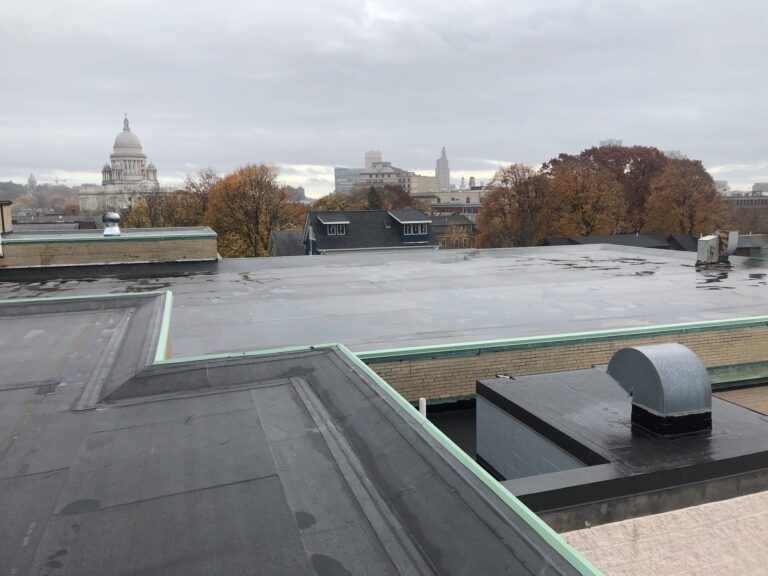
Parapet walls on Wakefield commercial buildings create complex roofing failures because parapet design integrates vertical wall surfaces with horizontal roof membranes through flashing systems that experience continuous stress. Wakefield parapet flashing must transition between the roof membrane and the vertical wall surface while accommodating movement and accommodating ponding water on the roof. Many Wakefield buildings have parapet walls built without proper flashing design, relying on mortar or caulk to seal the junction – this approach fails rapidly in Wakefield’s freeze-thaw climate. Water running down the exterior of Wakefield parapet walls infiltrates the wall interior if flashings are inadequate, sometimes creating interior water damage remote from the roof itself. Wakefield parapets with poor drainage direct water into the roof assembly rather than away from it. Some Wakefield parapet failures include actual structural compromise where water infiltration causes deterioration of masonry or structural framing. Wakefield buildings with visible water stains below parapet walls often have flashing problems that should be remediated immediately. Modern Wakefield parapet restoration involves installing through-wall flashings that direct water to the exterior and properly sealed roof-to-parapet transitions. The cost of proper parapet remediation can be substantial but is justified given the risk of ongoing structural damage.
Wakefield roof system selection should consider projected service life alongside first cost to evaluate lifecycle economics accurately.
Wakefield’s specific climate conditions (salt air exposure for coastal properties, freeze-thaw cycling, high humidity) affect roof longevity more than many Wakefield building owners realize. Wakefield’s coastal exposure accelerates corrosion of metal components, sealants, and fasteners compared to inland climates. Salt air degrades certain protective coatings and sealants that would perform adequately in non-coastal locations. Wakefield’s freeze-thaw cycling places particular stress on sealants and flashings where thermal movement is concentrated. Wakefield’s high precipitation load (annual rainfall above forty inches in most locations) stresses drainage systems more than drier climates. Wakefield’s humid summers accelerate mold and algae growth on roof surfaces, sometimes creating maintenance challenges. The winter snow load on some Wakefield properties (particularly northern regions) creates structural stress different from southern climates. Wakefield commercial building owners should understand that roof lifespans achievable in other climates may not apply to Wakefield conditions. Wakefield roofs reach end-of-service-life somewhat earlier than the published industry norms developed in more moderate climates. Selecting climate-appropriate materials and maintenance protocols extends Wakefield roof service life closer to theoretical maximums.
Wakefield property owners with different timelines and budgets may appropriately choose different paths – repair, restoration, or replacement.
Replacement of Wakefield commercial roofs provides performance certainty through new systems with full manufacturer warranty coverage, while repair and restoration approaches involve older systems with limited remaining warranty. Wakefield commercial buildings with mission-critical needs or long ownership horizons benefit from the peace-of-mind that new roof systems provide. The warranty on a newly installed Wakefield roof often extends twenty to thirty years depending on system type, providing substantial protection against early failure. Restoration warranties are typically shorter (ten to fifteen years) reflecting the fact that the underlying substrate is aging. Repair warranty is often just the specific repaired area, leaving the remainder of the Wakefield roof unprotected. Wakefield property owners valuing warranty protection as a form of insurance should factor this into the repair/restoration/replacement decision. Some Wakefield insurance companies or lenders specifically require minimum warranty coverage, favoring replacement.
Wakefield commercial property owners working with Pinnacle experience transparent assessment and honest recommendations aligned with building needs rather than maximum revenue.
Pinnacle views Wakefield commercial property owners as long-term partners rather than one-time transaction customers. Wakefield buildings often require periodic inspections, preventive maintenance, and occasional repairs across five to ten year periods before major restoration or replacement becomes necessary. Pinnacle’s maintenance contracts for Wakefield properties provide ongoing inspection, preventive care, and minor repairs that extend roof system life and prevent emergencies. Wakefield property owners working with Pinnacle over multiple years develop relationships with contractors who understand their property, their operational priorities, and their financial constraints. The partnership approach means that Wakefield property owners have trusted advisors to call when questions arise or when unexpected roof conditions emerge. The contrast with transactional contractors (install a roof and disappear) is substantial – Wakefield property owners value ongoing relationship and advice.
Wakefield commercial roofing costs deserve careful evaluation considering both immediate expense and long-term financial implications.
Wakefield commercial roofing financing options impact the total cost of ownership beyond the installed system cost. Financing interest costs for a Wakefield roof financed over five years adds approximately ten to fifteen percent to the total cost. Wakefield property owners with access to favorable financing rates (zero percent promotional periods, low fixed rates) benefit significantly compared to those using expensive financing. Wakefield property owners using cash reserves to pay for Wakefield roofing should consider the opportunity cost – capital used for roofing is unavailable for other investments. Pinnacle’s Synchrony Financial partnership offers Wakefield property owners financing with competitive rates and zero percent interest options, reducing financing cost burden. Wakefield property owners evaluating roofing costs should factor financing options into their comparison of total cost. Financing through Synchrony Financial makes every Wakefield commercial roofing project affordable with low monthly payments and zero percent interest options.
Storm-Damaged Roofs Require Fast Action
When you find storm damage on your roof in Rhode Island, swift action can be crucial. Contacting trusted roofing professionals like us for a thorough inspection. Our expert team will assess the damage and determine if roof repairs or roof replacement is recommended. With New England’s predictably unpredictable weather, it is important repairs happen quickly to prevent further loss.
Jennifer WeinraubTrustindex verifies that the original source of the review is Google. Very easy group to work with. We had leaks in a fairly new rubberized roof that was installed by someone else. They came out to evaluate the roof quickly as it was leaking, did a thorough evaluation, and then fit us in as an emergency repair. Mike CholkoTrustindex verifies that the original source of the review is Google. Scott and his crew from Pinnacle Roofing were flexible in scheduling and a pleasure to work with. They were thoroughly in installing my Velux Skylight. In addition, they noticed a few other issues with my roof and were quick to acquire the supplies to fix the roof. Highly recommend working with a business that is local and competent. Paul YelleTrustindex verifies that the original source of the review is Google. I had a skylight which had deteriorated and needed replacement. I called Pinnacle and found them to be responsive, personable, and efficient. I will call them again, if needed. jorge matesanzTrustindex verifies that the original source of the review is Google. Overall satisfactory. Mary Ellen LemireTrustindex verifies that the original source of the review is Google. We recently replaced our 38 year old skylights with Velux Solar skylights with Pinnacle Roofing and Skylights. From the first visit to our home with Joe F. to the completion of the job everything went perfectly. Joe explained everything from installation of the product with expertise and patience. We had many questions and he took the time to answer them all. The estimate was much lower than the other 3 we obtained but the installation was top notch. Joe and the owner Scott were both here the day the skylight were installed and all went so well. They were even able to match the color of our shingles which were nine years old. In never thought they would be such a perfect match. Our thanks and gratitude to all at Pinnacle for doing such a wonderful job. We couldn't be more happy. Thank you so much. We will not hesitate to recommend you to everyone we know who needs a new roof or skylights. Alan LemireTrustindex verifies that the original source of the review is Google. When I decided to have four 38 year old skylights replaced I requested quotes from four different installers. Pinnacle was by far the lowest. I admit that I was a little skeptical. I remembered the old saying to throw out the highest and the lowest and go with someone in the middle. But, I was very impressed with Joe F. the sales rep. He was the most professional, gave me an excellent presentation and provided printed details on the construction of the Velux skylights and the options available. He also included step by step procedures that they would follow to install the skylights. I checked out their office in North Kingston. It is located in the rear of an old stone mill building in a section called "The Hive". it's small and not at all flashy but a testament to the frugality of the business and I believe that this shows up in their desire to provide excellent customer service at a reasonable price. The crew arrived on time for the installation, were friendly and very hard working. I watched the first install and they followed the Velux installation to the letter as seen in the YouTube Velux video. The owner, Scott, even stopped by to check on the job. At the end of the day everything was cleaned up properly and the dumpster was picked up the next morning. Overall I am extremely happy with Pinnacle and would recommend that you give them a shot. Matthew KachanisTrustindex verifies that the original source of the review is Google. We just had a new black roof with matching gutters and downspouts installed and the whole process was excellent. Scott, the owner, was extremely thorough in his inspection—he checked everything including the attic—and provided a very accurate quote. During the job, he kept me updated with pictures so I knew exactly what was happening, even when additional plywood was needed. The crew worked neatly, on time, and left everything spotless. Professional, courteous, and fair. Highly recommend Scott and his team for anyone needing roofing work! Lawrence NordinTrustindex verifies that the original source of the review is Google. Dave JTrustindex verifies that the original source of the review is Google. Just wanted to praise Pinnacle Roofing Skylights for their excellent job replacing our roof. Top notch company from day 1. After calling a few local companies, we ended up having 6 estimates, narrowed it down to 2 companies based on competitive pricing, first impression meeting when they stopped by the house to do the inspection prior to submitting the quote. Joe was very nice and extremely knowledgeable, answered all the questions we had. Also the only one to go up on the roof for inspection. Once we received the estimates. We knew we wanted Pinnacle. They provided an excellent presentation with the company information, the roof shingle options, the warranties & much more. It took about 1 month from first reaching out to the roof installation. Scott & Joe were present that day, they made sure everything was running great. We were also impressed with the crew as well, they worked very hard, the clean up was excellent! Will highly recommend. This company is in their own league when it comes to roof replacement. It has been about a month since installation with no issues. Exceptional, so glad we found you. Robert MoskolTrustindex verifies that the original source of the review is Google. Recently had Skylights installed by Pinnacle Roofing. Owner Scott Olsen very easy to work with. Pricing very fair and working done promptly. Workers came prepared site left clean. Highly recommend Pinnacle for roofing needsVerified by TrustindexTrustindex verified badge is the Universal Symbol of Trust. Only the greatest companies can get the verified badge who has a review score above 4.5, based on customer reviews over the past 12 months. Read more