

Like most Pinnacle projects, the work was completed efficiently — minimizing disruption for the property owner.
Pinnacle makes every project affordable with monthly financing options, including 0% interest for 18 months.
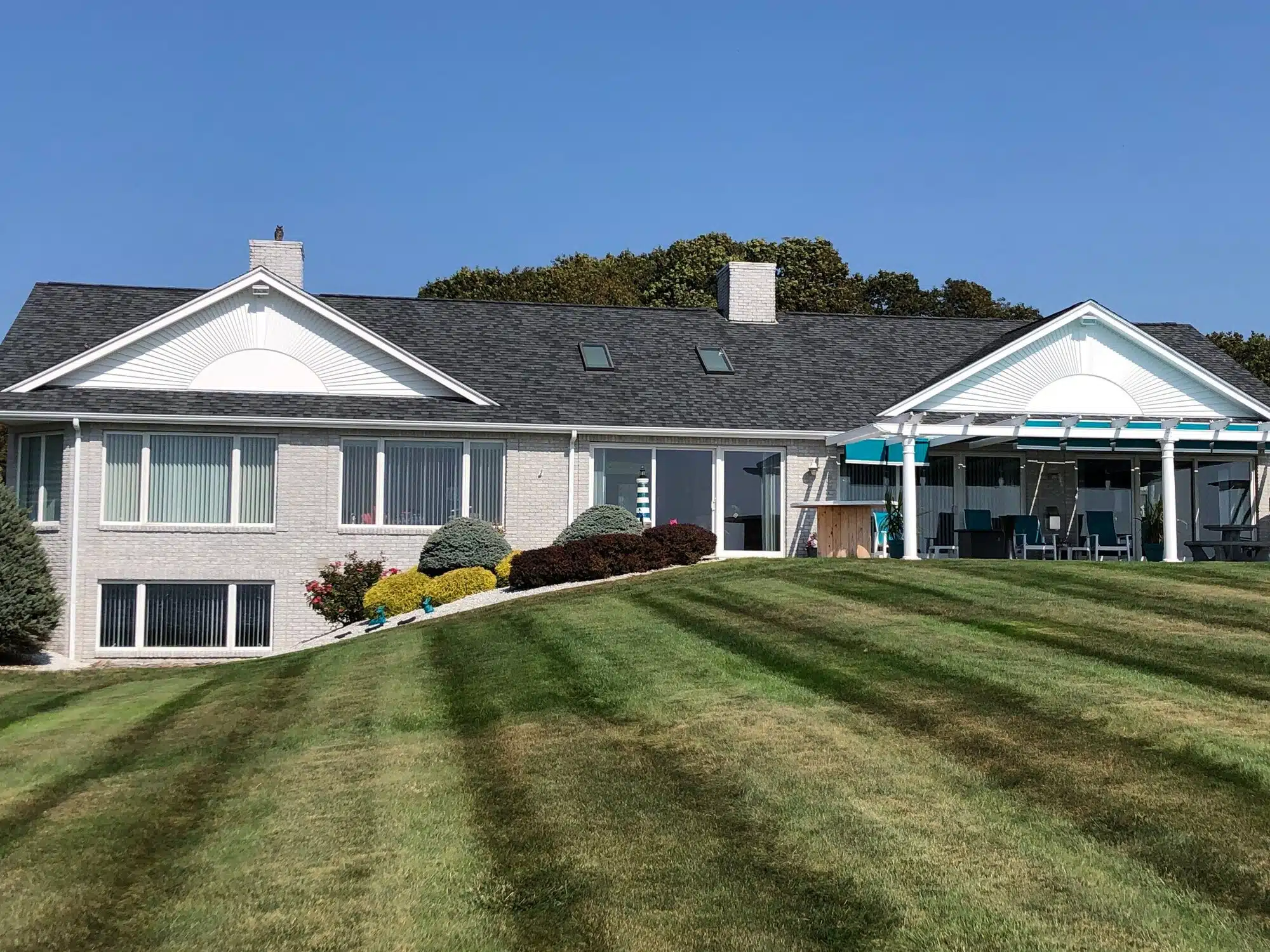
Winter is when a roof’s ventilation earns its keep, and this waterfront ranch in Barrington is a good example of why. When warm air escapes into an under-ventilated attic, it heats the roof deck, melts the snow above, and lets that meltwater refreeze at the cold eaves — the recipe for an ice dam. As part of replacing this home’s asphalt-shingle roof with clean, dark shingles, we built in a balanced attic ventilation system designed to keep the deck cold and even, so the roof is far better prepared for a Rhode Island freeze-thaw winter.
Scope of Work
This was a complete pitched asphalt-shingle re-roof on a low waterfront ranch, and balanced ventilation was engineered into the system rather than added as an afterthought. We stripped the old roof, prepped and inspected the deck, verified that the soffit intake was clear, then cut a continuous slot along the ridge and installed a baffled continuous ridge vent capped beneath matching shingles. Intake at the eaves and exhaust at the ridge were matched so the attic actually breathes — the approach we describe in detail on our Attic Ventilation Solutions page. On a long, low ridge like this one, even airflow across the whole peak is what helps hold the deck at a consistent temperature through winter.
What We Installed (And Why)
We ran a continuous ridge vent along the full length of the peak as the system’s exhaust. Because it is continuous, it draws air evenly across the entire attic rather than from a few scattered points, so there are no warm pockets to feed uneven melting on the roof above. The vent is externally baffled to resist wind-driven rain and snow — important on an exposed waterfront lot — and it has no moving parts to freeze or fail. Sitting low beneath the ridge cap, it keeps the roofline clean while quietly venting the attic all winter.
Paired with that ridge exhaust is intake down at the eaves and soffits, and the balance between the two is what matters in winter. Cold outside air enters low, moves up through the attic carrying moisture and warmth with it, and exits at the ridge. That constant exchange helps keep the roof deck close to the outside temperature, so snow on the roof is less likely to melt, run down, and refreeze into an ice dam at the eaves. The same airflow also carries out moist indoor air that would otherwise condense and rot the decking.
Project Photo Gallery


Good To Know: How does attic ventilation help prevent ice dams?
Ice dams form when heat trapped in an attic warms the roof deck, melts the snow on top, and lets the water trickle down to the cold overhang, where it refreezes and builds a ridge of ice that can back water up under the shingles. The key to preventing them is keeping the roof deck cold and uniform, and that is exactly what balanced ventilation does. By continuously drawing cold air in at the eaves and pushing warm, moist air out at the ridge, the system stops heat from pooling against the deck. A colder, more evenly tempered roof means less melting, fewer dams, and less risk of the leaks they cause.
Why Ridge Vent Ventilation Works
Ridge vent ventilation works because it creates a steady, natural flow of air from the bottom of the roof to the top. Air enters through the soffit intake at the eaves, rises through the attic, and exits through the continuous ridge vent at the peak — a self-sustaining loop powered by nothing more than the way warm air moves. Spanning the entire ridge, it ventilates the whole attic uniformly, with no stagnant zones. In winter that even airflow keeps the deck cold and consistent to resist ice dams and flush out moisture; in summer the same loop exhausts trapped heat. With no fans, electricity, or moving parts, it keeps working reliably in the harshest weather Rhode Island can throw at it.
Why Pinnacle
Pinnacle Roofing & Skylights has been installing complete roof systems in Rhode Island since 2012, and balanced attic ventilation is built into every one — no upsell required. We are fully licensed in Rhode Island (Residential Lic #39446, Commercial Lic #261), hold a BBB A+ rating, and average 5.0 stars across 100+ five-star Google reviews. Proper ventilation is also required to keep most shingle manufacturers’ warranties in force, so getting it right protects your coverage along with your roof.
Barrington, RI
Barrington is a leafy East Bay town known for its waterfront neighborhoods, tidal rivers, and well-kept homes near the shoreline. Houses close to the water take the brunt of winter wind and freeze-thaw swings, which makes a roof’s ability to stay cold and dry more than a technicality. Pinnacle is glad to offer complete roofing service in Barrington, with balanced ventilation designed for exactly these conditions built into every roof we install.
Wondering if your attic ventilation is doing its job in Barrington? Use our instant estimate tool, book a free appointment, or call us today.
Planning a new roof? Proper attic ventilation is built into every Pinnacle roof system.
401-267-ROOF (7663)