
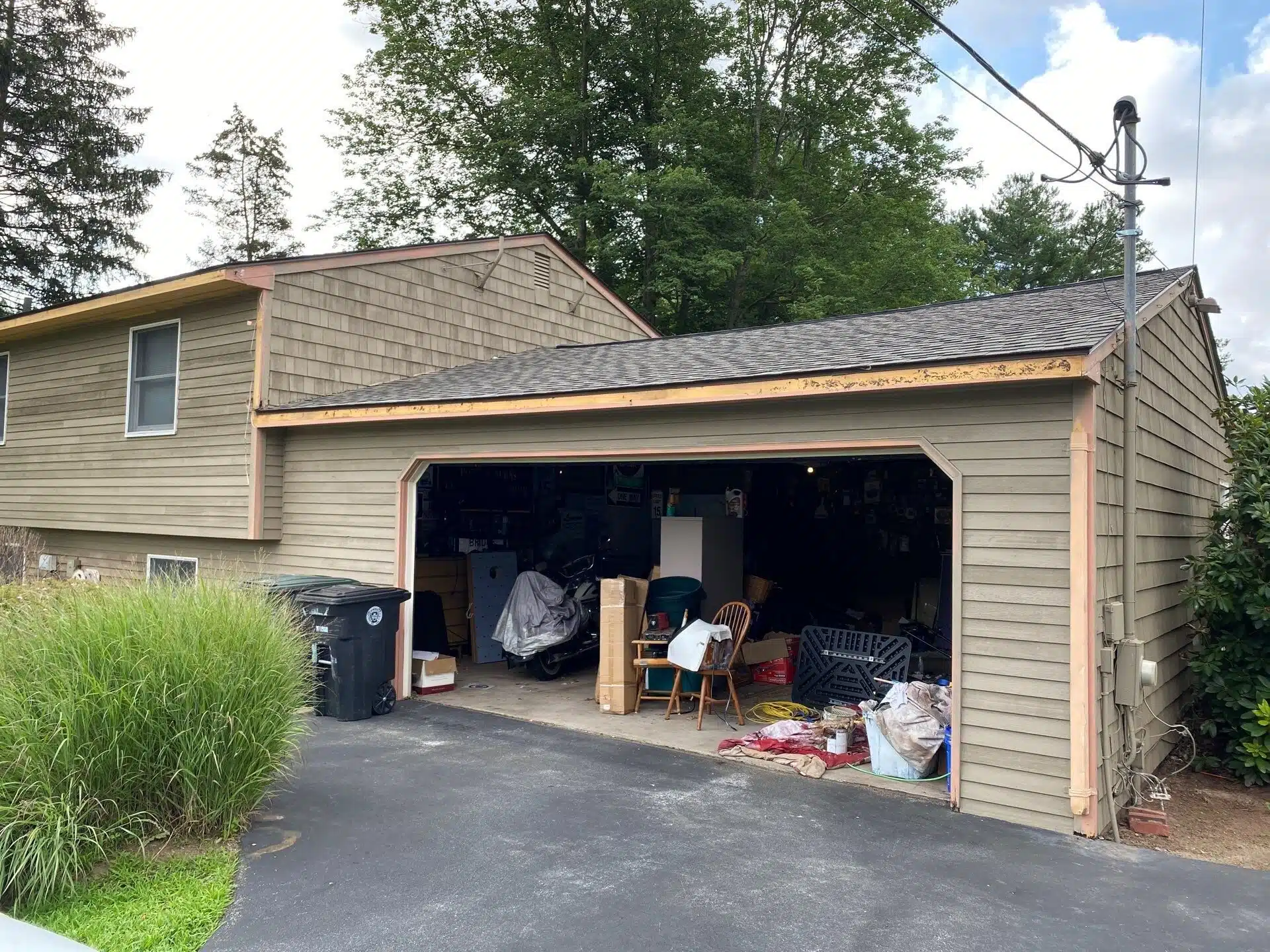

Like most Pinnacle projects, the work was completed efficiently — minimizing disruption for the property owner.
Pinnacle makes every project affordable with monthly financing options, including 0% interest for 18 months.
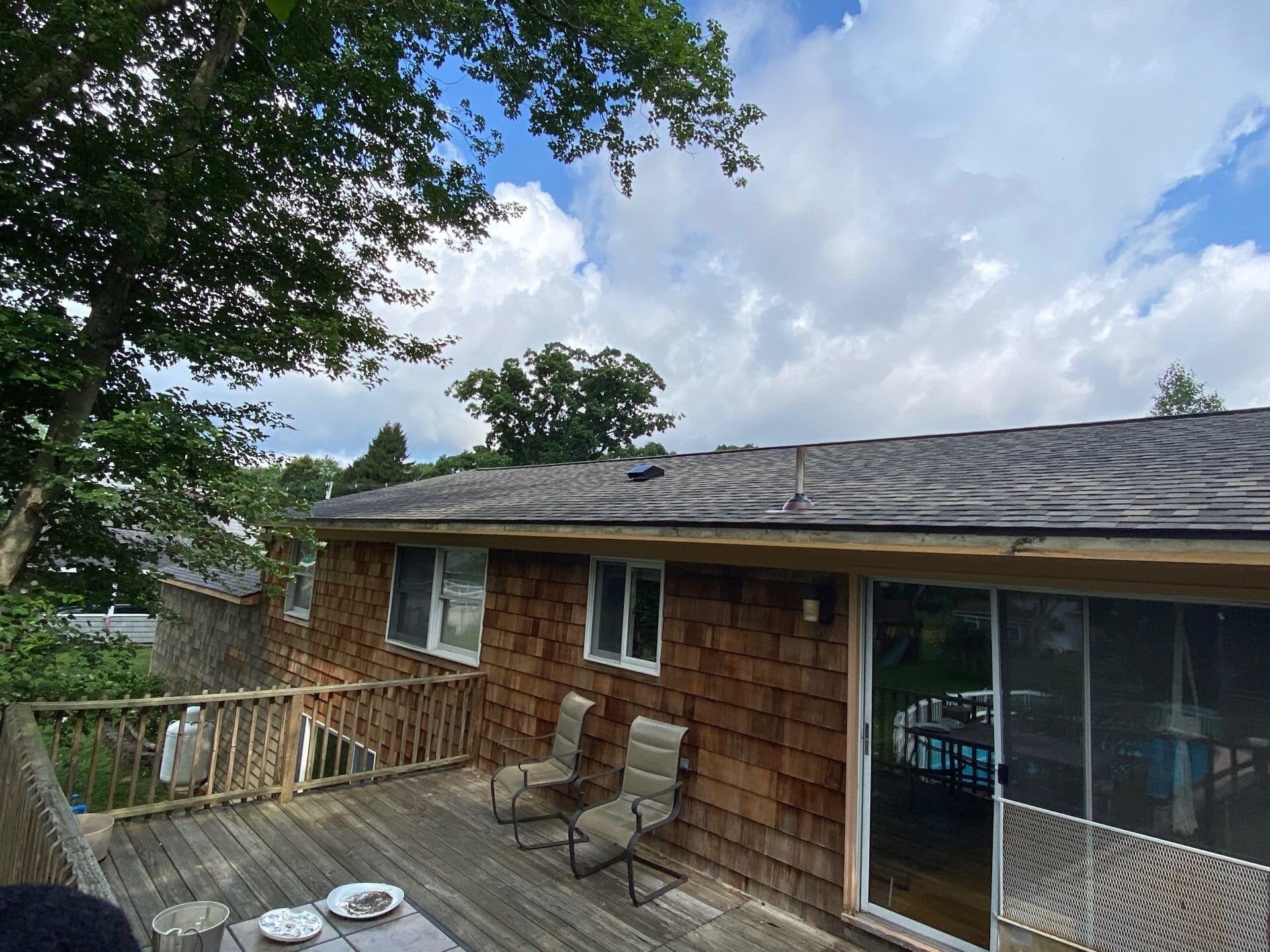
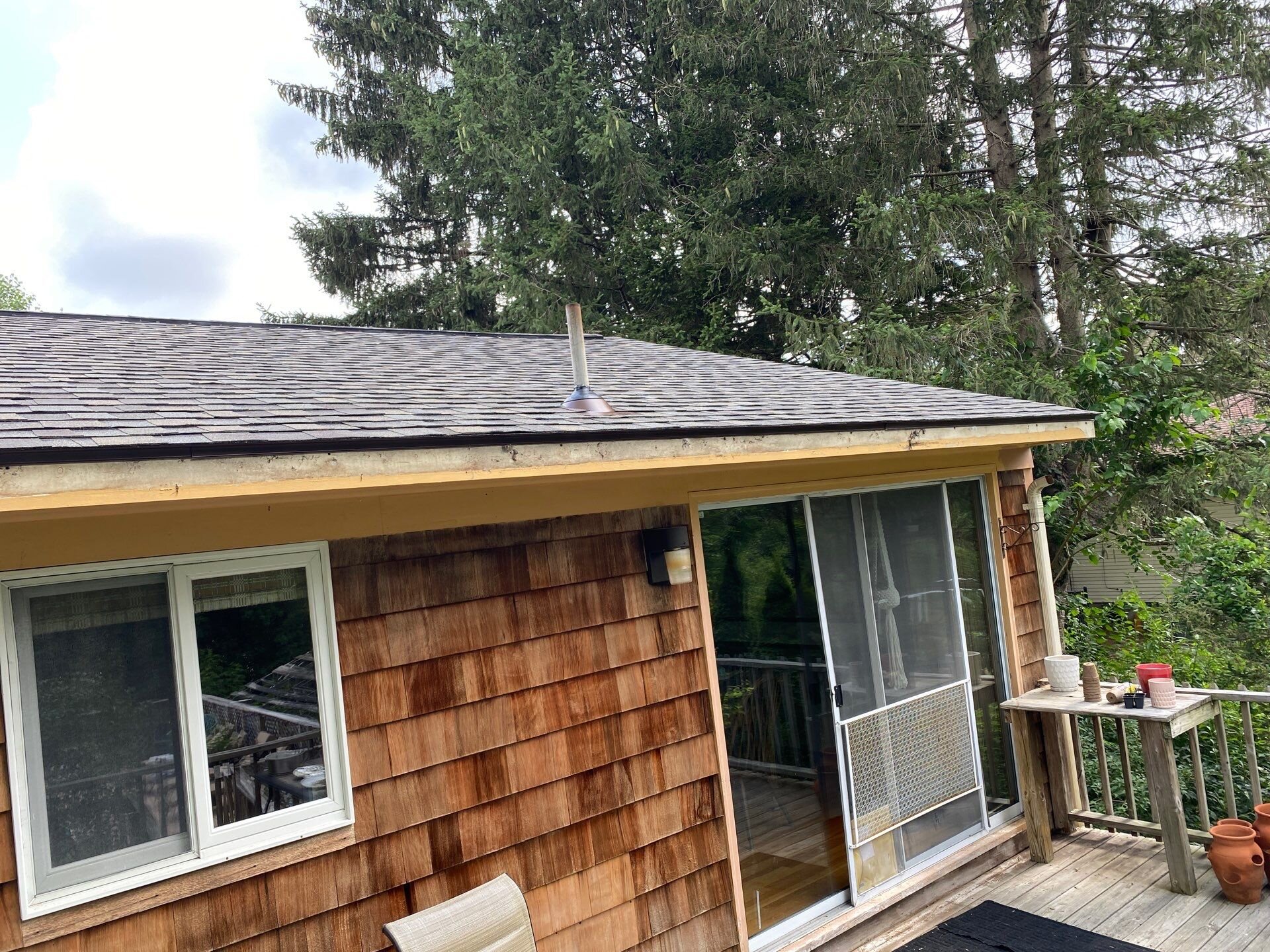
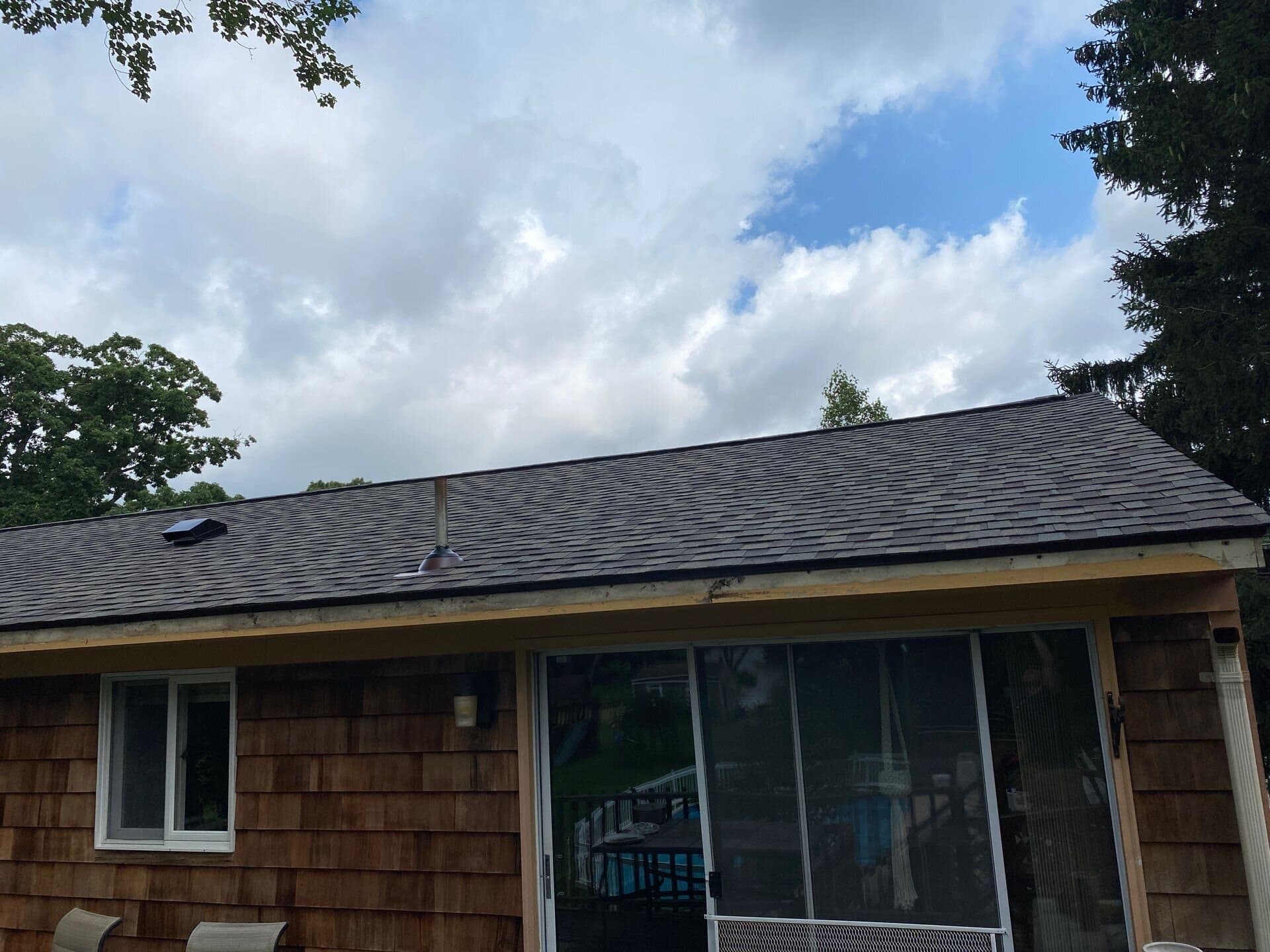
Not all attic ventilation is created equal, and this Coventry re-roof is a clear illustration of the difference. This cedar-shake-sided ranch got a crisp new dark asphalt-shingle roof with fresh fascia, and along its peak runs the choice we make on nearly every job: a single continuous ridge vent instead of a row of box vents or a spinning turbine. It is a quieter, more even, and more durable way to ventilate an attic — and it also happens to help the new shingles reach the lifespan they are rated for.
Scope of Work
This project was a full pitched asphalt-shingle re-roof, with a balanced ventilation system designed in from the outset. After tear-off and deck prep, we confirmed clear soffit intake, cut a continuous exhaust slot along the ridge, installed a baffled continuous ridge vent, and finished it under matching ridge cap shingles. Rather than dotting the roof with box vents or mounting a turbine, we used one clean, low-profile ridge vent sized to work with the intake below it — the balanced method laid out on our Attic Ventilation Solutions page. The payoff is a roof that ventilates the whole attic uniformly and keeps a smooth, uninterrupted roofline.
What We Installed (And Why)
We chose a continuous ridge vent because of how it compares to the alternatives. Box vents ventilate only the area right around each opening, leaving stretches of attic between them poorly served, and they punctuate the roof with several raised humps. Turbines rely on wind to spin and have moving parts that can seize, rattle, or wear out. A continuous ridge vent has none of those drawbacks: it runs the full length of the peak so the entire attic exhausts evenly, it has no moving parts to fail, it sits low under the ridge cap so it all but disappears, and its external baffle helps it shrug off wind-driven rain and snow.
Just as important, we matched that ridge exhaust to intake at the eaves and soffits so the two work in balance. Air is pulled in low, rises through the attic gathering heat and moisture, and leaves at the ridge in one continuous current. That steady airflow protects the roof from both directions — flushing superheated air in summer so the shingles are not cooked from below, and carrying moisture out in winter so the deck stays dry and cold. A system that actually breathes is what helps a new roof last.
Project Photo Gallery
Good To Know: Does attic ventilation affect how long my shingles last?
Very much so. Shingles are rated to last for decades, but that assumes the attic beneath them is properly ventilated. Without good airflow, trapped summer heat bakes the shingles from underneath and can age them prematurely, while trapped winter moisture rots the deck they are nailed to. That is why most shingle manufacturers require adequate, balanced ventilation to keep their warranties valid — an under-ventilated roof can actually void the coverage you paid for. Installing a matched intake-and-exhaust system is one of the most effective ways to help a roof reach, and protect, its full rated life.
Why Ridge Vent Ventilation Works
Ridge vent ventilation works by turning the natural rise of warm air into a continuous, self-powered current. Fresh air enters through the soffit intake at the eaves, warms and rises through the attic, and exits through the continuous ridge vent at the very top — no fans, no electricity, no moving parts. Because the vent spans the whole ridge instead of a few scattered points, every part of the attic is ventilated evenly, with no stale corners left behind. That uniform exchange flushes heat in summer and moisture in winter, keeping the roof deck drier and more stable in every season. It is a simple, durable design, and its reliability is exactly why we favor it over box vents and turbines.
Why Pinnacle
Since 2012, Pinnacle Roofing & Skylights has installed complete roof systems throughout Rhode Island, and balanced attic ventilation is standard on every one. We are fully licensed in Rhode Island (Residential Lic #39446, Commercial Lic #261), carry a BBB A+ rating, and hold a 5.0-star average from 100+ five-star Google reviews. Because manufacturers require proper ventilation to keep their shingle warranties valid, our approach protects both the roof and your coverage. When we build a roof, the ventilation behind it is engineered with the same care as the shingles on top.
Coventry, RI
Coventry is one of Rhode Island’s largest towns by area, spreading from busy village centers in the east to woods, farms, and lakes farther west. Its mix of ranches, capes, and rural homes see the full range of New England weather, from humid summers to hard freezes. Pinnacle provides complete roofing service in Coventry, and every roof we install includes the balanced ventilation that helps it last through all of it.
Wondering if your attic ventilation is doing its job in Coventry? Use our instant estimate tool, book a free appointment, or call us today.
Planning a new roof? Proper attic ventilation is built into every Pinnacle roof system.
401-267-ROOF (7663)