

Like most Pinnacle projects, the work was completed efficiently — minimizing disruption for the property owner.
Pinnacle makes every project affordable with monthly financing options, including 0% interest for 18 months.
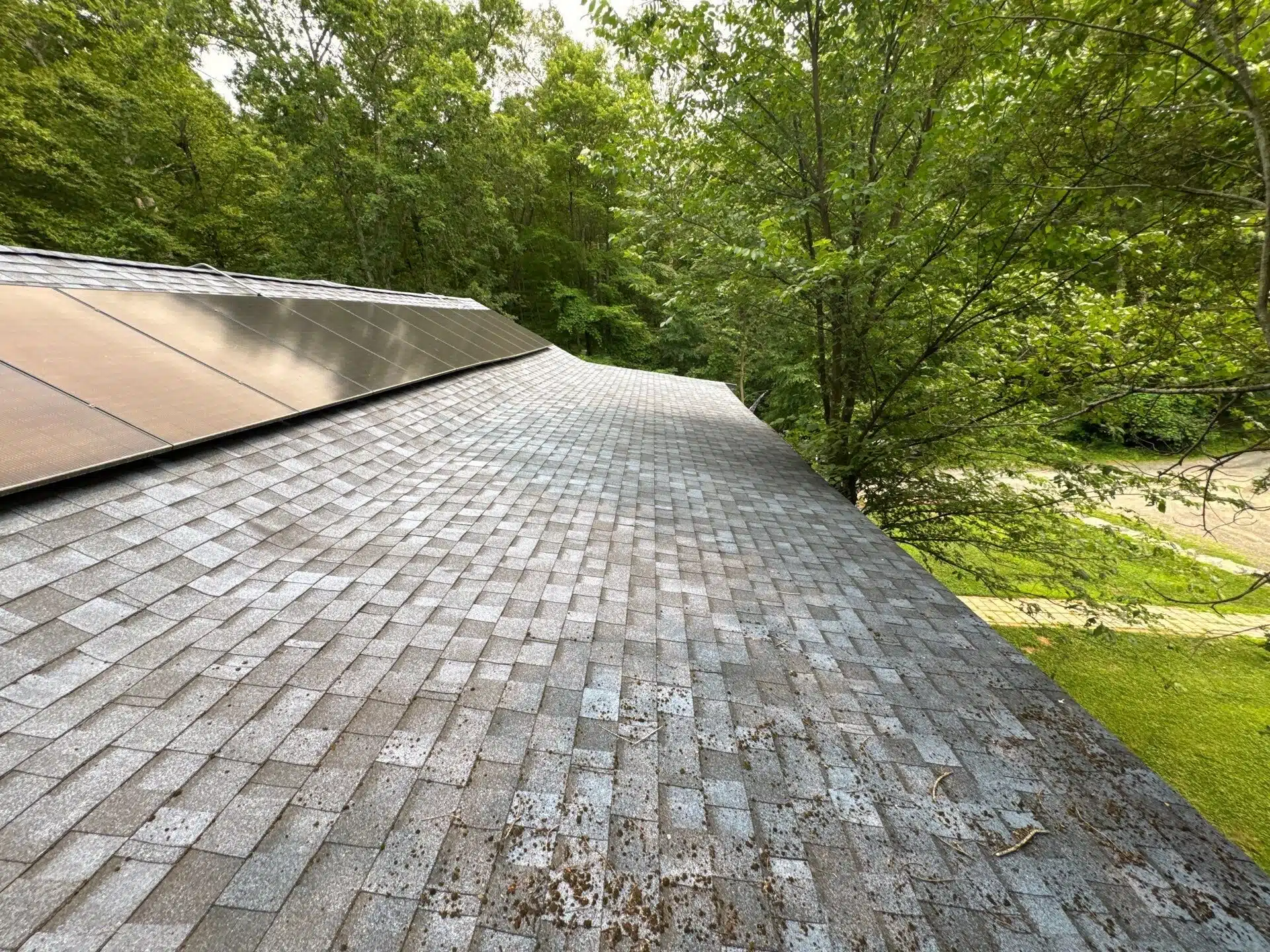
Tucked into the rural hills of Foster, this home earned a full asphalt-shingle re-roof — and the ventilation we built into it is what will help it stand up to Rhode Island winters. In the colder, higher inland reaches of the state, ice dams are a real threat: heat leaking into an under-ventilated attic melts rooftop snow, which then refreezes at the cold eaves and backs water up under the shingles. A balanced ridge-and-soffit system is one of the best defenses against exactly that.
Scope of Work
Along with a complete tear-off and new shingle installation, we made sure the roof could vent itself properly through every season. We cleared and confirmed the soffit intake, cut a continuous vent slot the length of the ridge, and set an externally baffled continuous ridge vent beneath fresh cap shingles. On a winter-exposed inland roof, the goal is to keep the deck cold and evenly ventilated so snow melts uniformly rather than at random hot spots. Our Attic Ventilation Solutions page walks through how we balance intake and exhaust on each roof.
What We Installed (And Why)
The exhaust is a continuous ridge vent running the entire length of the peak. Spanning the whole ridge means the attic ventilates uniformly, so the roof deck stays a consistent, cold temperature from eave to ridge instead of developing warm zones that melt snow unevenly. The vent is externally baffled, which lets it draw air out while resisting the wind-driven snow and rain that come with an exposed rural site — and it has no moving parts to freeze up or fail.
The intake side does the other half of the work. Open soffit vents at the eaves let cold outside air sweep up under the deck and exit at the ridge, flushing out the warm, moist air that rises from the living space below. Keeping that deck cold is what discourages the melt-and-refreeze cycle that forms ice dams. We match the intake area to the exhaust so the system actually breathes; an oversized ridge vent starved of intake simply cannot move the air a cold-climate roof needs it to move.
Project Photo Gallery


Good To Know: Can Attic Ventilation Really Reduce Ice Dams?
It is one of the most effective tools available, though it works alongside good attic insulation and air sealing. Ice dams form when heat escaping into the attic warms the roof deck, melts the snow above, and lets the runoff refreeze at the cold overhang. A balanced ventilation system keeps the deck closer to the outside temperature, so snow melts slowly and evenly instead of pooling into ice at the eaves. It will not change the weather, but it removes one of the main causes of dams that start on the roof itself.
Why Ridge Vent Ventilation Works
A continuous ridge vent works because it exhausts air at the single highest, warmest point of the attic while intake feeds it from the coldest, lowest point at the eaves. That layout creates a natural convection loop the full width of the roof — cold air in, warm and moist air out — with no fan, no filter, and nothing to service. In winter it carries out attic moisture and keeps the deck cold to resist ice dams; in summer it dumps trapped heat. One quiet system, working year round.
Why Pinnacle
Pinnacle Roofing & Skylights has been serving Rhode Island since 2012, and proper attic ventilation is built into every roof we install — not an add-on, but standard practice, and something most shingle manufacturers require to honor their warranty. We are fully RI licensed (Residential Lic #39446, Commercial Lic #261), hold a BBB A+ rating, and have earned more than 100 five-star Google reviews. On a rural, winter-exposed home, that attention to how a roof breathes is what keeps it protected for the long haul.
Foster, RI
Foster is one of Rhode Island’s most rural towns — wooded, hilly, and noticeably colder and snowier than the coast. Homes out here range from log builds to classic farmhouses, and they take winter head on, which makes ventilation and ice-dam resistance more than an afterthought. We are glad to help protect these properties; see more about our work in Foster and western Rhode Island.
Wondering if your attic ventilation is doing its job in Foster? Use our instant estimate tool, book a free appointment, or call us today.
Planning a new roof? Proper attic ventilation is built into every Pinnacle roof system.
401-267-ROOF (7663)