

Like most Pinnacle projects, the work was completed efficiently — minimizing disruption for the property owner.
Pinnacle makes every project affordable with monthly financing options, including 0% interest for 18 months.
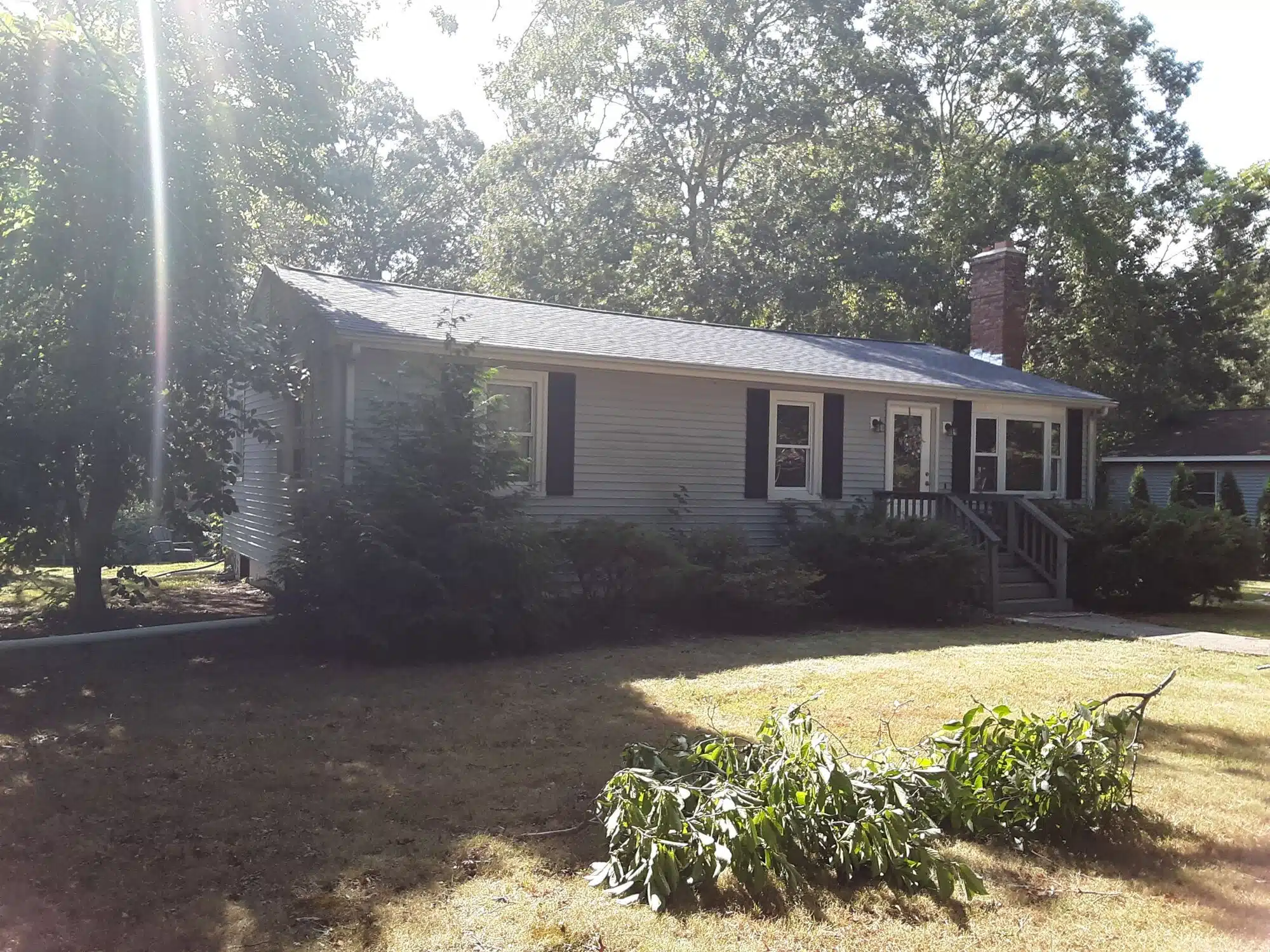
In the wooded hills of Hopkinton, winter is the season that tests a roof — and much of what determines how well a roof handles snow and cold happens out of sight, up in the attic. This ranch received a full architectural-shingle replacement, and the part that will matter most in January runs along the peak: a balanced attic ventilation system designed to keep the roof deck cold, carry moisture out, and help the home resist ice dams. The finished shingles look great, but the ventilation is what keeps them working through a Rhode Island winter.
Scope of Work
Along with the full tear-off and new asphalt-shingle roof, we installed a complete balanced ventilation system as part of the job. Our crew confirmed the intake at the eaves and soffit, cut a continuous vent slot the length of the ridge, set a baffled ridge vent, and finished it under matching ridge cap shingles. The goal in a climate like Hopkinton’s is a roof deck that stays cold and dry through winter, and that only happens when intake and exhaust are matched so air moves steadily through the attic. Our Attic Ventilation Solutions page explains how the pieces work together.
What We Installed (And Why)
The exhaust for this attic is a continuous ridge vent that runs the entire length of the peak. In winter its most important job is carrying moisture-laden air out of the attic — the warm, damp air that rises from a heated home and would otherwise condense on cold framing and decking. Left in place, that moisture leads to mildew, rot, and ruined insulation. The ridge vent sits low beneath the cap shingles, has no motors or moving parts to freeze up, and its external baffle turns away blowing snow so the winter weather stays outside where it belongs.
Feeding that exhaust is intake at the eaves, confirmed and balanced to match. As cold outside air is drawn in low and pushed out at the ridge, it keeps the underside of the roof deck close to the outdoor temperature. That cold deck is a key defense against ice dams: when the roof surface stays uniformly cold, snow melts and refreezes far less at the eaves, so water is less likely to back up under the shingles. A well-vented attic is one of the simplest, most effective ways to protect a roof through a New England winter.
Project Photo Gallery


Good To Know: How does attic ventilation help prevent ice dams?
Ice dams form when heat escaping into the attic warms the roof surface, melting snow that then refreezes into a ridge of ice at the cold eaves. That ice traps meltwater, which can work its way under the shingles and into the home. A balanced ventilation system fights this by keeping the whole roof deck cold and even in temperature, so there’s less melting and refreezing to begin with. It won’t replace good attic insulation and air sealing, but paired with them, steady ridge-and-soffit airflow is one of the best tools for keeping ice dams from forming.
Why Ridge Vent Ventilation Works
Ridge vent ventilation works with physics rather than against it. Warm, moist air inside the attic rises and escapes at the highest point — the continuous ridge slot — while cool, dry air is pulled in at the eaves to take its place. Because the vent runs the full ridge instead of covering just a few spots, the entire attic is flushed evenly, with no stale pockets where moisture can collect. There’s nothing to power and nothing to maintain; as long as intake and exhaust stay balanced, the system moves air on its own around the clock, all winter.
Why Pinnacle
Pinnacle Roofing & Skylights has built proper ventilation into every roof we install since 2012, because in this climate a roof that can’t breathe invites winter moisture problems no matter how good the shingles look. We’re fully licensed in Rhode Island (Residential Lic #39446, Commercial Lic #261), carry a BBB A+ rating, and have earned more than 100 five-star Google reviews from homeowners across the state. Balanced attic ventilation is standard on every roof we build — and it’s the standard most shingle manufacturers require to keep their warranties valid.
Hopkinton, RI
Tucked into Rhode Island’s rural southwestern corner, Hopkinton is a town of wooded lots, village centers like Ashaway and Hope Valley, and homes that see the full brunt of a New England winter. Snow load and cold make dependable roof ventilation especially valuable here. We’re glad to help local homeowners protect their homes with roofs built to breathe — learn more on our Hopkinton roofing services page.
Wondering if your attic ventilation is doing its job in Hopkinton? Use our instant estimate tool, book a free appointment, or call us today.
Planning a new roof? Proper attic ventilation is built into every Pinnacle roof system.
401-267-ROOF (7663)