
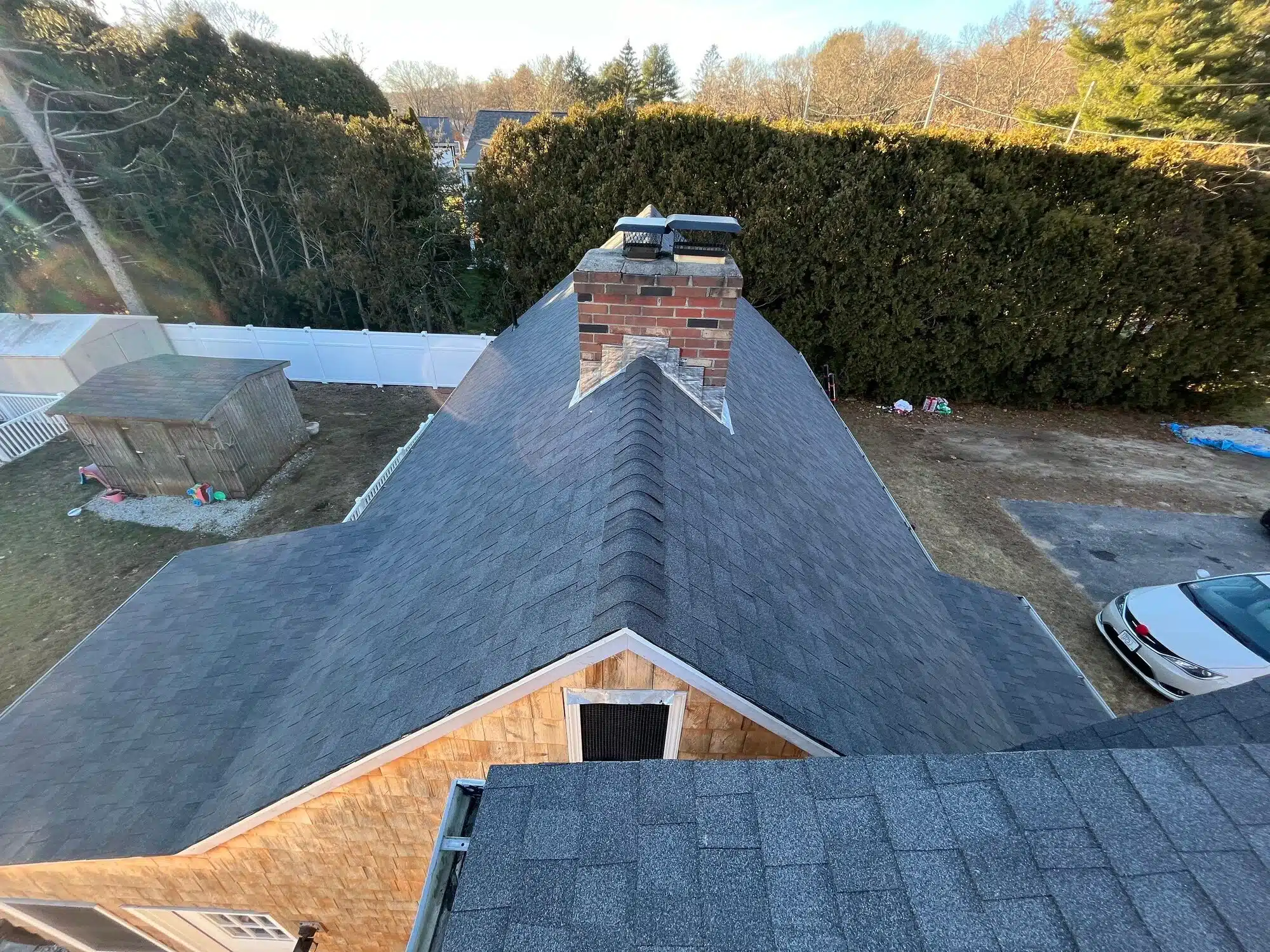

Like most Pinnacle projects, the work was completed efficiently — minimizing disruption for the property owner.
Pinnacle makes every project affordable with monthly financing options, including 0% interest for 18 months.
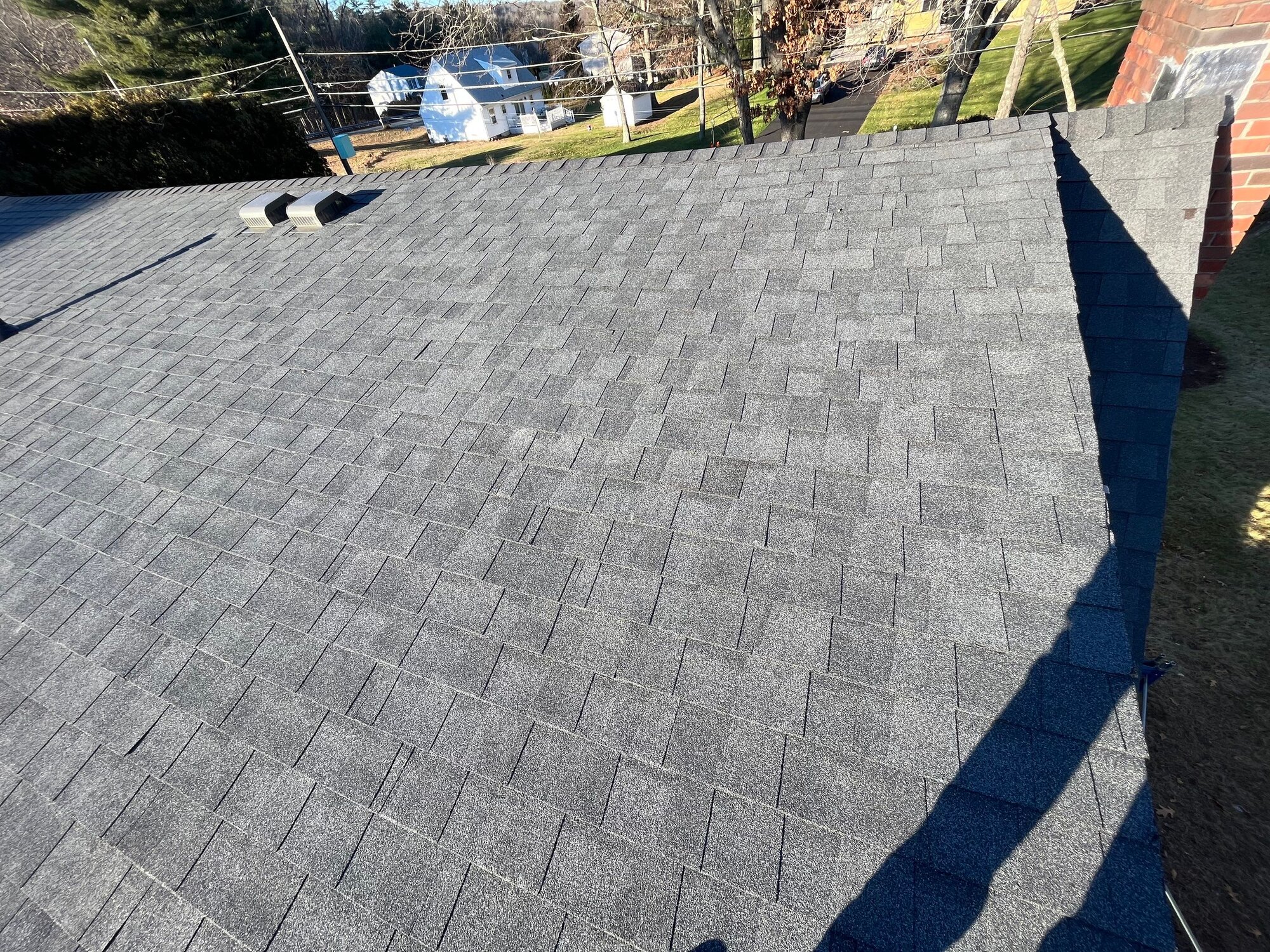
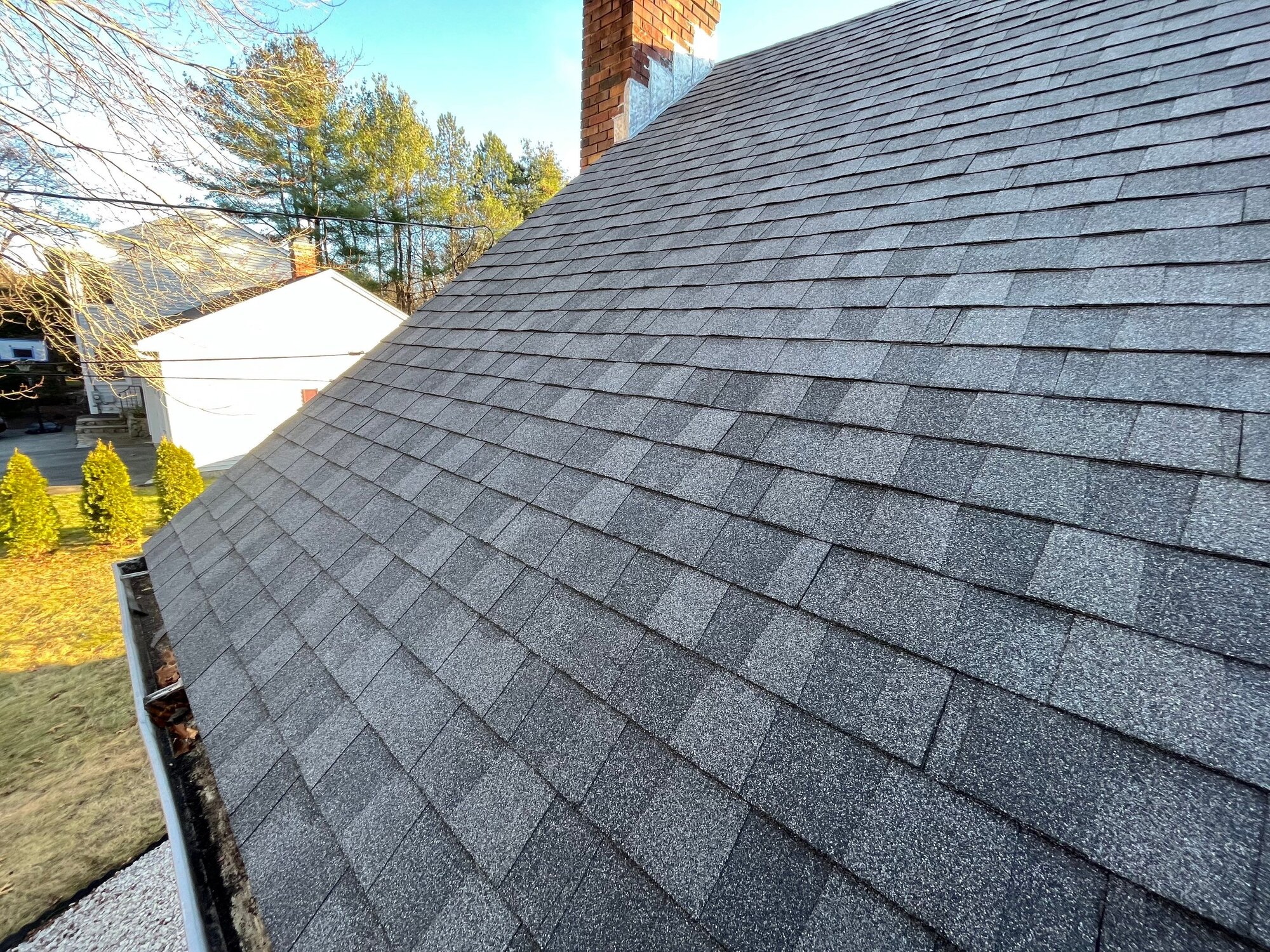
This tidy Cape in Smithfield received a full architectural-shingle roof replacement, and the ventilation we built underneath is aimed squarely at a Rhode Island winter headache: ice dams. Those ridges of ice that form along the eaves and back water up under the shingles start with a warm, poorly vented attic. The balanced airflow system we installed keeps the roof deck cold — the single best defense against them.
Scope of Work
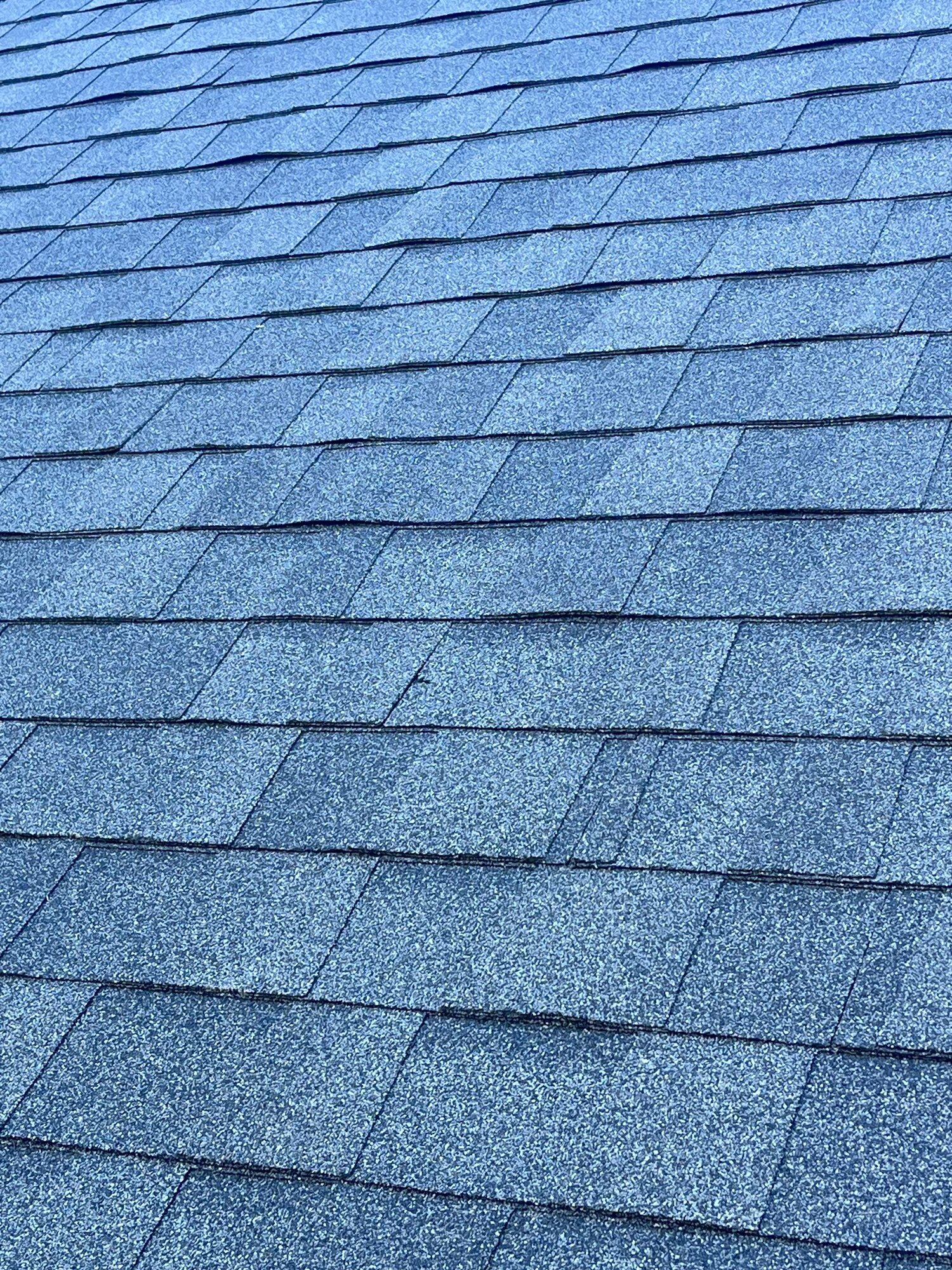
As part of this asphalt-shingle re-roof, we set up the attic to stay cold and evenly vented through winter. We confirmed and cleared the soffit intake at the eaves so cold outside air enters low, then cut a continuous ridge slot and installed an externally baffled continuous ridge vent to exhaust at the peak, capped beneath fresh ridge shingles. Balancing that intake and exhaust keeps the whole deck at a uniform temperature, which is central to how we approach ice-dam resistance in our Attic Ventilation Solutions on every roof.
What We Installed (And Why)
Ice dams form when heat escaping into the attic warms the roof deck, melts the snow on the upper roof, and sends the meltwater running down to the cold eave — where it refreezes into a ridge of ice that traps more water behind it and forces it under the shingles. The fix is to keep the entire deck cold and uniform. The continuous ridge vent we installed exhausts warm attic air out the peak along the whole ridge, so heat is not left to pool against the deck and create the warm spots that start the melt-refreeze cycle.
The soffit intake is the other half of that defense. Cold air drawn in low at the eaves washes up the underside of the deck toward the ridge, keeping the roof surface close to the outdoor temperature so snow melts evenly and drains instead of damming. Because the ridge vent is externally baffled, it keeps drifting snow and wind-driven rain out while it works. Together, balanced intake and exhaust give you a cold, dry deck all winter — the most reliable way to reduce the risk of ice dams on a pitched roof.
Project Photo Gallery
Good To Know: Will attic ventilation really stop ice dams?
Ventilation is the single biggest factor you can control. Ice dams form when a warm attic heats the roof deck unevenly, so keeping that deck cold and uniform with balanced soffit intake and ridge exhaust dramatically reduces the melt-refreeze cycle that creates them. Good insulation and air sealing work hand in hand with it, but a well-vented attic is the foundation — which is why we build a balanced system into every roof we replace. In older homes we also look for the small things that undermine it, like blocked soffits or insulation pushed tight against the roof deck, so intake air has a clear path from eave to ridge.
Why Ridge Vent Ventilation Works
In winter, ridge ventilation works by keeping the roof deck cold from end to end. Cold air enters low at the soffits and flows up the underside of the deck, while any warm air that reaches the attic is exhausted continuously through the vent at the peak. Because that airflow covers the whole ridge with no dead spots and no moving parts, the deck stays at a uniform temperature — snow melts evenly and drains rather than refreezing into an ice dam at the eaves.
Why Pinnacle
Pinnacle Roofing & Skylights is fully licensed in Rhode Island (Residential Lic #39446, Commercial Lic #261), carries a BBB A+ rating, and has earned 100+ five-star Google reviews from homeowners across the state. Since 2012 we have engineered balanced attic ventilation into every roof we install, because a cold, well-vented deck resists ice dams and because manufacturers require proper ventilation to honor their warranties. We build the defense in from the start, so your roof is ready before the first snow flies.
Smithfield, RI
Smithfield’s mix of Capes, colonials, and ranches sits in the northern part of the state, where winters bring real snow and the freeze-thaw cycles that spawn ice dams. That climate makes a cold, well-vented roof deck genuinely worth the effort here. We are glad to help Smithfield homeowners head off winter roof trouble before it starts.
Wondering if your attic ventilation is doing its job in Smithfield? Use our instant estimate tool, book a free appointment, or call us today.
Planning a new roof? Proper attic ventilation is built into every Pinnacle roof system.
401-267-ROOF (7663)