
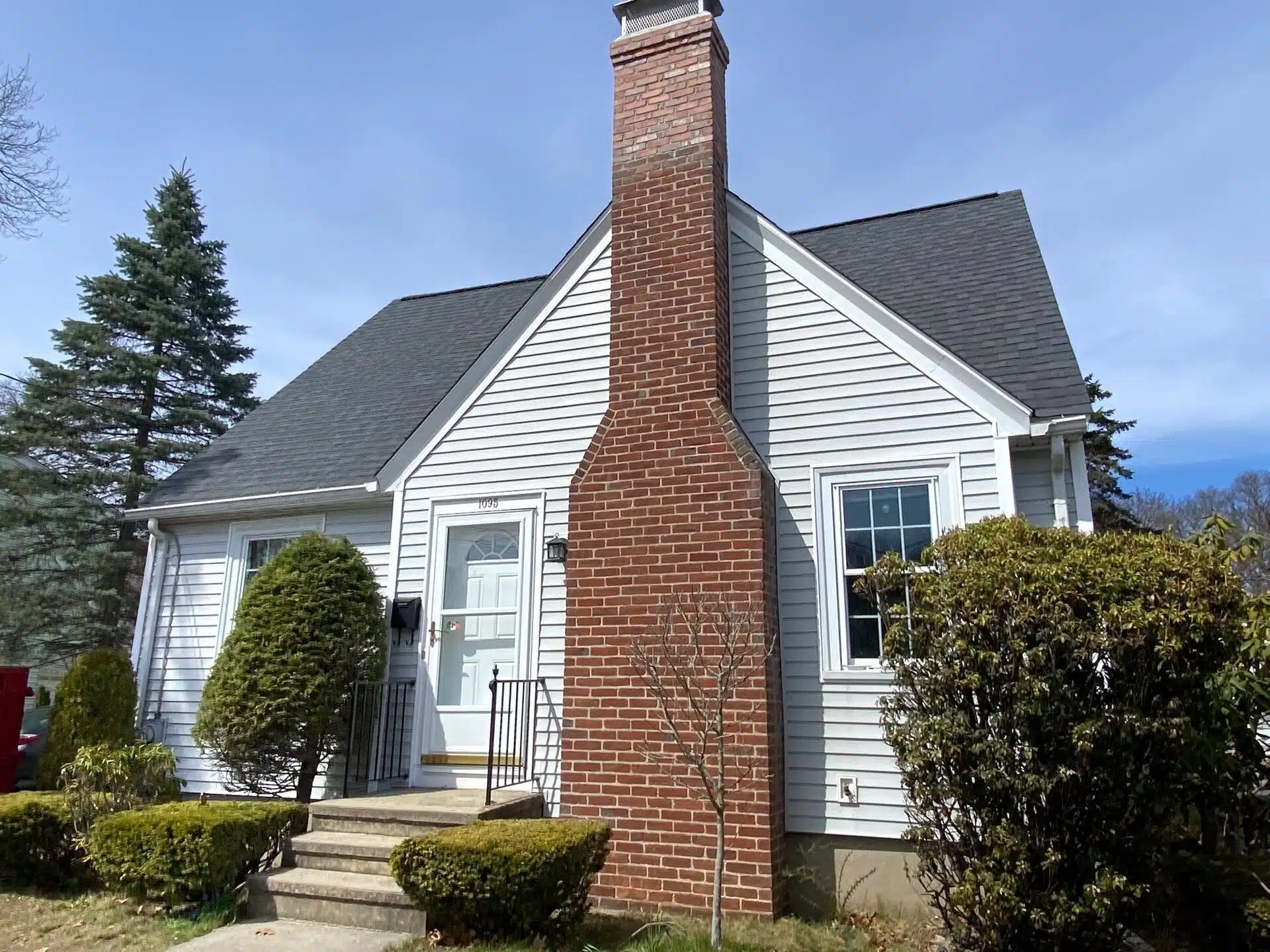

Like most Pinnacle projects, the work was completed efficiently — minimizing disruption for the property owner.
This roof was replaced through an insurance claim; Pinnacle documented the damage and worked directly with the adjuster — see how our storm/insurance process works.
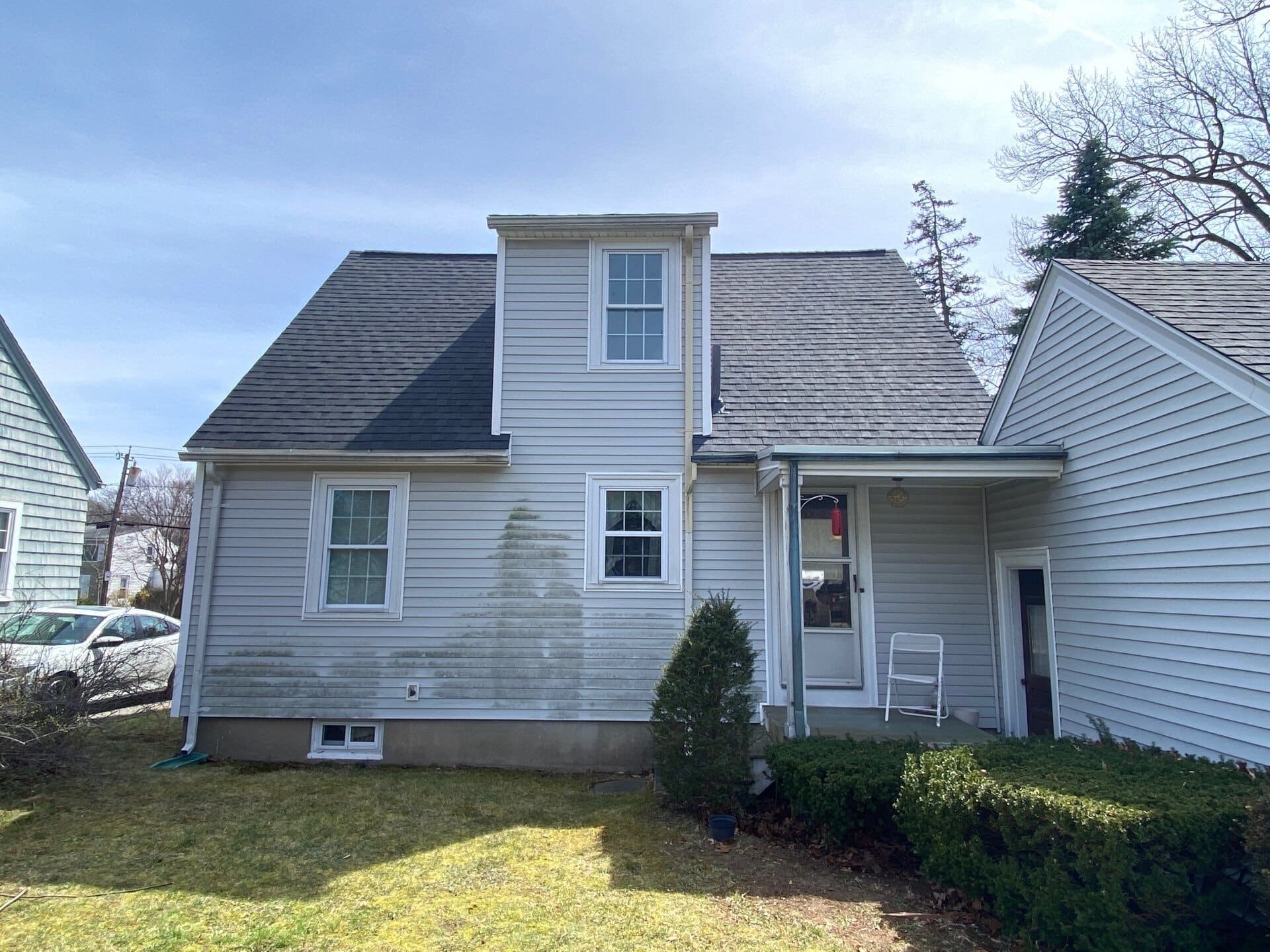
This side-gable Cape Cod in Warwick wears its new Pewterwood CertainTeed Landmark roof well — a weathered gray that plays off the white clapboard siding, the front gable dormer, and the prominent brick chimney at the peak. Replaced through an insurance claim after storm damage, the roof was rebuilt with a balanced attic ventilation system aimed squarely at the problem Cape roofs know best: winter ice dams. On a low, wide Cape roofline like this, a warm attic over cold eaves is exactly the recipe for ice buildup, which is why airflow matters as much as watertight shingles. Homeowners throughout Warwick face the same freeze-and-thaw cycles every January.
Scope of Work
This Warwick roof was replaced through the homeowner’s insurance claim after storm damage, with a full tear-off, new underlayment, and the Pewterwood CertainTeed Landmark shingles that now run clean across the side-gable roofline. Along the peak we installed a continuous ridge vent, and we confirmed unobstructed intake at the eaves and soffits to complete the balanced airflow explained on our Attic Ventilation Solutions page. New aluminum gutters were fitted along the eaves to carry water away, and the flashing around the brick chimney was rebuilt watertight. On a Cape this low and wide, that combination of ventilation and drainage is the front line against winter ice dams.
What We Installed (And Why)
The exhaust for this attic is a continuous ridge vent running the full length of the peak, set low beneath the Pewterwood ridge cap so the finished ridge line stays clean and straight. A single continuous vent moves air out of the whole attic evenly, unlike scattered box vents that leave cold and warm pockets behind. It has no moving parts, and its internal baffle deflects the wind-driven rain and snow that Rhode Island winters throw at a coastal city like Warwick.
Just as important is the intake low at the eaves, which lets cold outside air wash up the underside of the roof deck. That constant flush of cold air keeps the deck temperature even from eave to ridge — and an even, cold deck is precisely what prevents ice dams. Ice dams form when attic heat melts snow high on the roof, the meltwater runs to the cold overhang, and it refreezes into a ridge of ice that backs water up under the shingles. By keeping the whole deck cold beneath the Pewterwood Landmark shingles, this balanced system removes the warm spot that starts the cycle.
Project Photo Gallery


Good To Know: How does attic ventilation stop ice dams?
Ice dams start with a warm attic. When heat leaks up and warms the roof deck, snow melts near the ridge, trickles down to the frozen eaves, and refreezes — building a dam of ice that forces water back up under the shingles and into the house. Good ventilation breaks that chain by keeping the roof deck uniformly cold. Cold air enters at the eaves, travels up the underside of the deck, and exits at the ridge vent, so snow melts evenly instead of pooling and refreezing at the overhang. For a wide Cape roofline in Warwick, that balanced airflow is one of the most effective defenses against winter leaks.
Why Ridge Vent Ventilation Works
A balanced roof breathes from bottom to top: intake at the eaves, exhaust at the ridge. Because the ridge vent runs the entire length of the peak instead of relying on a few isolated box vents, air moves through every part of the attic with no stagnant pockets left behind. In winter that steady current carries warm, moist indoor air out before it can condense on the cold deck, and it keeps the deck itself uniformly cold to resist ice dams. The vent sits low under the Pewterwood ridge cap for a clean look, with baffling that keeps rain and blowing snow out. No fans, no motors — just physics working around the clock.
Why Pinnacle
Pinnacle Roofing & Skylights has served Rhode Island since 2012, and proper attic ventilation is built into every roof we install as standard, never as an add-on. We are fully licensed in Rhode Island (Residential #39446, Commercial #261) and a CertainTeed ShingleMaster Premier contractor, qualified to install and back the Pewterwood Landmark shingles on this Cape. We also handle storm and insurance work start to finish — documenting the damage and working directly with the adjuster. With 100+ five-star Google reviews and a BBB A+ rating, Warwick homeowners trust us to get it right.
Warwick, RI
Warwick is one of Rhode Island’s largest cities, wrapping around Greenwich Bay with everything from bungalows to classic Capes like this one. Its long coastline and full four-season weather — heavy snow loads and coastal storms included — put real demands on a roof, which is why balanced ventilation belongs on every home here. Explore our full range of Warwick roofing services and see how we protect homes through every season.
Wondering if your attic ventilation is doing its job in Warwick? Use our instant estimate tool, book a free appointment, or call us today.
Planning a new roof? Proper attic ventilation is built into every Pinnacle roof system.
401-267-ROOF (7663)