
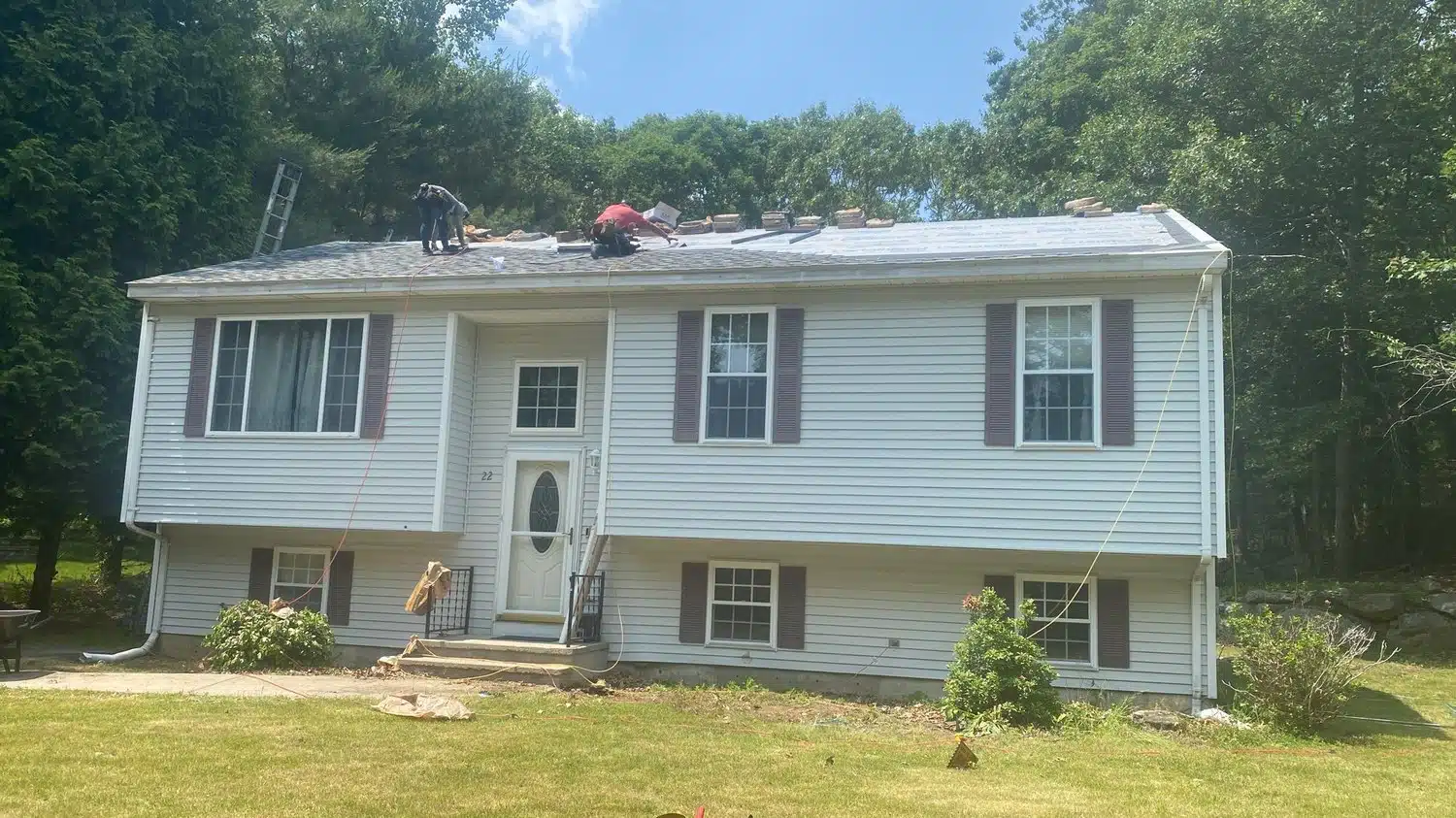

On a home where the roof is well above the ceiling — an attic in between — a skylight is only half the story. The other half is the shaft that carries the daylight down from the roof to the room, and how it is built decides how much light actually arrives. This Coventry home got solar-powered VELUX skylights on a new CertainTeed Landmark PRO roof in Colonial Slate, with light shafts built to spread the daylight, not choke it. Pinnacle roofs go on fast — often as a one-day roof replacement — and flexible financing keeps a project like this within reach, with plans as low as 0% interest for 18 months.
A Coventry home received solar-powered VELUX skylights on a new CertainTeed Landmark PRO roof in Colonial Slate, with light shafts built and flared to carry daylight from the roof down into the rooms below. This project is in Coventry, Rhode Island, finished in CertainTeed Landmark PRO — Colonial Slate.
Scope of Work
The project set solar-powered skylights into a new roof and built the shafts that deliver their light. The slopes were laid up with ice-and-water shield, synthetic underlayment, and new edge metal, then finished in Landmark PRO shingles in Colonial Slate. The VELUX units — solar-powered venting models — were set and flashed with engineered metal kits and ice-and-water membrane up each curb. Between the roof opening and the ceiling below, a light shaft was framed and finished to carry the daylight through the attic space; where it could, the shaft was flared outward toward the room so it spreads the light rather than funneling it. Finished bright and splayed, the shaft is what turns a hole in the roof into a well of daylight in the room.
What We Installed (And Why)
When a roof sits directly against a sloped ceiling, a skylight opens almost straight into the room. But on many homes there is an attic between the roof and the ceiling, and there the skylight needs a shaft — a framed, finished tunnel that carries the daylight down through that space to the ceiling opening below. The shaft is the part nobody sees, and it quietly determines how much of the skylight’s light actually reaches the room. A shaft built straight and narrow works, but it funnels the light into a tight column. The better approach, wherever the framing allows, is to flare the shaft — to splay its walls outward as it comes down, wider at the ceiling than at the roof — so it spreads the daylight across the room like a reflector rather than dropping it in a single shaft. Finishing the inside of the shaft in a bright, light color amplifies the effect, bouncing light down and out into the space. Get the shaft right and a modest skylight lights a whole room; build it as a cramped, dark tunnel and even a large skylight underperforms. The skylights feeding these shafts are solar-powered VELUX venting units — they open to release hot air, run on a built-in solar panel so no wiring is needed, close automatically in the rain, and, because they are solar, generally qualify for the federal Residential Clean Energy tax credit. They sit in a new CertainTeed Landmark PRO roof in Colonial Slate — the heavier-weight architectural shingle rated to 130 mph with SureStart™ PLUS warranty eligibility — flashed with engineered metal so the openings stay dry. The visible parts get the attention, but on this Coventry home it is the shafts, built to spread the light, that make the skylights deliver.
Project Photo Gallery


Good To Know: What is a skylight light shaft and why does it matter?
A light shaft is the framed, finished tunnel that carries a skylight’s daylight from the roof opening down through an attic to the ceiling of the room below — and on any home where there is attic space between the roof and the ceiling, it is what determines how much of the skylight’s light actually arrives. If the roof sits right against a sloped ceiling, there is barely any shaft and the skylight opens almost directly into the room. But when an attic sits in between, the daylight has to travel through it, and the shape of that passage matters. A shaft built straight and narrow delivers the light in a tight column, lighting a small footprint directly below the skylight. A shaft that is flared — splayed wider at the ceiling than at the roof, wherever the framing allows — spreads the daylight outward across the room like a reflector, so a modest skylight lights a whole space rather than a single spot. Finishing the inside of the shaft in a bright color amplifies this further, bouncing the light down and out. The shaft is invisible once it is finished, which is exactly why it is easy to shortchange — but a cramped, dark shaft can make even a good skylight underperform, while a well-built, flared one makes a modest skylight feel generous. On this Coventry home, building the shafts to spread the light is what lets the solar VELUX skylights fully daylight the rooms below.
Why This Approach Works
A skylight’s daylight has to travel through a shaft to reach a room below an attic, and how that shaft is built decides how much light arrives. Flaring the shaft outward toward the room and finishing it bright spreads the daylight across the space, so even a modest skylight lights a whole room.
Why Pinnacle
Skylight work rewards a contractor who builds the light shaft to spread the daylight, not just the visible unit, so the skylight delivers its full light to the room. As a VELUX 5-Star Skylight Specialist and CertainTeed ShingleMaster™, Pinnacle qualifies our customers for CertainTeed’s full SureStart™ PLUS extended warranty — coverage most contractors cannot offer. We’ve served Rhode Island since 2012, hold a 5.0-star Google rating across 100+ reviews and an A+ BBB rating — see our full credentials.
Coventry, Rhode Island
Coventry is a large, mostly rural town stretching across western Rhode Island, with a housing stock of ranches, capes, and colonials that often have attic space between roof and ceiling — exactly where the light shaft does its quiet work. Solar VELUX skylights with well-built shafts, set into a premium Landmark PRO roof, suit how Coventry homes are built and the daylight their owners want. Explore our work across Coventry roofing services.
Need a roofing estimate in Coventry? Use our instant estimate tool, book a free appointment, or call us today.
Exploring payment options? Ask about financing — plans as low as 0% interest for 18 months.
401-267-ROOF (7663)
Frequently Asked Questions
Why does the same skylight light one room better than another?
Often it comes down to the light shaft. On a home with attic space between the roof and ceiling, the daylight travels through a shaft to reach the room, and a shaft that is flared outward and finished bright spreads the light across the space, while a straight, narrow, or dark shaft funnels it into a tight column. The visible skylight can be identical; the shaft makes the difference.
Do solar-powered VELUX skylights qualify for a tax credit?
Solar-powered VELUX skylights and their solar blinds are generally eligible for the federal Residential Clean Energy tax credit, because the venting mechanism and controls run on an integrated solar panel. Because tax situations differ, confirm the current credit with your tax preparer — but it is one reason the solar models are popular.
What is CertainTeed Landmark PRO in Colonial Slate?
Landmark PRO is the heavier-weight version of CertainTeed’s Landmark architectural shingle — a 130 mph wind rating, Max Def color depth, and eligibility for the strongest SureStart PLUS warranty. Colonial Slate is a refined gray blend with the look of natural slate, without slate’s weight or cost.
More Resources for Coventry
- Coventry Roofing Services
- VELUX Skylights
- CertainTeed Shingles
- Residential Roofing
- One-Day Roof Replacement
- Financing Available
- Instant Roof Estimate
- Showcase Gallery
Browse more of our Rhode Island project galleries:
Explore all Rhode Island Skylight Projects →Explore all VELUX Skylight & Sun Tunnel Projects →Explore all CertainTeed Shingle Projects →