


Like most Pinnacle roofing projects, the work was completed in a single day — minimizing disruption for the homeowner.
Pinnacle makes every roof affordable with monthly financing options to make your home project affordable with low monthly payments, including 0% interest for 18 months.
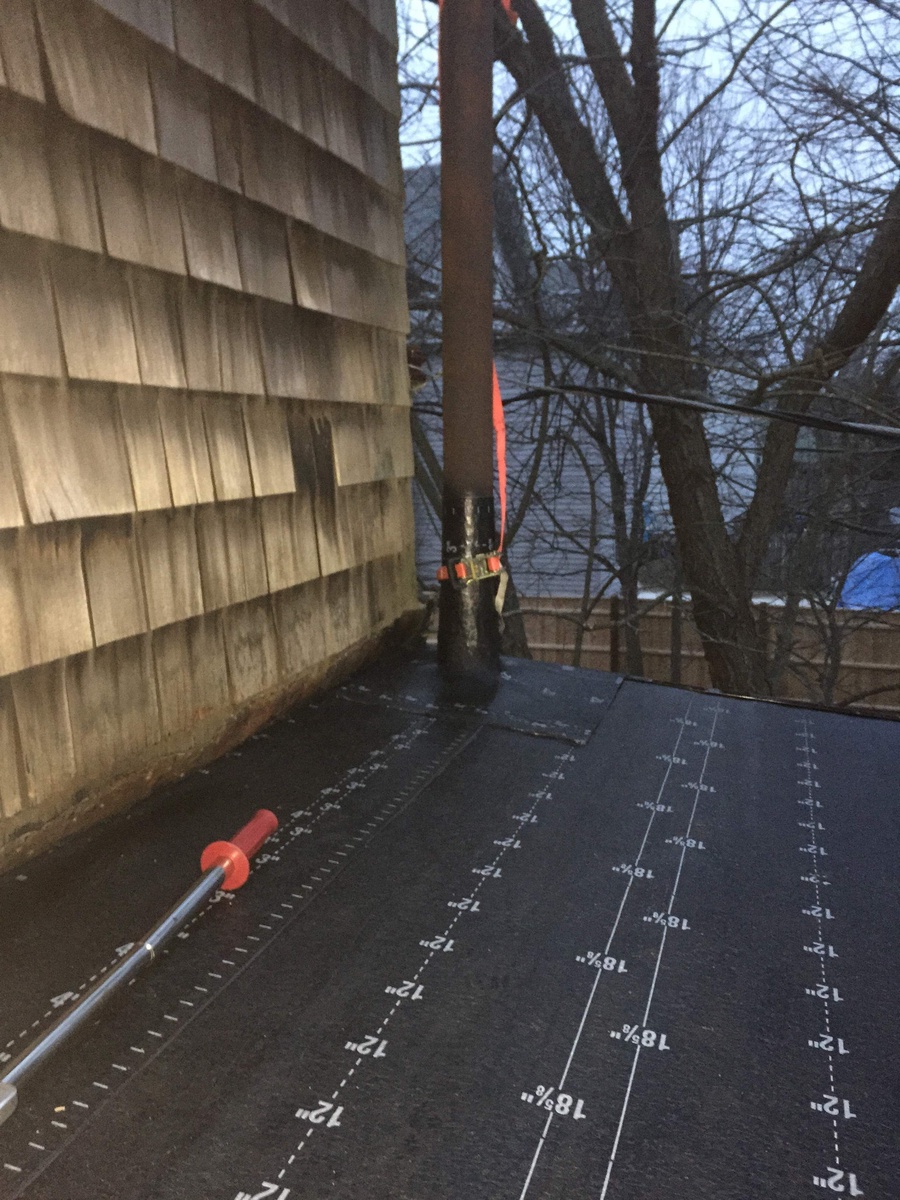
Shingles on a low-pitched roof are a leak with a schedule. When Pinnacle Roofing & Skylights replaced this rear roof in Newport, we installed a solution designed specifically for the application: the Mule-Hide Self-Adhered Modified Bitumen system — traditional mod-bit protection without torches, hot asphalt, or odor, right against the home’s cedar-shingled walls.
Scope of Work
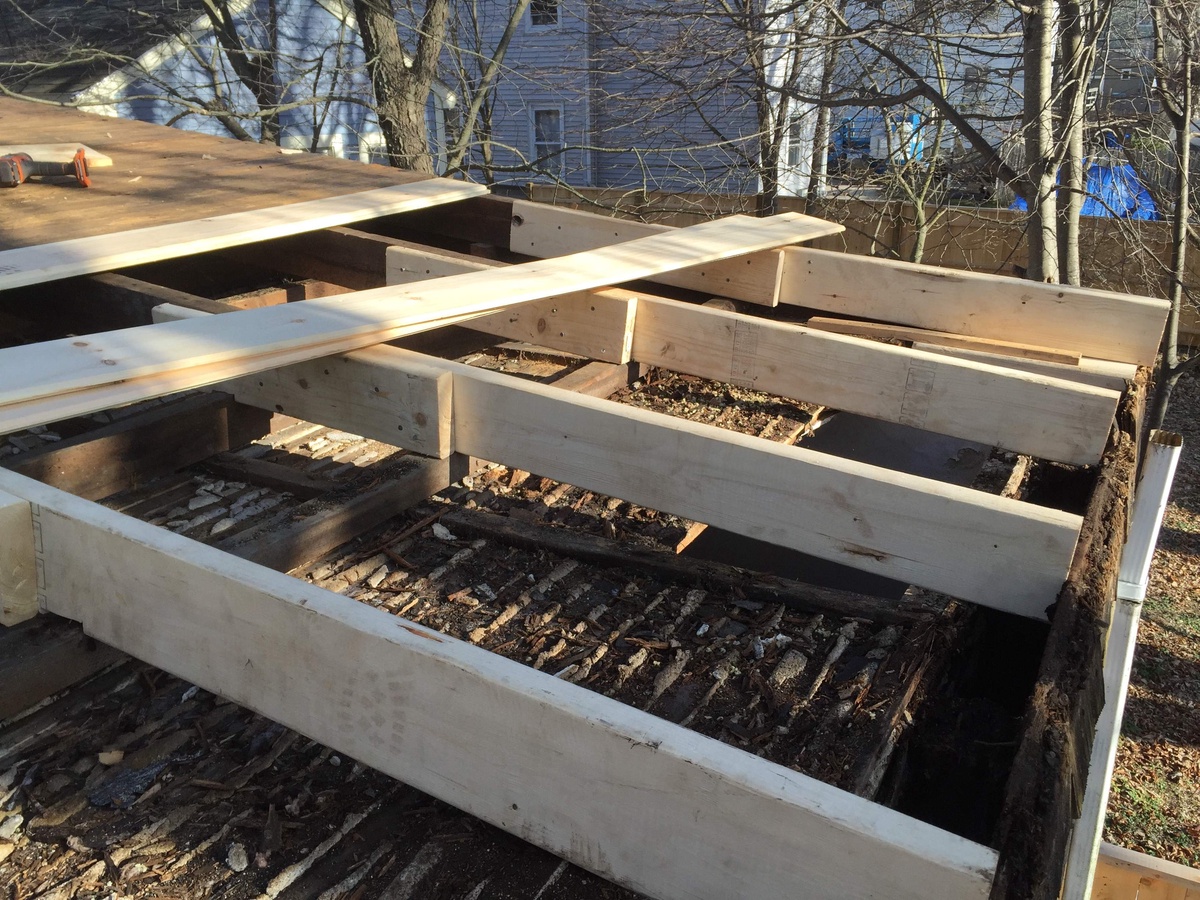
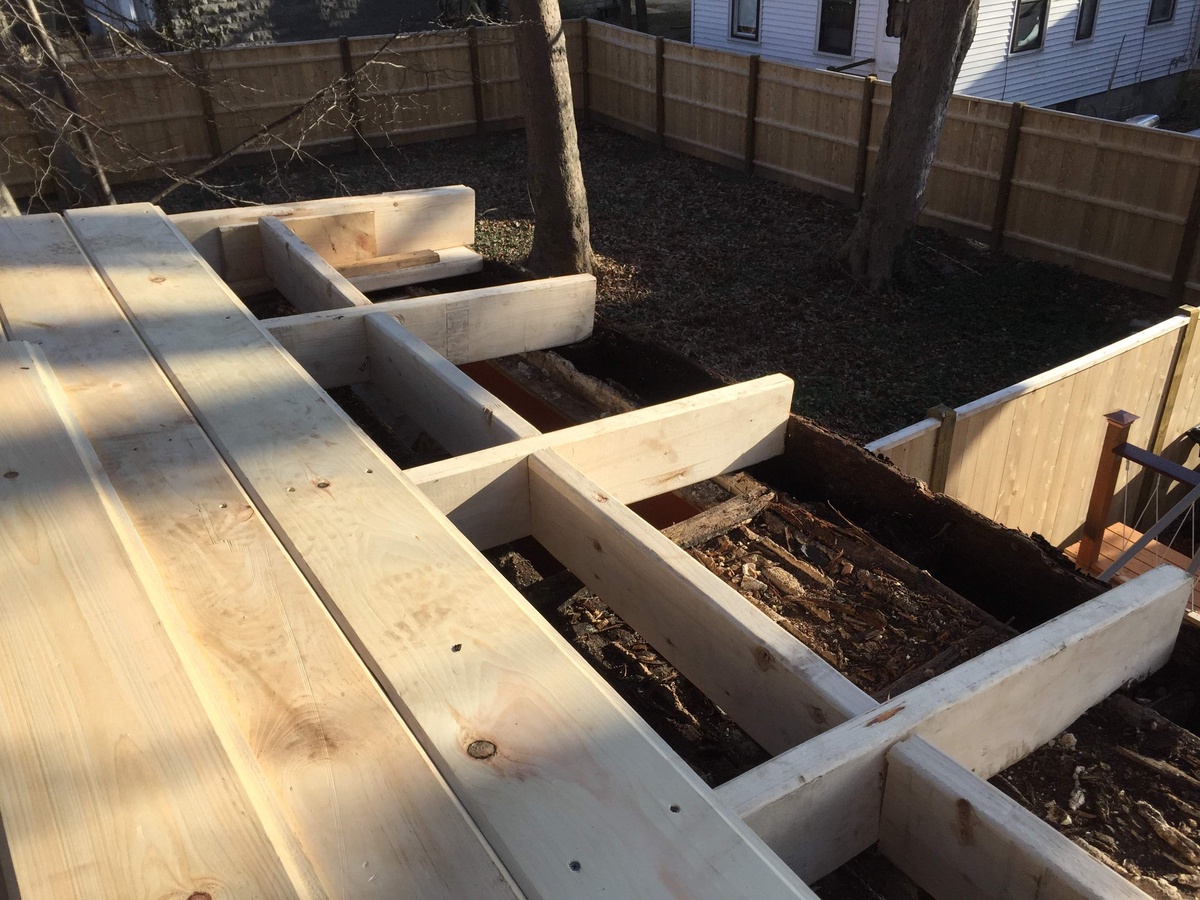
The crew tore the old assembly off to the structure — and rebuilt what the tear-off exposed, replacing failed decking and framing details before any membrane went down. Then the Mule-Hide system in layers: self-adhered base sheet bonded directly to the prepared deck, self-adhered mod-bit cap sheet over it, with terminations run up and flashed at the cedar sidewall so runoff from the walls above sheds over — never behind — the new roof.
What We Installed (And Why)
Modified bitumen is asphalt roofing re-engineered for low slopes: rubberized asphalt reinforced with polyester, laid in overlapping sheets that waterproof by continuous adhesion instead of by gravity-dependent shingle laps. The self-adhered version delivers that protection with no open flame — which matters this close to a wood-shingled historic home.
Newport’s housing stock is full of these rear ells and porch roofs: pitches too shallow for shingles, tucked under second-story walls that dump water on them all year. Matching the material to the pitch — instead of forcing shingles where they don’t belong — is most of what separates a roof that lasts from one that leaks quietly for a decade.
Project Photo Gallery
Good To Know: Why can’t you just use regular shingles on a low-slope roof?
Shingles shed water; they don’t seal against it. Below about a 2:12 pitch, water moves too slowly — wind pushes rain uphill under the laps, snow sits and melts backward, and capillary action does the rest. Manufacturers void shingle warranties below their minimum pitch for exactly this reason. Low-slope sections need a membrane system — mod-bit, EPDM, or a coating system — engineered to be continuously waterproof, not just water-shedding.
Why This Approach Works
Full-adhesion layers on a rebuilt deck give this roof no seams facing uphill and no fasteners through the field. On a rear roof surrounded by taller walls — the worst water exposure a small roof can have — that continuous seal is the whole game.
Why Pinnacle
Pinnacle Roofing & Skylights is Firestone Building Envelope Certified for commercial roofing systems, and holds RI Commercial Roofing License #261. Pinnacle is also a licensed Mule-Hide applicator, so this system carries manufacturer-recognized installation on top of our commercial license. With more than 100 five-star Google reviews and an A+ BBB rating, our track record speaks for itself.
Newport, RI
Newport’s historic blocks hide more low-slope roofing than visitors ever see — rear ells, dormer flats, porch decks behind every colonial facade. Pinnacle serves Newport with membrane systems sized to those spaces and sensitive to the architecture around them.
Need a roof estimate in Newport? Use our instant estimate tool, book a free appointment, or call us today.
Exploring payment options? See financing available to make your home project affordable with low monthly payments.
401-267-ROOF (7663)
Frequently Asked Questions
Why no open flame on this Newport roof?
This rear roof sits right against the home’s cedar-shingled walls, so torches and hot asphalt were not worth the risk. The Mule-Hide Self-Adhered Modified Bitumen system gives traditional mod-bit protection without flame, hot asphalt or odor: a self-adhered base sheet bonded to the prepared deck, with a self-adhered cap sheet over it.
How does the new roof handle water coming off the walls above?
The membrane terminations were run up and flashed at the cedar sidewall, so runoff from the second-story walls sheds over the new roof, never behind it. Full-adhesion layers on a rebuilt deck leave no seams facing uphill and no fasteners through the field, which matters on a small rear roof surrounded by taller walls.
Are low-slope rear roofs common in Newport?
Very. Newport’s historic blocks hide more low-slope roofing than visitors ever see: rear ells, dormer flats and porch roofs behind colonial facades, often with pitches too shallow for shingles. On this job the tear-off also exposed failed decking and framing details, which were rebuilt before any membrane went down.