

A venting skylight does not have to be solar-powered or electric to be useful — a manual-venting skylight opens with a crank or a pole and does the same job for less. This North Smithfield home, re-roofed after storm damage in a Cobblestone Gray shingle, got manual-venting VELUX skylights that bring in daylight and let hot air out, simply and reliably. Pinnacle roofs go on fast — often as a one-day roof replacement — and flexible financing keeps a project like this within reach, with plans as low as 0% interest for 18 months.
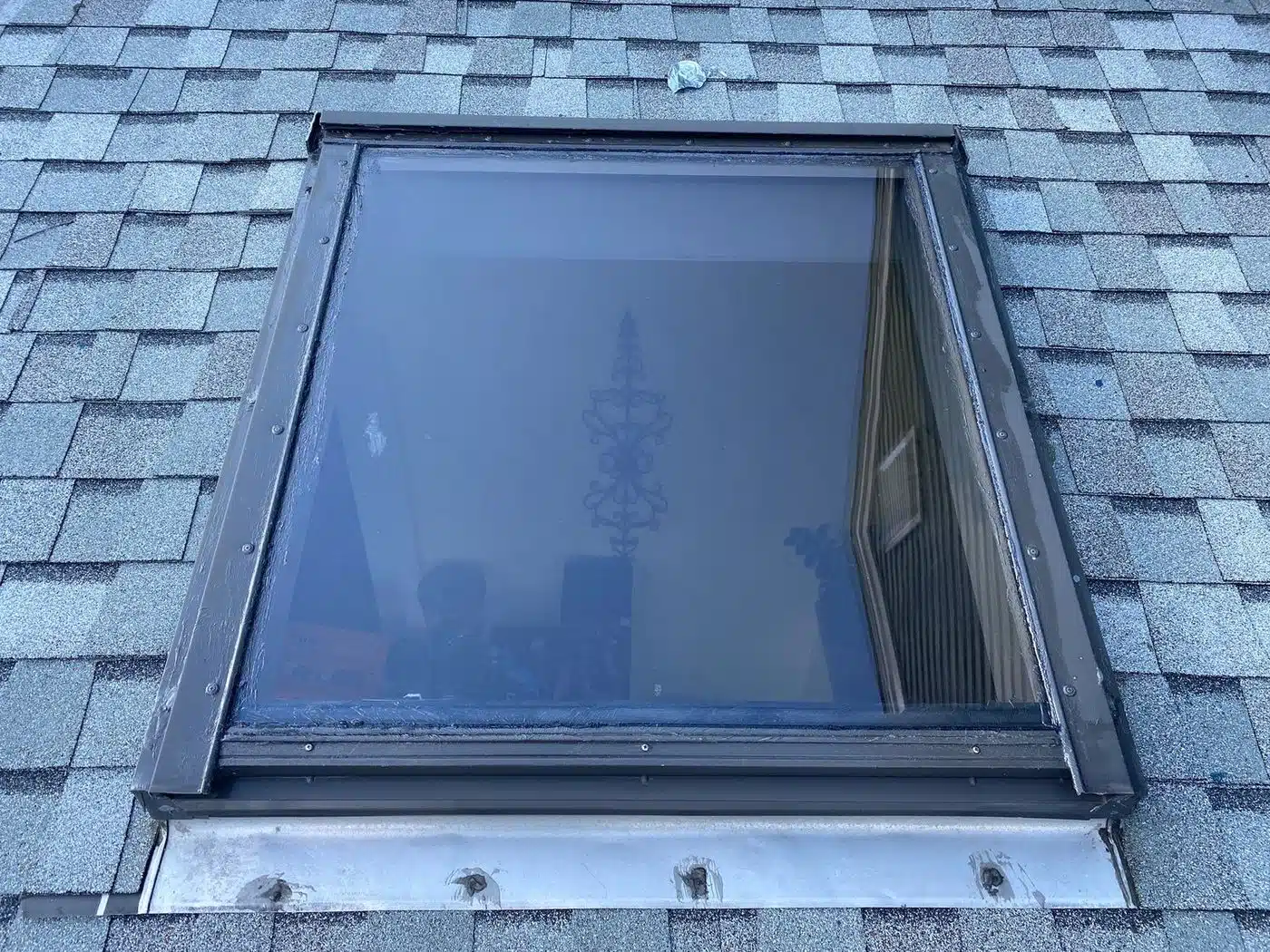
A storm-damaged North Smithfield home was re-roofed in a Cobblestone Gray shingle with manual-venting VELUX skylights installed — units that open by hand to bring in daylight and release hot air, flashed watertight into the new roof. This project is in North Smithfield, Rhode Island using VELUX skylights.
Scope of Work
The skylights went into a new roof built after storm damage. The roof was rebuilt with a full weather system and finished in Cobblestone Gray shingles, and each VELUX skylight was set and flashed with its engineered metal kit and ice-and-water membrane up the curb, watertight from the first rain. The units are manual-venting models, which open by a hand crank or a control rod rather than a motor, so they bring in daylight and vent hot air with a simple, dependable mechanism and nothing to wire or power.
What We Installed (And Why)
Venting skylights come in a few flavors, and the manual-venting version is a practical, often-overlooked choice. A fixed skylight is sealed glass that only brings in light. A venting skylight opens, and it can open three ways: electrically, on a solar-powered motor, or manually — by turning a crank handle or, for a high or out-of-reach skylight, by using a telescoping control rod or pole. The manual-venting VELUX units on this North Smithfield home open by hand, and for many rooms that is exactly enough. Over a kitchen, a bath, or a stairwell, a manual-venting skylight lets you open the roof to release cooking heat, shower humidity, or the hot air that collects at the top of the house, then close it when you are done — no wiring to run, no motor or electronics to eventually service, and a lower cost than a powered unit. The trade-off is simply that you open and close it yourself rather than by remote, which for an easily-reached skylight is no trade-off at all. Like all VELUX skylights, these are No Leak units, flashed with engineered metal kits rather than caulk so they stay dry, and they were set into a roof rebuilt after storm damage — finished in a Cobblestone Gray shingle, a blended gray tone — with the full modern weather barrier beneath. Rebuilding a storm-damaged roof is the right moment to add or replace skylights, because the new flashing integrates into the new roof as one system. For this North Smithfield home, manual-venting skylights brought daylight and fresh-air venting into the rooms below in the simplest, most dependable form.
Project Photo Gallery


Good To Know: What is a manual-venting skylight?
It is a skylight that opens by hand rather than by a motor. Venting skylights — the kind that open to let hot air and humidity out, as opposed to fixed skylights that are sealed glass — come in electric, solar-powered, and manual versions. A manual-venting skylight opens with a crank handle, and for skylights placed high or out of reach, with a telescoping control rod or pole that lets you operate it from the floor. It does the same core job as a powered venting skylight: over a kitchen it releases cooking heat and steam, over a bath it vents humidity, and high in the house it lets out the hot air that collects near the ceiling — all while bringing in daylight. The advantages of the manual version are simplicity and cost: there is no wiring to run, no motor or electronics that could eventually need service, and it costs less than a powered unit. The only difference in use is that you open and close it yourself instead of by remote, which for a skylight you can reach easily is no real drawback. Powered and solar models make more sense for skylights that are hard to reach or that you want to close automatically in the rain, but for many rooms a manual-venting skylight is the practical, dependable choice. On this North Smithfield home, manual-venting VELUX skylights brought light and fresh-air venting into the rooms below with the simplest mechanism there is.
Why This Approach Works
A venting skylight can open electrically, on solar power, or manually by crank or control rod. The manual version does the same job — daylight and hot-air venting — with no wiring, no motor to service, and a lower cost, which for an easily-reached skylight is a simple, dependable choice.
Why Pinnacle
Skylight work rewards a contractor who helps match the right venting type to each room and flashes every unit into the new roof — here, a storm rebuild — so the openings stay watertight. Pinnacle installs as a VELUX 5-Star Skylight Specialist and CertainTeed ShingleMaster™, to the manufacturer’s specification. We’ve served Rhode Island since 2012, hold a 5.0-star Google rating across 100+ reviews and an A+ BBB rating — see our full credentials.
North Smithfield, Rhode Island
North Smithfield is a rural town in Rhode Island’s northern corner, its homes exposed to the wind that drives the region’s storms. Storm re-roofs are common here, and they are the right moment to add skylights, whose new flashing integrates into the new roof. Manual-venting VELUX skylights suit North Smithfield homes that want simple, dependable daylight and fresh-air venting. Explore our work across North Smithfield roofing services.
Need a roofing estimate in North Smithfield? Use our instant estimate tool, book a free appointment, or call us today.
Exploring payment options? Ask about financing — plans as low as 0% interest for 18 months.
401-267-ROOF (7663)
Frequently Asked Questions
Are manual skylights better than electric or solar ones?
Each has its place. Manual-venting skylights are simpler and cost less — no wiring, no motor to service — and are ideal for skylights you can reach easily. Electric and solar-powered models make more sense for hard-to-reach skylights or when you want them to open by remote and close automatically in the rain. For many rooms, a manual-venting skylight does everything needed at a lower cost.
How do you open a skylight that’s out of reach?
Manual-venting skylights placed high or on a tall ceiling are operated with a telescoping control rod or pole that reaches the skylight’s crank from the floor. It lets you open and close the skylight without a ladder. For skylights that are truly hard to reach or that you want to automate, a solar-powered or electric model with a remote is an alternative.
Is a re-roof a good time to add or replace skylights?
Yes — it is the ideal time. When the roof is being rebuilt, as on this storm re-roof, the skylights and their engineered flashing integrate into the new shingles as one system, which is the most watertight result. Adding skylights during the re-roof also avoids cutting into a finished roof later.
More Resources for North Smithfield
- North Smithfield Roofing Services
- VELUX Skylights
- Residential Roofing
- One-Day Roof Replacement
- Financing Available
- Instant Roof Estimate
- Showcase Gallery
Browse more of our Rhode Island project galleries:
Explore all Rhode Island Skylight Projects →Explore all VELUX Skylight & Sun Tunnel Projects →Explore all CertainTeed Shingle Projects →