
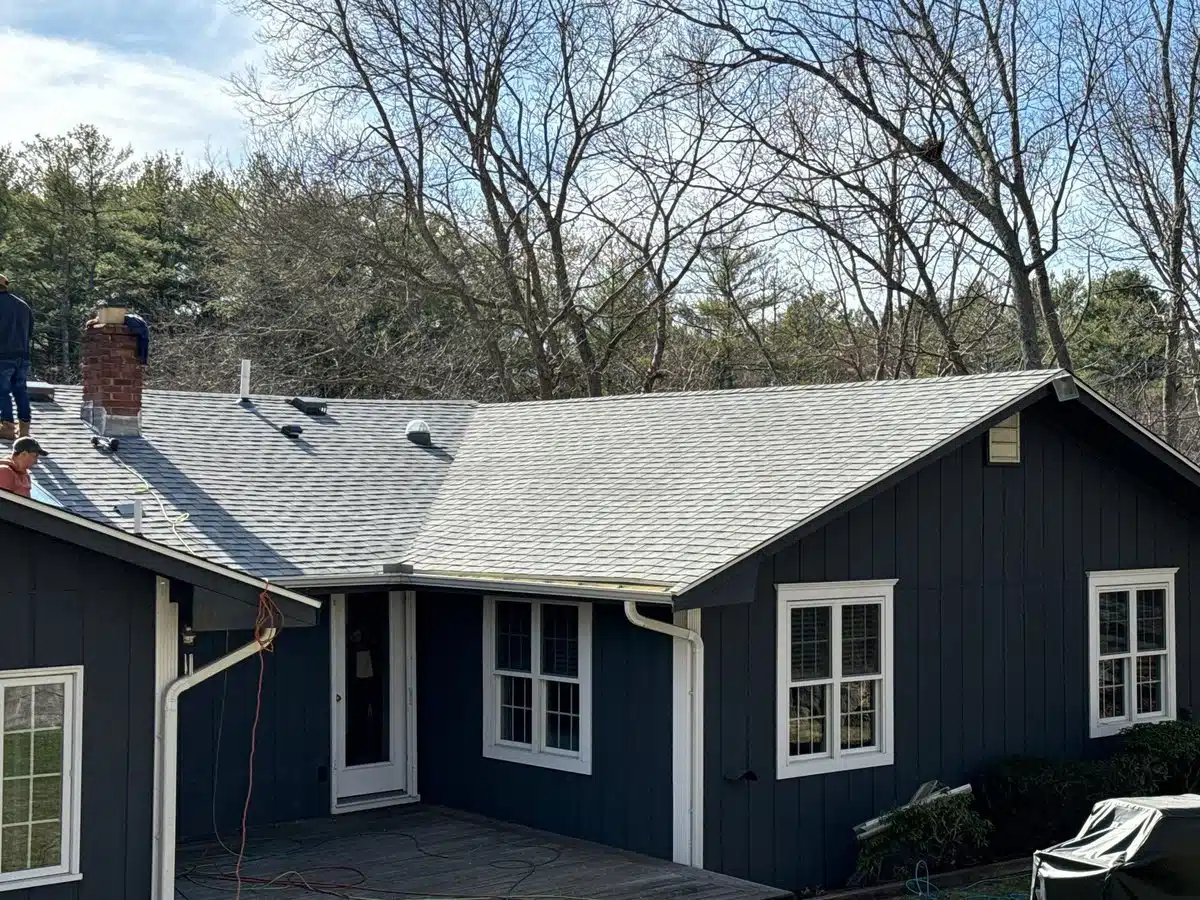

Roof ventilation clears the warm, moist air that collects in an attic — but the less of that air you let into the attic in the first place, the better ventilation works. This North Smithfield home got a new CertainTeed Landmark roof in Cobblestone Gray built over a balanced ventilation system, with attention to the air-sealing below it that keeps ventilation from having to fight a losing battle. Pinnacle roofs go on fast — often as a one-day roof replacement — and flexible financing keeps a project like this within reach, with plans as low as 0% interest for 18 months.
A North Smithfield home received a new CertainTeed Landmark roof in Cobblestone Gray over a balanced ventilation system, with attention to sealing the attic bypasses below so less warm, moist air enters the attic for the ventilation to clear. This project is in North Smithfield, Rhode Island, finished in CertainTeed Landmark — Cobblestone Gray.
Scope of Work
The re-roof built a balanced ventilation system and treated the attic as a whole. Intake was opened at the soffits and exhaust set high so the attic clears the heat and moisture that reach it. The full weather system went down — ice-and-water shield, synthetic underlayment, and new edge metal — and the Landmark shingles in Cobblestone Gray, a blended gray, were coursed up the slopes, with the brick chimney flashed where it passes through. The principle underneath the work is that ventilation and air-sealing are partners: sealing the gaps that let household air leak up into the attic means the ventilation has far less moisture and heat to remove, so the whole system works better and the attic stays drier.
What We Installed (And Why)
Ventilation gets most of the attention, but it is only half of a healthy attic — the other half is air-sealing, and the two work best together. Here is the idea. A house is full of hidden gaps where warm, moist indoor air leaks up into the attic: around recessed lights, plumbing and wiring penetrations, the attic hatch, the top plates of interior walls, and the chase around a chimney. This leakage — sometimes called the stack effect — constantly feeds the attic with the very heat and humidity that ventilation exists to remove. Ventilation clears that air, but if the ceiling below is leaking like a sieve, the ventilation is bailing out a boat that is still taking on water. Sealing those bypasses — closing the gaps between the living space and the attic — cuts the flow of warm, moist air at its source, so far less reaches the attic in the first place. Then balanced ventilation, intake at the soffits and exhaust at the ridge, easily clears what remains, keeping the attic cold and dry in winter and cooler in summer. The payoff is compounding: a well-sealed, well-ventilated attic has drier sheathing, longer-lasting shingles, lower heating and cooling bills, and far less risk of the condensation that rots a roof deck. This North Smithfield home’s new roof is CertainTeed Landmark in Cobblestone Gray — the dual-layer architectural shingle with a Class A fire rating and StreakFighter algae resistance — with the chimney properly flashed and a balanced ventilation system above. Treating ventilation and air-sealing as the partners they are, rather than relying on ventilation alone, is what makes an attic genuinely healthy.
Project Photo Gallery


Good To Know: Is ventilation or air-sealing more important for my attic?
They work together, and doing both is what makes an attic healthy — but if you understand the relationship, you see why air-sealing makes ventilation far more effective. Warm, moist air from your living space constantly leaks up into the attic through hidden gaps: around recessed lights, plumbing and wiring holes, the attic access hatch, the tops of interior walls, and the chimney chase. That leakage is the main source of the heat and humidity that build up in an attic. Ventilation’s job is to clear that air out — intake at the soffits, exhaust at the ridge — but if the ceiling below is full of leaks, the ventilation is constantly fighting a fresh supply of moisture rising from the house. Air-sealing closes those gaps, cutting the flow at its source so much less warm, moist air ever reaches the attic. With the leakage sealed, balanced ventilation easily handles what little remains, keeping the attic cold and dry in winter and cooler in summer. The two are partners: sealing without ventilation can trap what does get through, and ventilation without sealing has to work overtime against constant leakage. Done together, they keep the roof deck dry, extend the life of the shingles, and lower heating and cooling bills — because sealed gaps also stop your conditioned air from escaping. On this North Smithfield home, building balanced ventilation and paying attention to the air-sealing below it is what makes the whole attic system work rather than just moving air around.
Why This Approach Works
Warm, moist household air leaks into the attic through hidden gaps, feeding it the heat and humidity that ventilation must remove. Sealing those bypasses cuts the flow at its source, so balanced ventilation easily clears what remains — the two working as partners to keep the attic dry and the roof sound.
Why Pinnacle
A healthy attic rewards a contractor who treats ventilation and air-sealing as partners, so the ventilation clears a sealed attic instead of fighting constant leakage from the house. As a CertainTeed ShingleMaster™ Premier contractor, Pinnacle qualifies our customers for CertainTeed’s full SureStart™ PLUS extended warranty — coverage most contractors cannot offer. We’ve served Rhode Island since 2012, hold a 5.0-star Google rating across 100+ reviews and an A+ BBB rating — see our full credentials.
North Smithfield, Rhode Island
North Smithfield is a rural town in Rhode Island’s northern corner, with older homes and additions where hidden gaps between the living space and the attic are common and where cold winters make attic moisture a real concern. Pairing balanced ventilation with attention to air-sealing is especially valuable here, keeping the attic dry through the season most likely to damage a roof. A Landmark roof built over that combined approach suits how North Smithfield homes are built and heated. Explore our work across North Smithfield roofing services.
Need a roofing estimate in North Smithfield? Use our instant estimate tool, book a free appointment, or call us today.
Exploring payment options? Ask about financing — plans as low as 0% interest for 18 months.
401-267-ROOF (7663)
Frequently Asked Questions
What is attic air-sealing?
Air-sealing means closing the hidden gaps where warm, moist household air leaks up into the attic — around recessed lights, plumbing and wiring penetrations, the attic hatch, the tops of interior walls, and the chimney chase. Sealing these bypasses cuts the flow of heat and humidity into the attic at its source, so ventilation has far less to remove and the attic stays drier.
Does air-sealing replace the need for ventilation?
No — they are partners. Air-sealing reduces how much warm, moist air enters the attic, and ventilation clears out what still gets through along with the heat that builds under the roof. Sealing without ventilation can trap moisture; ventilation without sealing fights constant leakage. Doing both keeps the attic cold and dry and the roof deck sound.
What is CertainTeed Landmark in Cobblestone Gray?
CertainTeed Landmark is a dual-layer, fiberglass-based architectural shingle with a Class A fire rating and StreakFighter algae resistance. Cobblestone Gray is a blended gray color that gives a roof a clean, versatile look suited to a wide range of homes.
More Resources for North Smithfield
- North Smithfield Roofing Services
- Residential Roofing
- CertainTeed Shingles
- Residential Roofing
- One-Day Roof Replacement
- Financing Available
- Instant Roof Estimate
- Showcase Gallery
Browse more of our Rhode Island project galleries:
Explore all Rhode Island Roofing Projects →Explore all CertainTeed Shingle Projects →