
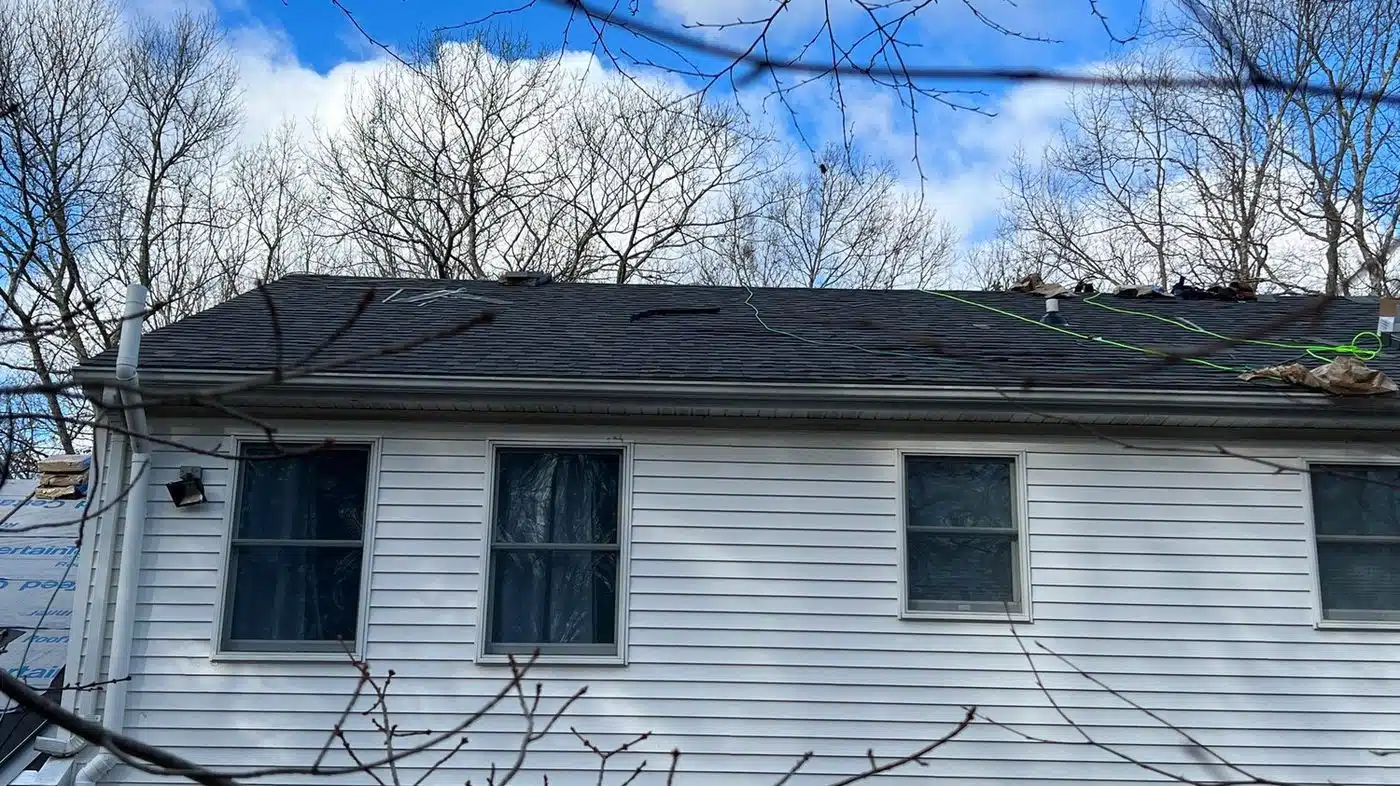

Ventilation and insulation sound like they do the same job — keeping a house comfortable — but they are different tools that only work when they work together. This Scituate home got a new CertainTeed Landmark PRO roof built over a system where the attic insulation and the roof ventilation were balanced, so each does its job without defeating the other. Pinnacle roofs go on fast — often as a one-day roof replacement — and flexible financing keeps a project like this within reach, with plans as low as 0% interest for 18 months.
A Scituate home received a new CertainTeed Landmark PRO roof over a balanced system in which the attic insulation and roof ventilation work together — insulation holding heat in the living space, ventilation keeping the attic itself dry and cool. This project is in Scituate, Rhode Island, finished in CertainTeed Landmark PRO.
Scope of Work
The re-roof treated insulation and ventilation as a pair. At the eaves, intake ventilation was kept clear so air can enter the attic — with baffles where needed to stop insulation from blocking that airflow — and exhaust was set high so the attic breathes. The full weather system went down and the Landmark PRO shingles were coursed up the slopes. The result is an attic where the insulation on the attic floor keeps the home’s heat where it belongs, while the ventilation above it keeps the attic near outdoor conditions, the two working as a team rather than fighting.
What We Installed (And Why)
Insulation and ventilation are often confused, and getting the relationship right is what makes an attic actually perform. Here is the distinction: insulation, laid on the attic floor, keeps the heated (or cooled) air of the living space from escaping into the attic — it is the barrier between your rooms and the attic. Ventilation, up above, keeps the attic itself near the outside temperature by flushing it with outdoor air. You want the living space warm and the attic cold in winter, and insulation and ventilation are how you get both at once: insulation holds the warmth below, ventilation keeps the attic above it cold and dry so moisture cannot condense and heat cannot build. The two only work as a team when neither blocks the other, and that is where installation matters most. The classic mistake is insulation stuffed into the eaves, packed right up against the roof deck, which blocks the soffit intake vents and strangles the ventilation. The fix is a baffle — a channel installed at the eaves that holds the insulation back and keeps a clear path for intake air to flow up the underside of the deck. Done right, you get full insulation coverage and full airflow at the same time. This Scituate home’s new roof is CertainTeed Landmark PRO, the heavier-weight architectural shingle rated to 130 mph with SureStart™ PLUS warranty eligibility, and it will reach its full life only over an attic where insulation and ventilation are both doing their jobs. Balancing the two — insulation keeping the house’s heat in, ventilation keeping the attic cold and dry, with baffles keeping them from interfering — is what makes the whole roof-and-attic system work.
Project Photo Gallery


Good To Know: What’s the difference between attic insulation and ventilation?
They do opposite-sounding jobs that together keep a roof and home healthy. Insulation, laid on the attic floor, is the barrier that keeps the heated or cooled air of your living space from escaping up into the attic — it holds comfort in the rooms below. Ventilation, above the insulation, does the reverse: it keeps the attic itself near the outdoor temperature by continuously flushing it with outside air. The goal in winter is a warm living space and a cold, dry attic — and you need both tools to get there. Insulation alone would trap the house’s heat below but let moisture build in a stagnant attic; ventilation alone would keep the attic dry but let the home’s heat pour into it and drive up energy bills. Working together, insulation holds the warmth down where you want it while ventilation keeps the attic cold and dry above it so moisture cannot condense on the deck. The catch is that they can interfere: if insulation is stuffed into the eaves against the roof deck, it blocks the soffit intake vents and strangles the ventilation. The solution is a baffle — a channel at the eaves that holds the insulation back and preserves a clear air path — so you get full insulation and full airflow at once. Understanding that insulation and ventilation are different tools that must be balanced, not the same thing, is what makes an attic perform and a roof reach its full life.
Why This Approach Works
Insulation keeps the living space’s heat from escaping into the attic; ventilation keeps the attic itself cold and dry. They are different tools that only work as a team when neither blocks the other — which is why baffles at the eaves keep insulation from strangling the intake airflow.
Why Pinnacle
A roof-and-attic system rewards a contractor who balances insulation and ventilation, using baffles so both do their jobs and the roof reaches its full life. As a CertainTeed ShingleMaster™ Premier contractor, Pinnacle qualifies our customers for CertainTeed’s full SureStart™ PLUS extended warranty — coverage most contractors cannot offer. We’ve served Rhode Island since 2012, hold a 5.0-star Google rating across 100+ reviews and an A+ BBB rating — see our full credentials.
Scituate, Rhode Island
Scituate is a large, rural, wooded town in the center of Rhode Island, home to the reservoir and to established homes on shaded lots where both winter cold and summer heat test an attic. Balancing insulation and ventilation is especially valuable here, where a stagnant, poorly-insulated attic shows up fast as high bills and a damp deck. A Landmark PRO roof over a properly balanced attic suits how Scituate homes are built and heated. Explore our work across Scituate roofing services.
Need a roofing estimate in Scituate? Use our instant estimate tool, book a free appointment, or call us today.
Exploring payment options? Ask about financing — plans as low as 0% interest for 18 months.
401-267-ROOF (7663)
Frequently Asked Questions
Is ventilation or insulation more important for my attic?
Neither on its own — they work as a pair. Insulation keeps your living space’s heat from escaping into the attic; ventilation keeps the attic itself cold and dry. Insulation without ventilation traps moisture in the attic; ventilation without insulation lets your heat pour into it and raises bills. A healthy attic needs both, balanced so neither blocks the other.
What is a baffle and why does my attic need one?
A baffle is a channel installed at the eaves that holds attic insulation back from the roof deck and keeps a clear path for intake air to flow up from the soffit vents. Without baffles, insulation pushed into the eaves blocks the soffit intake and strangles the ventilation. Baffles let you have full insulation coverage and full airflow at the same time.
What is CertainTeed Landmark PRO?
Landmark PRO is the heavier-weight version of CertainTeed’s Landmark architectural shingle — more mass, a 130 mph wind rating, Max Def color depth, and eligibility for CertainTeed’s strongest SureStart PLUS warranty. Installed over a properly balanced attic, it is built to reach its full rated life.
More Resources for Scituate
- Scituate Roofing Services
- Residential Roofing
- CertainTeed Shingles
- Residential Roofing
- One-Day Roof Replacement
- Financing Available
- Instant Roof Estimate
- Showcase Gallery
Browse more of our Rhode Island project galleries:
Explore all Rhode Island Roofing Projects →Explore all CertainTeed Shingle Projects →