
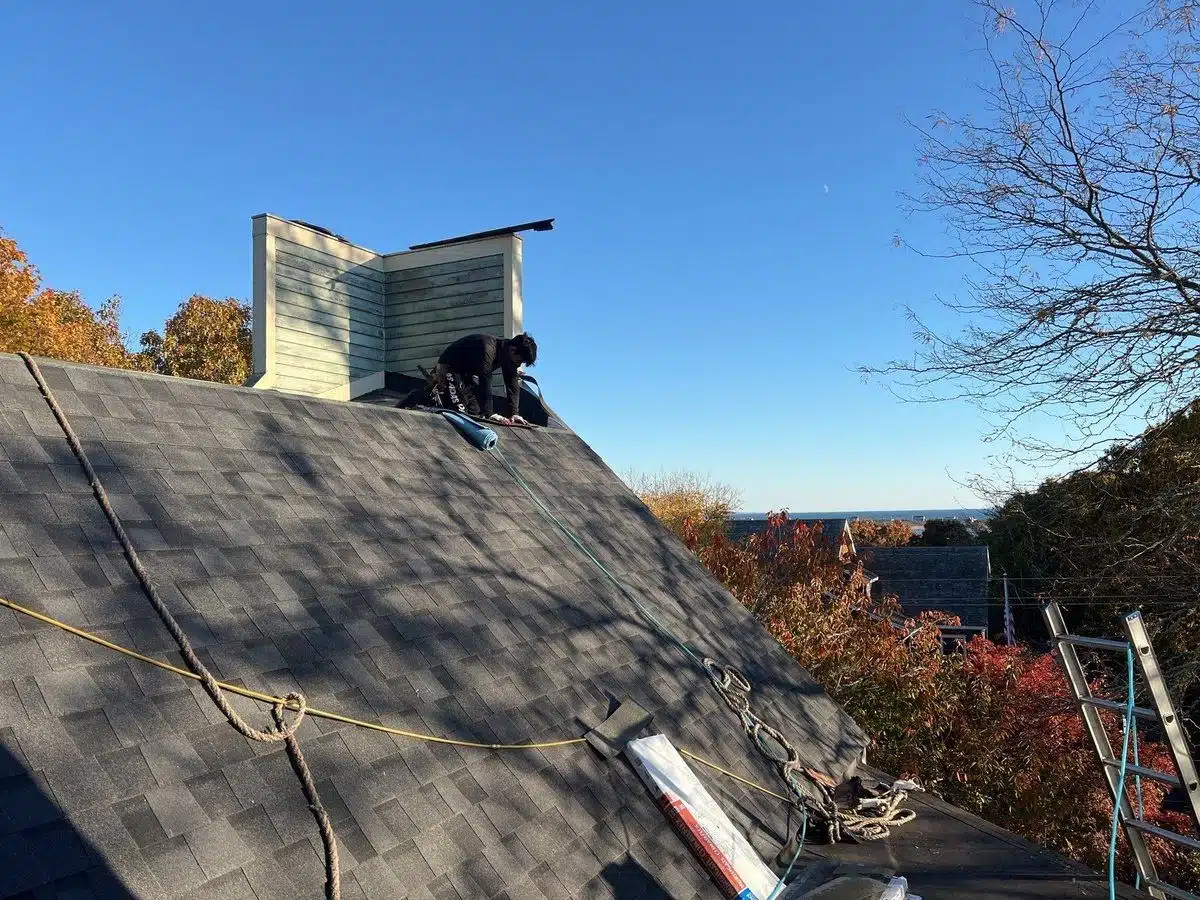

The most expensive damage bad ventilation causes is the part you never see: the plywood deck under the shingles, quietly rotting from moisture trapped in an attic that cannot breathe. This Westerly home got a new CertainTeed Northgate ClimateFlex roof in Moire Black, with a silicone-coated low-slope section, built over the balanced ventilation that keeps the deck sound. Pinnacle roofs go on fast — often as a one-day roof replacement — and flexible financing keeps a project like this within reach, with plans as low as 0% interest for 18 months.
A Westerly home was re-roofed in CertainTeed Northgate ClimateFlex impact-resistant shingles in Moire Black, with a silicone-coated low-slope section, over a balanced ventilation system that keeps moisture from rotting the roof deck. This project is in Westerly, Rhode Island using CertainTeed Northgate ClimateFlex — Moire Black.
Scope of Work
The re-roof rebuilt the whole roof over a proper ventilation plan. Intake was opened at the soffits and exhaust set high so the attic clears the moist air that would otherwise attack the deck. The steep slopes were built up with ice-and-water shield, synthetic underlayment, and new edge metal, then coursed in Northgate ClimateFlex shingles in Moire Black; the low-slope section was finished with a silicone roof system suited to a shallow pitch. The point of the ventilation is what happens beneath it: a dry, breathing attic keeps the plywood deck sound, which is the surface everything else is fastened to.
What We Installed (And Why)
It is worth understanding exactly how poor ventilation destroys a roof from the inside, because it explains why ventilation is not optional. All winter, a house pushes warm, humid air upward — from cooking, showering, and simply living — and that air rises into the attic. In a properly ventilated attic, a continuous flow of outside air carries it away: in at the soffits, out at the ridge. In a poorly ventilated attic, it has nowhere to go, so it hits the cold underside of the roof deck and condenses, exactly the way water beads on a cold glass. Drip by drip, that condensation soaks the plywood sheathing. Over seasons it saturates the deck, feeds mold and rot, delaminates the plywood, and softens the very surface the shingles and their nails depend on. By the time it shows — sagging between rafters, dark stains on the sheathing, nails that no longer hold — the fix is no longer just ventilation but replacing rotted decking, the most disruptive and costly part of a roof to redo. Summer adds the other half of the damage: an unventilated attic superheats, baking the shingles from below and aging them years early. The CertainTeed Northgate ClimateFlex on this Westerly home is a tough, impact-resistant shingle rated Class 4 for hail and impact, and the silicone system protects the low-slope section — but the best roofing materials still fail early over a deck that is rotting because the attic could not breathe. Building the balanced ventilation, in at the soffits and out high on the roof, is what protects the deck, and protecting the deck is what protects everything above it.
Project Photo Gallery


Good To Know: How does poor attic ventilation rot a roof deck?
Through condensation, and it happens out of sight until the damage is done. In winter, a home constantly pushes warm, humid air upward — from cooking, bathing, and heating — and that air rises into the attic. If the attic is well ventilated, a steady flow of outside air carries the moisture away before it can settle. If it is poorly ventilated, the moist air has nowhere to go, so it reaches the cold underside of the roof deck and condenses on it, just like water beading on a cold glass of water. That condensation drips onto and soaks into the plywood sheathing. Repeated over many cold days and many winters, it saturates the deck, grows mold, rots and delaminates the plywood, and softens the surface that the shingles and their nails are fastened to. The warning signs — a musty attic, dark water stains on the underside of the deck, sheathing that sags between the rafters, nails that have backed out or rusted — often appear only after real damage is underway. At that point, fixing it means tearing off the roof and replacing rotted decking, which is far more expensive and disruptive than the ventilation that would have prevented it. Balanced ventilation — intake at the soffits, exhaust high on the roof — keeps the attic dry so the deck never gets the chance to rot, which is why it is one of the most important and most overlooked parts of a roof.
Why This Approach Works
In a poorly ventilated attic, warm indoor air condenses on the cold roof deck and, over seasons, rots the plywood sheathing that everything else is fastened to — the most costly damage to repair. Balanced intake-and-exhaust ventilation keeps the attic dry so the deck stays sound.
Why Pinnacle
Protecting the roof deck rewards a contractor who builds balanced ventilation as the foundation of the re-roof, keeping the moisture that rots plywood out of the attic. As a roofing and ventilation specialist, Pinnacle qualifies our customers for CertainTeed’s full SureStart™ PLUS extended warranty — coverage most contractors cannot offer. We’ve served Rhode Island since 2012, hold a 5.0-star Google rating across 100+ reviews and an A+ BBB rating — see our full credentials.
Westerly, Rhode Island
Westerly is Rhode Island’s southwestern shoreline town, a place of beaches, historic downtown blocks, and homes that take damp, salt-laden coastal air year-round. That constant moisture makes attic ventilation especially important here, because a coastal attic that cannot breathe holds humidity against the deck and rots it faster. A new roof built over balanced ventilation is what protects a Westerly home’s deck through the seasons. Explore our work across Westerly roofing services.
Need a roofing estimate in Westerly? Use our instant estimate tool, book a free appointment, or call us today.
Exploring payment options? Ask about financing — plans as low as 0% interest for 18 months.
401-267-ROOF (7663)
Frequently Asked Questions
What are the signs of a rotting roof deck?
Look for a musty smell in the attic, dark water stains on the underside of the roof sheathing, plywood that sags or feels soft between the rafters, mold growth, and roofing nails that have rusted or backed out. These usually point to moisture from poor ventilation condensing on and soaking the deck. Catching it early can mean improving ventilation; catching it late usually means replacing rotted decking.
What is CertainTeed Northgate ClimateFlex?
Northgate ClimateFlex is CertainTeed’s impact-resistant architectural shingle, carrying a Class 4 impact rating — the highest — thanks to an SBS ‘rubberized’ asphalt that stays flexible and resists cracking from hail and impact. It also holds a Class A fire rating and performs well through New England’s temperature swings.
Why does a low-slope roof section get a different material?
Because a shallow pitch drains too slowly for shingles to shed water reliably, so it needs a continuous waterproof covering instead — here, a silicone roof system suited to low slopes. Matching the covering to the pitch on each part of the roof, while ventilating the whole attic underneath, is what keeps the entire roof sound.
More Resources for Westerly
- Westerly Roofing Services
- Residential Roofing
- CertainTeed Shingles
- Residential Roofing
- One-Day Roof Replacement
- Financing Available
- Instant Roof Estimate
- Showcase Gallery
Browse more of our Rhode Island project galleries:
Explore all Rhode Island Roofing Projects →Explore all CertainTeed Shingle Projects →