nn
Skip to content
The Portsmouth cedar-shake crew kept the siding work organized and efficient, so the colonial was disrupted as little as possible.
Our siding crew on Indian Run Trail kept the job organized and moving, so the household was disrupted as little
When wind and storm damage hits a home, it rarely stops at the roof — the same weather that tears
In Greenville, siding projects often involve homes that have been dealing with moisture for years without proper management. Our inspection looks for rot behind existing siding, checks soffit ventilation, and evaluates whether the current wall assembly allows moisture to escape. We install ventilation strips (furring) behind siding to create the air gap that prevents condensation and allows drying. New England storms create additional pressure on walls — proper flashing and drainage prevent meltwater from finding its way inside. For homes near Stillwater area, we pay particular attention to north-facing walls where shade keeps surfaces damp longest. For residential homes near nearby areas in Greenville, siding performance depends on matching the right product to your home’s orientation and microclimate.
In Greenville’s wooded setting, cedar shingles are a popular choice for homeowners who value natural appearance. The material weathers to a silver-gray that blends with the surrounding landscape, though Greenville’s shade and moisture conditions require careful installation. Cedar shingles are especially well suited to residential homes found throughout Greenville, maintaining the classic New England character homeowners value.
In Greenville, cedar shingle installation requires extra attention to moisture management because of the tree shade and ground-level humidity common on rural properties. We install ventilation strips behind every cedar project, creating airflow that prevents the dampness that causes premature rot and mold growth. Each shingle course overlaps the one below by at least 1.5 inches, with exposure set between 4 and 6 inches. We fasten with stainless steel or hot-dipped galvanized nails — never standard steel, which rusts and stains the wood. For north-facing walls where Georgiaville Pond area keeps surfaces damp longest, we sometimes recommend tighter shingle spacing for additional water shedding. Cedar left to weather naturally turns silver-gray within 2-3 years; staining extends color life but requires reapplication every 5-7 years. Suburban homes throughout Greenville face seasonal storms that tests siding from every direction — proper material selection accounts for your property’s specific exposure.
James Hardie fiber cement siding gives Greenville homes the look of traditional clapboard with significantly better durability. The material resists rot, insects, and fire — and holds paint far longer than wood. Greenville homeowners with residential homes find that James Hardie fiber cement offers the look of wood without the maintenance concerns.
Fiber cement siding is installed as planks, panels, or shingle profiles over a weather-resistant barrier. In Greenville, we follow James Hardie’s installation specifications precisely — proper gapping between boards (typically 3/16 inch), correct fastener placement, and flashing details at every transition point. The material comes in smooth or textured finishes that replicate wood grain without the maintenance requirements. Pine needle accumulation demands materials that handle temperature swings and moisture cycles without warping or cracking, and fiber cement delivers. ColorPlus factory finish is baked on under controlled conditions, providing better adhesion and color consistency than field-applied paint. Suburban homes throughout Greenville face seasonal storms that tests siding from every direction — proper material selection accounts for your property’s specific exposure.
In Greenville’s wooded setting, composite materials from Everlast and CertainTeed resist the moisture and mold growth that challenge wood siding on tree-shaded properties. Composite siding from Everlast and CertainTeed offers Greenville homeowners a modern alternative that resists seasonal storms without ongoing upkeep.
Composite siding addresses the specific challenges Greenville homeowners face with wood in moisture-heavy environments. Everlast uses zero wood fiber in its composition, eliminating the mold and rot risk that affects cedar and wood clapboard in shaded areas. CertainTeed Cedar Impressions provides the look of hand-split cedar shakes without the maintenance cycle of staining and sealing. Both products install over standard drainage planes and ventilation strips. In Greenville’s climate, these materials maintain their appearance through Pine needle accumulation without the surface degradation that sends homeowners back up on ladders with stain and sealant. In Greenville, residential homes near Greenville represent the most common siding scenarios we encounter, and each architectural style demands specific installation techniques.
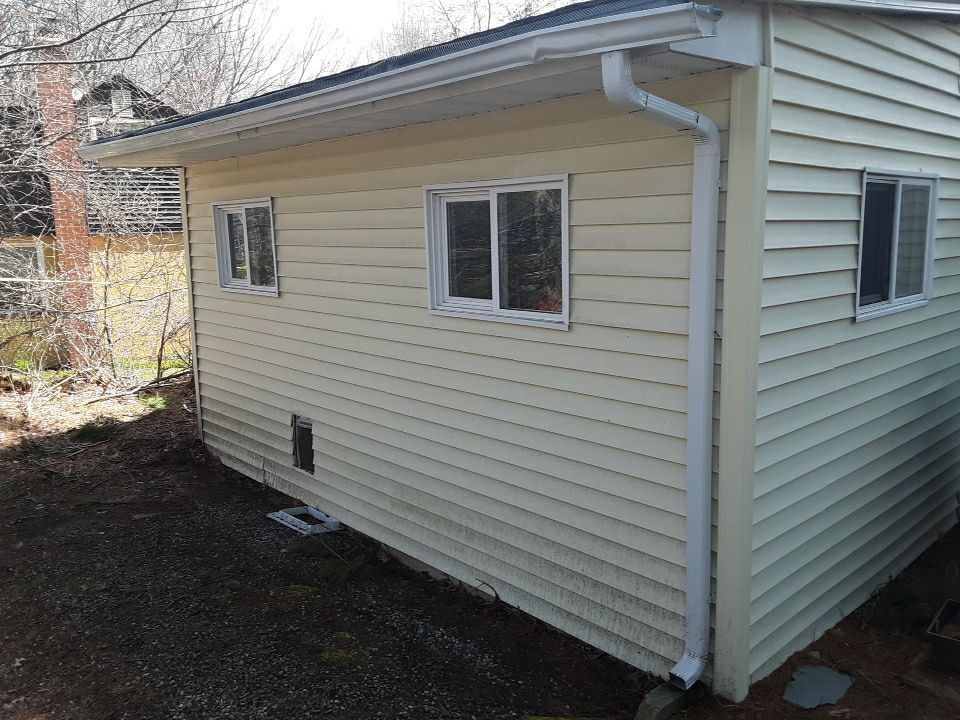
For Greenville homes where value and low maintenance are priorities, vinyl siding provides reliable weather protection at the most accessible price point of any siding material. Modern vinyl siding systems have improved dramatically, offering Greenville homeowners good protection against seasonal storms at an accessible price.
Modern vinyl siding comes in thicknesses ranging from .040 to .055 inches, with profiles including Dutch lap, clapboard, board and batten, and shingle styles. For Greenville homes, we recommend .044-inch minimum thickness for durability and appearance — thicker vinyl has deeper shadow lines and better impact resistance. Installation requires precise nailing (centered in the slot, not driven tight) to allow thermal expansion and contraction. Pine needle accumulation makes proper installation technique critical — vinyl installed too tight buckles in summer heat. Behind the vinyl, a weather-resistant barrier manages moisture that inevitably penetrates at joints and around accessories. Insulated vinyl options add R-2 to R-5 of insulation value and reduce the hollow sound that standard vinyl can produce. Homes in Greenville near nearby areas experience seasonal storms patterns that demand siding materials proven to maintain their integrity through decades of exposure.
For homeowners in Greenville who love the look of natural cedar but want a material that resists rot, insects, and weather damage, CertainTeed Cedar Impressions polymer shake siding delivers authentic wood grain appearance with lifetime durability. Homes near Greenville benefit from a siding option engineered specifically for New England’s demanding climate.
Pinnacle installs CertainTeed Cedar Impressions across Greenville for homeowners who want their home to have the character of natural cedar shake without the maintenance commitment real wood requires. Near Greenville, homes gain an exterior finish that reproduces the look of hand-split cedar — every panel is molded from actual cedar shingles using CertainTeed’s TrueTexture process, capturing authentic grain detail and shadow lines. The product line offers three distinct profile options: Perfection shingles for clean traditional lines, Rough-Split Shakes for rustic texture, and Half-Round Scallops for decorative details. CertainTeed’s wide color palette includes natural tones, deep shades, and Ageless Cedar blends that mimic the color variation of naturally weathered wood. Structurally, the panels feature reinforced nail slots, a double-thick nailing hem rated for 110 mph winds, and a Molded Perimeter Lock that creates secure panel-to-panel connections. Back ribs molded into each panel guard against warping and distortion. The polymer material does not absorb water, making it immune to the rot, mold, and freeze-thaw damage that affects real cedar in Greenville’s Rhode Island weather. Maintenance is limited to rinsing with a garden hose when needed.
Siding material selection in Greenville depends heavily on your property’s tree coverage, sun exposure, and how much maintenance you’re willing to do. Each material handles moisture and shade differently. Homes near nearby areas in Greenville face seasonal storms that makes this especially important for long-term exterior protection.
Cedar fits Greenville’s aesthetic naturally but requires more maintenance in shaded environments where moisture and mold accumulate faster. Fiber cement handles moisture well and provides a painted-wood appearance without the rot risk. Composite products resist mold and moisture completely with zero maintenance — a strong choice for homes surrounded by Stillwater area. Vinyl is the budget option but can trap moisture behind it without proper drainage details. For Greenville properties with significant tree canopy, we often recommend composite or fiber cement with enhanced ventilation behind the cladding. For residential homes near nearby areas in Greenville, siding performance depends on matching the right product to your home’s orientation and microclimate.
James Hardie is the leading fiber cement manufacturer, and their products are engineered specifically for different climate zones — HZ5 for freeze-thaw regions like Rhode Island. CertainTeed offers both vinyl and composite (Cedar Impressions) products with strong color and texture options. Everlast composite siding uses zero wood content for complete moisture immunity. In Greenville’s moisture-heavy environment, we follow manufacturer ventilation and drainage specifications closely to maintain warranty coverage. Homes in Greenville near nearby areas experience seasonal storms patterns that demand siding materials proven to maintain their integrity through decades of exposure.
For Greenville homes surrounded by trees and shade, the wall system behind the siding determines whether moisture gets managed or trapped. Rain screen technology solves this problem at the source. For Greenville properties exposed to seasonal storms, this matters more than many homeowners realize when planning a siding project.
The wall system we build for Greenville homes addresses moisture from every direction — rain from above, ground humidity from below, and condensation from temperature differentials. The assembly starts with sealed sheathing and a quality weather-resistant barrier, then adds 3/4-inch furring strips to create a ventilated air cavity. This cavity is the critical component for homes in Greenville’s environment — Stillwater area and Pine needle accumulation mean the wall needs active drying capacity, not just passive resistance. Vented starter strips at the base allow air to enter the cavity; vented trim at the top lets moist air exit. The result is continuous convective airflow that removes moisture before it can damage the wall structure. Homes in Greenville near nearby areas experience seasonal storms patterns that demand siding materials proven to maintain their integrity through decades of exposure.
Our process for Greenville homes starts with a free exterior inspection where we evaluate your current siding condition, check for moisture damage, assess ventilation behind the cladding, and review flashing details at windows and doors. We present options based on what your home actually needs — not a one-size-fits-all recommendation. After approval, we order materials (typically 2-3 week lead time for specialty products) and schedule installation. Our crew removes all existing siding, inspects and repairs the wall structure, installs the weather-resistant barrier and drainage system, and applies new siding with proper fastening, gapping, and trim details. We clean the site daily, remove all debris, and walk you through the finished project. Most Greenville homes take 1-2 weeks for complete siding replacement. For residential homes near nearby areas in Greenville, siding performance depends on matching the right product to your home’s orientation and microclimate.
Homes in Greenville’s wooded environment develop siding problems related to moisture, shade, and organic debris that accumulate over time. Many of these issues are hidden behind the visible surface. For Greenville properties exposed to seasonal storms, this matters more than many homeowners realize when planning a siding project.
Mold and algae growth on exterior surfaces is common on Greenville homes where tree shade keeps siding damp for extended periods. This surface issue often indicates a deeper problem — trapped moisture behind the cladding that has no way to dry out. We find rot behind siding on north-facing walls and under eaves where Stillwater area accumulate and hold moisture against the surface. Ice dam damage at the wall-to-roof transition occurs when snow melts, refreezes, and forces water behind the siding. Woodpecker damage is another issue specific to wooded areas — they target cedar and wood siding where insects have established colonies behind the cladding. For residential homes near nearby areas in Greenville, siding performance depends on matching the right product to your home’s orientation and microclimate.
In Greenville’s wooded environment, siding lifespan is affected by moisture exposure, shade, and maintenance habits. Materials that resist moisture inherently last longer in this setting than those that depend on surface protection. Greenville homeowners along Greenville face seasonal storms that puts extra demands on siding systems throughout the year.
Cedar shingle siding in Greenville: 20-40 years with proper maintenance, though homes in heavy shade may see mold-related issues sooner without regular cleaning and staining. Unfinished cedar weathers to gray in 2-3 years and lasts 10-15 years before structural deterioration in shaded settings. Fiber cement: 30-50+ years — the material resists the moisture and mold conditions that affect wood products in Greenville’s environment. Factory finish lasts 15+ years. Composite: 30-50+ years with zero maintenance — ideal for Greenville homes where moisture and shade would require constant upkeep with wood. Vinyl: 20-40 years, though its appearance can decline faster in shaded areas where algae and mildew discolor the surface. For residential homes near nearby areas in Greenville, siding performance depends on matching the right product to your home’s orientation and microclimate.
Knowing when to replace siding saves Greenville homeowners from spending money on repairs that don’t address the real problem. These are the signs that replacement is the better investment. The unique combination of seasonal storms and residential homes in Greenville makes these factors worth careful consideration.
Replace siding when you see: persistent warping, buckling, or cracking that is not limited to a few panels; rot in wood siding that extends beyond surface damage; mold or mildew that returns within weeks of cleaning; paint that peels within 2-3 years of application; loose panels that shift in wind; water damage on interior walls; energy bills increasing without other explanation; and soft spots when pressing on the wall surface. If your Greenville home’s siding is 20+ years old and showing multiple symptoms, replacement typically makes more financial sense than ongoing repair. In Greenville, residential homes near Greenville represent the most common siding scenarios we encounter, and each architectural style demands specific installation techniques.
We’ve earned the trust of Greenville homeowners by delivering siding installations that perform year after year, backed by both our workmanship guarantee and full manufacturer warranties. In Greenville, where residential homes are common near Greenville, this directly affects how siding performs over its lifespan.
Pinnacle Roofing & Skylights (RI Reg #39446) understands the moisture challenges that Greenville’s environment creates for homes. We build every siding project with the ventilation and drainage details that prevent the rot and mold problems common in shaded, humid settings. Our manufacturer certifications ensure your installation activates full product warranties, and our workmanship guarantee covers the installation details that make the system work. We’ve completed projects throughout Greenville on Colonials in every condition. Suburban homes throughout Greenville face seasonal storms that tests siding from every direction — proper material selection accounts for your property’s specific exposure.
Siding costs in Greenville depend on material choice, home size, structural condition, and installation complexity. We provide detailed estimates based on your specific property — not ballpark numbers from a website. Homes near nearby areas in Greenville face seasonal storms that makes this especially important for long-term exterior protection.
For a typical Greenville home (1,500-2,500 sq ft of siding area), expect vinyl siding replacement to run $7,000-$14,000, fiber cement $14,000-$28,000, composite $12,000-$25,000, and cedar $16,000-$30,000+. These ranges include complete removal of old siding, sheathing inspection and repair, weather barrier and drainage plane installation, new siding with trim and accessories, and full cleanup. Actual cost depends on your home’s specific size, condition, and material choice. We provide detailed written estimates after on-site assessment. Financing is available — see financing options for details. Suburban homes throughout Greenville face seasonal storms that tests siding from every direction — proper material selection accounts for your property’s specific exposure.
Storm-Damaged Roofs Require Fast Action
When you find storm damage on your roof in Rhode Island, swift action can be crucial. Contacting trusted roofing professionals like us for a thorough inspection. Our expert team will assess the damage and determine if roof repairs or roof replacement is recommended. With New England’s predictably unpredictable weather, it is important repairs happen quickly to prevent further loss.