nn
Skip to content
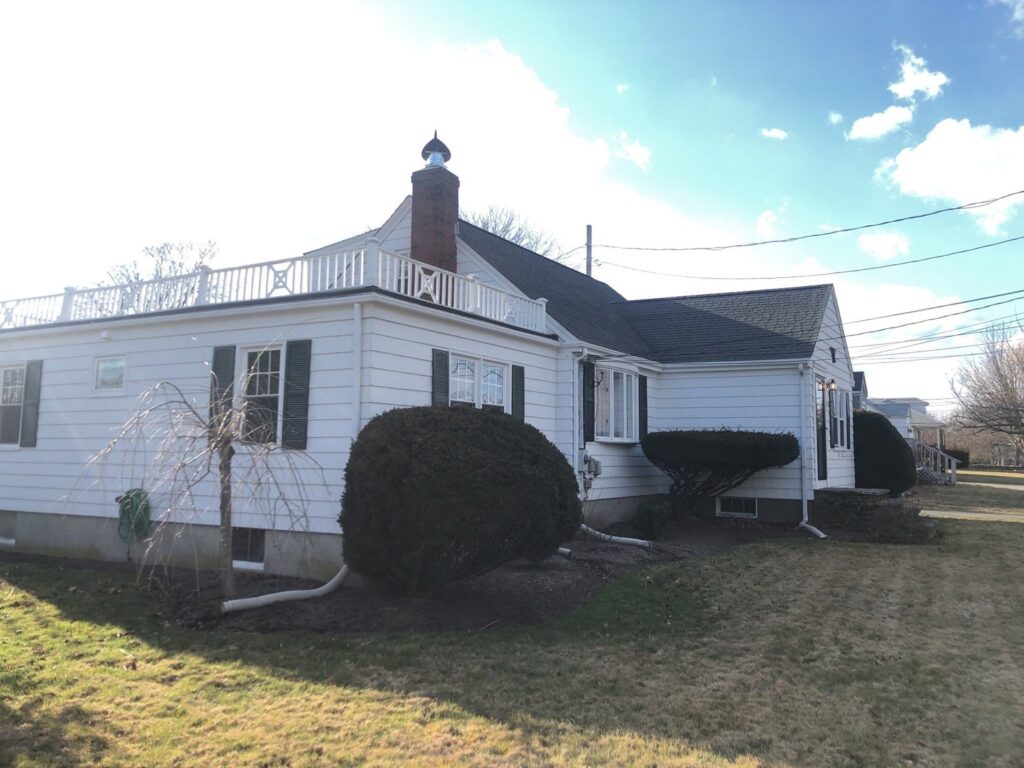
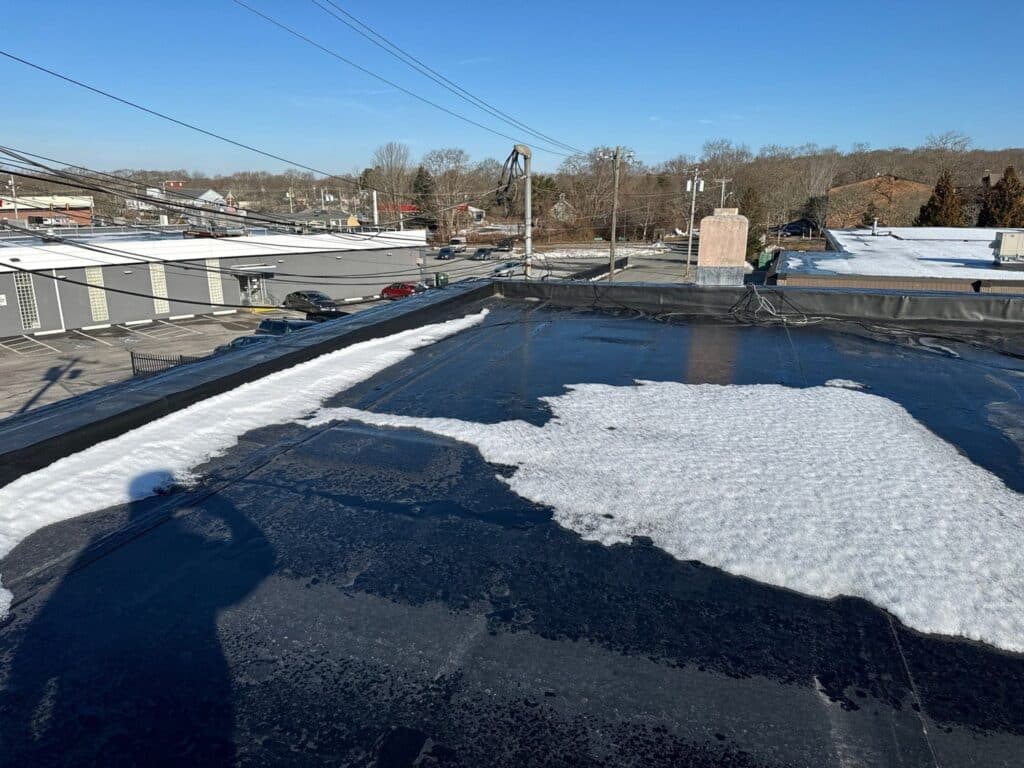
Every Providence project is different, and this commercial roofing was no exception. This Victorian required materials and methods tailored to
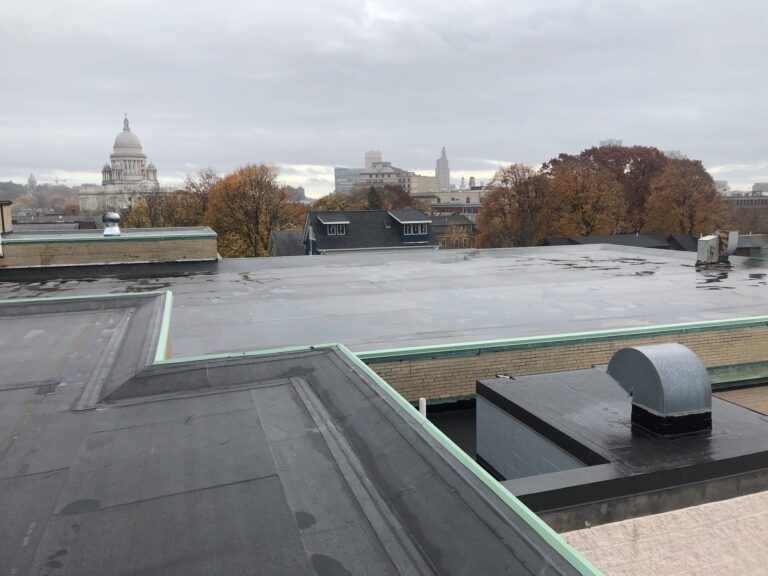
Another Providence project completed right here by Pinnacle Roofing & Skylights: a Commercial Roofing on a commercial property. Materials were
Commercial buildings in Clayville are subject to building codes that impose vastly stricter requirements than residential construction. The International Building Code as adopted by Clayville’s jurisdiction specifies fire ratings for commercial roofing systems, wind uplift resistance standards tied to building height and exposure category, attachment requirements for roof-mounted equipment, and energy efficiency criteria. These code requirements change based on building classification (commercial vs. residential), occupancy type, and whether the building is in a flood zone or special wind exposure area. Clayville’s Route 6 commercial area commercial area has specific exposure classifications that mandate particular performance levels. Additionally, commercial buildings require engineered roof system designs submitted for permit approval – not just the generic installations used on residential buildings. Insurance companies impose their own requirements on commercial roofing systems, and some major property owners require certifications from specific manufacturers. A contractor working on commercial roofing in Clayville must navigate all of these regulatory and contractual requirements simultaneously. Residential roofers trained to follow simple prescriptive rules find themselves completely unprepared for the documentation, engineering, and coordination demands of commercial projects.
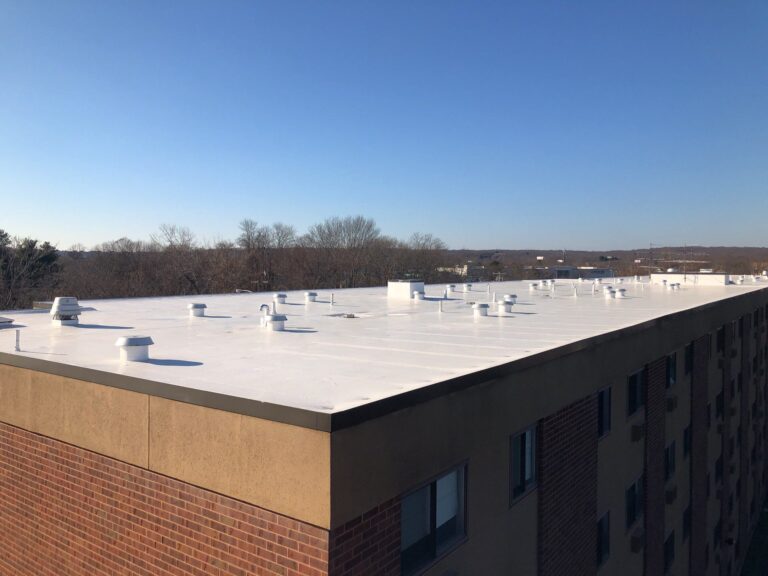
When a commercial roof’s waterproofing layer has failed but the structural deck remains intact, silicone coating offers Clayville property owners a middle-path solution.
Silicone polymers cure into a highly cross-linked, rubber-like solid through moisture-induced condensation polymerization. This mechanism differs fundamentally from acrylic coatings, which cure by water evaporation and are therefore vulnerable to re-wetting. Acrylic-coated roofs in Clayville’s climate experience destructive expansion and contraction as morning dew penetrates the coating. Silicone’s chemistry resists this because the cured polymer contains no water-soluble binders. The result is a membrane that achieves superior ponding water resistance and greater longevity in Clayville’s humid climate. Additionally, silicone polymers maintain elasticity across temperature extremes, from below freezing during Rhode Island winters to heating above one hundred twenty degrees in summer sun exposure.
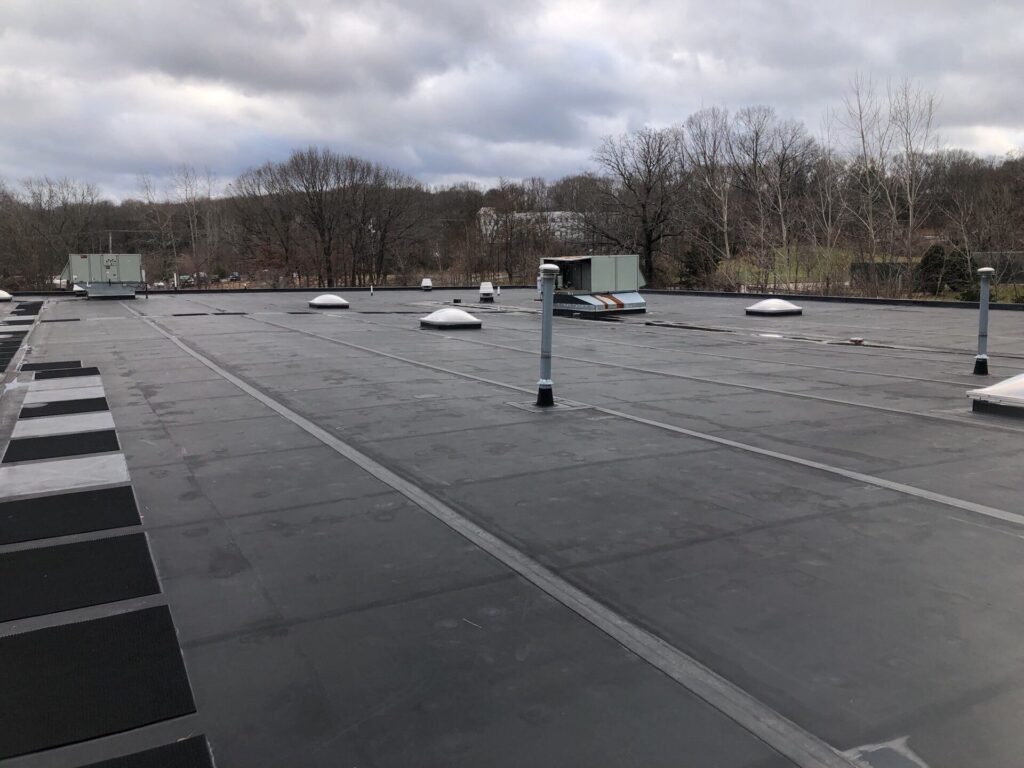
EPDM’s track record on Clayville commercial buildings spans decades, with countless installations demonstrating reliable protection in New England’s climate.
EPDM membrane comes in forty-five, sixty, and ninety-mil thicknesses, and selection is not arbitrary but rather depends on the building’s use, traffic exposure, and budget. Forty-five mil EPDM represents the minimum practical thickness and is used on Clayville commercial buildings with minimal roof traffic and lower budget constraints. Sixty mil EPDM provides the middle ground, offering improved puncture resistance and durability at moderate cost; this is the most common thickness specified on Clayville commercial buildings. Ninety mil EPDM delivers exceptional puncture resistance and longevity; it is recommended for Clayville commercial buildings with regular rooftop traffic (maintenance personnel, HVAC service, safety inspections). The thickness selection affects service life, maintenance costs, and capital cost directly. A Clayville warehouse with heavy HVAC equipment and frequent service access benefits from ninety-mil specification, which provides near-puncture-proof protection. A Clayville office building with minimal roof access might use sixty mil, accepting slightly lower traffic durability to reduce capital expenditure. Pinnacle recommends thickness based on the specific building’s use patterns and the owner’s ownership timeline.
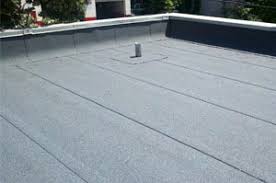
Modified bitumen roofing provides Clayville commercial buildings with multi-layer redundant waterproofing suited for high-traffic and complex roof conditions.
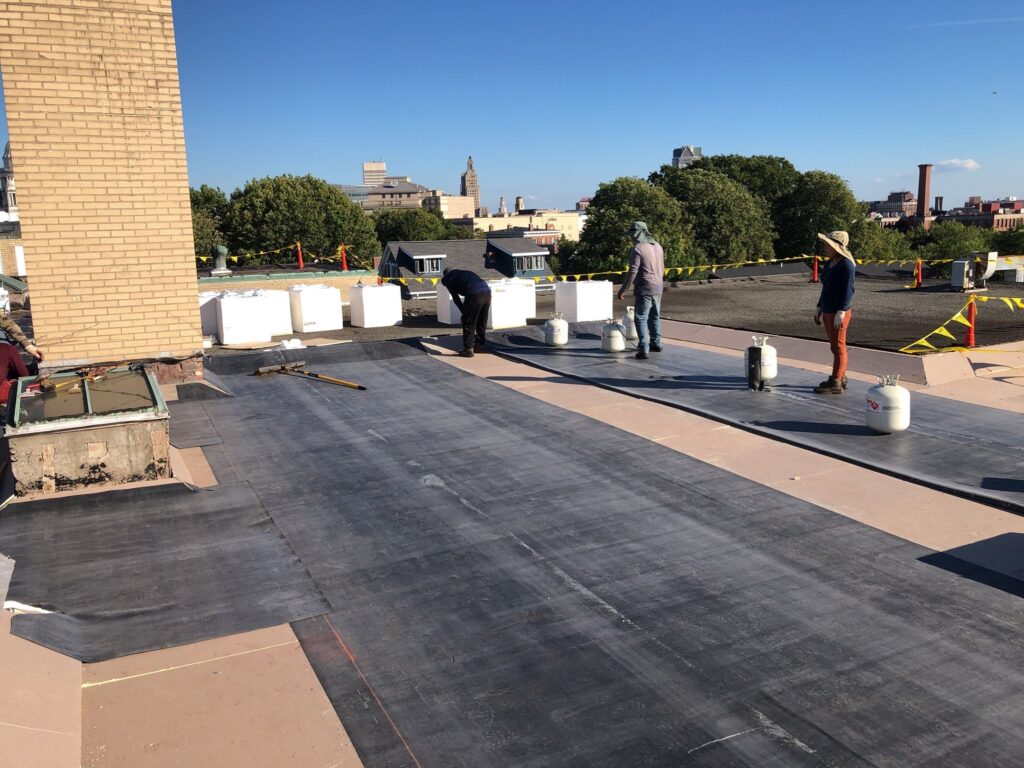
Modified bitumen installation on Clayville commercial buildings can be accomplished through torch application (heat-activated bonding) or cold adhesive methods (mastic or self-adhering sheets). Torch application uses propane torches to heat the underside of modified bitumen sheets, activating the bitumen to bond to the substrate and create field seams. This method provides rapid installation and strong seam bonding, but requires careful execution to avoid substrate overheating and fire risk. Clayville commercial roofers using torch application must follow strict safety protocols and avoid installation near combustible rooftop materials. Cold adhesive installation applies compatible mastics to the substrate, then positions the sheet, or uses self-adhering sheets that eliminate the need for separate adhesive. Cold adhesive installation is safer and simpler but requires meticulous surface preparation and is slower than torch application. Some Clayville commercial buildings (particularly older structures with lightweight decking or composite materials) are unsuitable for torch application due to fire risk, making cold adhesive mandatory. Pinnacle evaluates each Clayville commercial building’s deck type, adjacent structures, and safety requirements to determine the appropriate installation method.
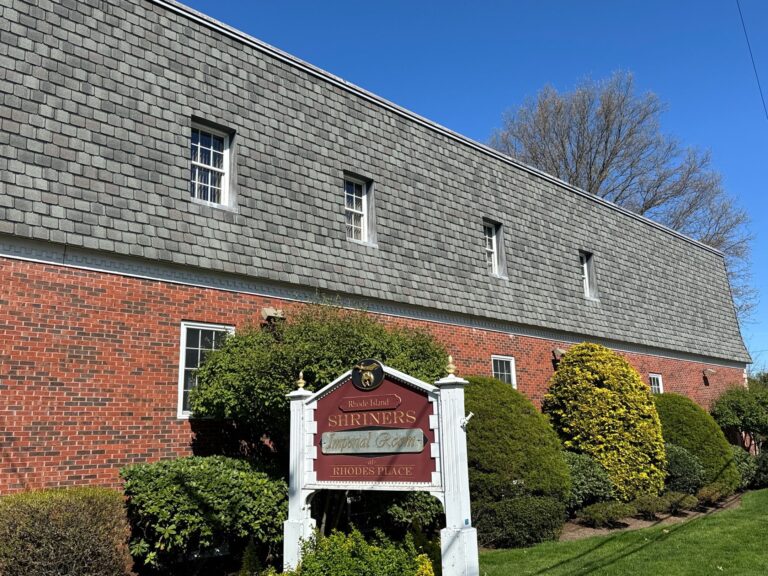
Clayville commercial properties with prominent roof lines choose shingle systems that enhance property appearance while meeting commercial performance requirements.
Clayville commercial buildings (particularly in fire-sensitive districts or high-rise locations) face building code requirements for roof fire-resistance ratings. Class A fire rating (the highest level) is required for many Clayville commercial and mixed-use buildings. Not all shingle products achieve Class A rating without additional underlayment or assembly specifications. Clayville buildings in fire districts or constructed adjacent to other buildings may face additional fire-resistance requirements beyond Class A shingles alone. CertainTeed Integrity and other systems specify Class A assembly configurations that include designated underlayment and installation methods necessary to achieve the fire rating. Clayville commercial buildings in sensitive locations (downtown, adjacent to other structures, in institutional zones) should verify fire-rating requirements during design phase and ensure shingle specifications include the assembly configuration needed to comply. Non-compliant installations will be rejected by code officials, requiring replacement and creating timeline delays.
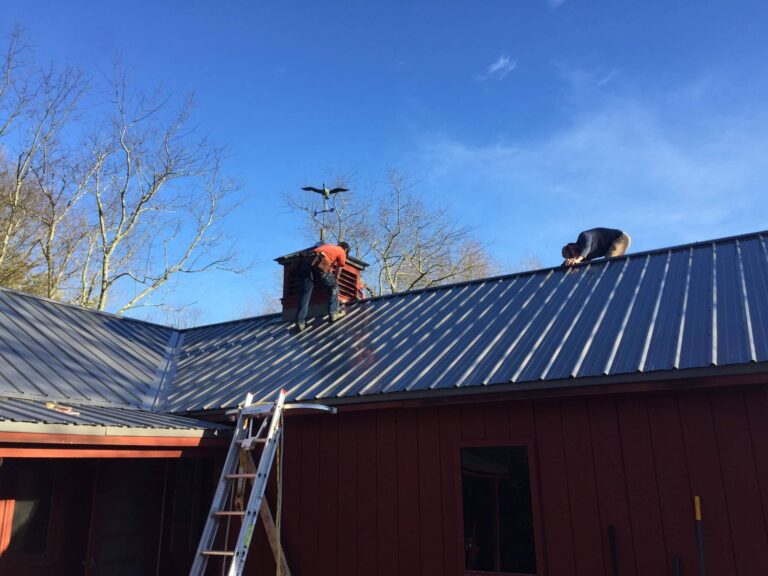
Clayville commercial buildings with metal roofing systems installed in prior decades demonstrate the durability foundation for continuing metal specification today.
Light-colored metal roofing reflects solar radiation effectively, reducing roof surface temperatures by thirty to fifty degrees compared to dark membranes. Clayville commercial buildings with significant air conditioning loads benefit from metal roofing’s reflectivity, which reduces cooling energy consumption by ten to twenty percent depending on building geometry and climate patterns. The energy savings accrue annually throughout the roof’s service life, resulting in substantial cumulative savings on a Clayville building held for multiple decades. A Clayville commercial building with metal roofing operating for fifty years accumulates cooling cost savings that often exceed the premium cost of metal over cheaper alternatives. The reflectivity also reduces thermal stress on the metal panel system, potentially extending service life. Clayville property owners evaluating lifecycle costs should include energy savings from reflectivity when comparing metal roofing to other systems.
Clayville building owners with multiple properties might use different roofing systems on different buildings because each building’s conditions and economics are distinct.
Clayville commercial property owners planning five to ten-year holding periods should prioritize lowest upfront cost and minimum maintenance demands, favoring silicone coating or basic EPDM. Clayville commercial owners planning twenty to thirty-year holdings should evaluate EPDM and modified bitumen, where service life approximates holding period. Clayville commercial property owners planning forty-year-plus ownership should prioritize metal roofing, where the system’s longevity aligns with ownership timeline and lifecycle cost is optimized. Institutional Clayville owners (colleges, municipalities, health systems) often plan indefinite ownership and prioritize metal roofing for maximum longevity and minimal operational demands. The alignment between building ownership timeline and roofing system service life is critical to financial optimization.
GAF commercial-grade asphalt shingles represent a lower-slope alternative suited to Clayville commercial buildings transitioning from traditional residential appearance toward genuine commercial performance. The manufacturing process creates shingles with enhanced adhesive systems and mechanical fastening that differ substantially from residential shingles. GAF commercial products specifically address the fastening load requirements and wind uplift resistance standards that Clayville commercial buildings must meet. The company’s engineering focus on sealing strength and adhesive durability translates to Clayville commercial roofs with reduced blow-off vulnerability during wind events. GAF’s solar reflectance options help Clayville commercial property owners achieve energy efficiency while meeting fire rating requirements in their specific building classification. The manufacturer provides detailed installation documentation and application guidelines specifically for Clayville’s building code environment. For Clayville commercial properties where architectural continuity with surrounding residential buildings influences aesthetic priorities, GAF commercial shingles provide legitimate performance while maintaining the sloped-roof appearance.
Each layer of Clayville commercial roof systems serves specific functions – from structural support through thermal protection to water management.
A properly designed commercial roof system on Clayville buildings functions as an integrated assembly where each layer supports the others’ function. The deck provides structural support for insulation and membrane. The vapor barrier manages moisture migration. The insulation provides thermal resistance while supporting membrane installation. The cover board protects insulation and stabilizes the membrane platform. The membrane waterproofs the system. Flashing protects penetrations. Drainage removes water. Fastening resists uplift forces. A failure in one layer cascades into problems in others – poor drainage allows ponding water that stresses membranes and insulation, moisture penetrates insulation creating structural problems, exposed insulation degrades and loses thermal value. Clayville commercial roofing assessments evaluate the entire system, not just the visible membrane. Clayville commercial property owners should demand that roofing contractors address the complete system rather than suggesting membrane replacement while ignoring deck condition, insulation integrity, or drainage adequacy. System-level thinking prevents the failures that would otherwise recur within years of addressing only the symptoms.
Clayville commercial roofing projects conclude with comprehensive completion procedures ensuring that the roofing system is fully functional and properly documented. Pinnacle’s final inspection confirms that all components of the Clayville roof system are installed correctly and that no defects or incomplete work remain. The Clayville building’s roof is photographed comprehensively, creating a baseline for future assessments. As-built drawings document the actual installed system, sometimes varying slightly from design specifications due to field conditions encountered during Clayville project execution. Clayville property owners receive detailed documentation including membrane specifications, application parameters, maintenance requirements, and warranty coverage details. Training is provided on the specific Clayville roof system’s maintenance needs – what seasonal activities are required, what inspection procedures should be followed, and what contractor to call for future maintenance. Warranties are activated and registered with manufacturers. Clayville property owners receive clear communication about how to maintain their new roof and what they should monitor. Completion documentation creates the foundation for successful long-term Clayville roof performance.
Recognizing early warning signs of Clayville commercial roof problems enables timely intervention that prevents extensive damage.
Water infiltration into Clayville commercial roof insulation creates cascading damage that becomes increasingly expensive to remediate the longer the insulation remains wet. Roofing leaks that penetrate the membrane may saturate insulation boards before entering the occupied spaces below. Clayville insulation (typically polyisocyanurate or extruded polystyrene) loses thermal resistance and structural capability when saturated. The weight of absorbed water adds significant load to Clayville roof structures – a saturated insulation board can weigh two to three times the dry weight. Wet insulation also becomes a substrate for mold growth if conditions remain damp. Clayville buildings experiencing persistent leaks sometimes have extensive wet insulation beneath apparently modest surface damage. Identifying the extent of wet insulation requires infrared imaging or core sampling, which can reveal insulation saturated across large areas distant from the visible leak point. Replacing wet insulation requires removing the waterlogged boards, drying the deck substrate, and installing new insulation – a substantial repair expense. Clayville commercial property owners facing wet insulation problems must distinguish between addressing only the surface leak versus addressing the underlying insulation damage. Remediation of wet insulation on Clayville roofs sometimes includes selective replacement of affected boards rather than complete system replacement.
Different Clayville commercial roofing system types deliver substantially different service life potential depending on material properties and exposure.
Metal roofing systems on Clayville commercial buildings, particularly standing-seam metal, deliver exceptional service life when installed correctly and maintained properly. Clayville metal roofs commonly perform reliably for forty to fifty years, and some installations exceed fifty year service life. The metal itself (typically aluminum or steel with protective coatings) resists degradation much longer than organic membrane materials. Clayville’s coastal salt air presents corrosion challenges that require higher-grade protective finishes (polyester or polyvinylidene fluoride rather than basic paint). Properly coated Clayville metal roofs resist salt exposure effectively. The seams represent the principal failure point on metal roofs – seam sealants must be resealed periodically (every ten to twenty years) to maintain waterproofing as sealants degrade. Clayville metal roofs that receive appropriate seam maintenance often extend beyond fifty years. The fasteners connecting metal panels require attention – fastener corrosion can cause leaks even when the metal panels remain sound. Clayville metal roof lifespan calculations often assume replacement of seam sealants and fastener maintenance at twenty year intervals. Given the extended service life potential, Clayville property owners with metal roofs should view them as long-term assets justifying higher initial installation costs.
Professional assessment of Clayville roof condition determines whether repair, restoration, or replacement is technically viable and financially prudent.
Choosing repair or restoration to defer replacement decision essentially postpones the financial planning conversation – Clayville property owners must eventually address roof replacement. Deferring replacement for one to two years (for budget reasons) is sometimes justified and acceptable. Deferring replacement for five to seven years to avoid decision-making is rarely wise and often creates larger ultimate expense. Clayville property owners should establish long-term roof asset management planning, evaluating when replacement will likely be necessary and beginning financial planning three to five years before that point. Clayville commercial buildings with fifteen-year-old roofs should be evaluating whether replacement will occur at year twenty or year twenty-five and beginning the planning process. Avoiding the repair/restore/replace decision until failure forces action guarantees the least favorable financial and operational circumstances. Clayville property owners demonstrating financial discipline in roof asset management position their properties for long-term success and preserve capital budgets for other priorities.
Clayville property owners choosing commercial roofing contractors benefit from Pinnacle’s commercial-specific expertise and established track record.
Pinnacle’s inspection methodology for Clayville commercial roofs generates comprehensive documentation allowing property owners to make informed decisions. Inspections include detailed photographs of every roof component, measurement of roof areas, assessment of membrane condition, identification of failure modes, and documentation of existing damage. Clayville property owners receive thorough inspection reports explaining current conditions and future trajectory if no action is taken. This documentation gives Clayville property owners the information they need for financial planning and budgeting. The systematic approach prevents the reactive response where problems suddenly force emergency decision-making – Clayville property owners with proactive inspection planning can make choices on their schedule rather than being forced by emergency failure.
Clayville property owners comparing roofing quotes should understand what components drive pricing and why estimates may vary between contractors.
Clayville commercial roofing material costs fluctuate based on commodity pricing, manufacturer production, and supply chain factors. EPDM rubber pricing fluctuates with petroleum markets. Asphalt prices affect modified bitumen costs. Metal pricing affects metal roofing systems. Silicone coating costs relate to polymer resin pricing. Clayville property owners evaluating roofing costs should understand that material pricing can shift between bid development and project execution – some contractors build in contingency for material cost increases. Clayville property owners locking in pricing should clarify whether quotes are subject to material cost escalation. The alternative is fixed-price contracts where the contractor bears material cost risk. Clayville contractors may offer modest price reductions if projects are deferred to times when material costs are projected to be lower, though this is relatively rare. Financing through Synchrony Financial makes every Clayville commercial roofing project affordable with low monthly payments and zero percent interest options.
Storm-Damaged Roofs Require Fast Action
When you find storm damage on your roof in Rhode Island, swift action can be crucial. Contacting trusted roofing professionals like us for a thorough inspection. Our expert team will assess the damage and determine if roof repairs or roof replacement is recommended. With New England’s predictably unpredictable weather, it is important repairs happen quickly to prevent further loss.
Jennifer WeinraubTrustindex verifies that the original source of the review is Google. Very easy group to work with. We had leaks in a fairly new rubberized roof that was installed by someone else. They came out to evaluate the roof quickly as it was leaking, did a thorough evaluation, and then fit us in as an emergency repair. Mike CholkoTrustindex verifies that the original source of the review is Google. Scott and his crew from Pinnacle Roofing were flexible in scheduling and a pleasure to work with. They were thoroughly in installing my Velux Skylight. In addition, they noticed a few other issues with my roof and were quick to acquire the supplies to fix the roof. Highly recommend working with a business that is local and competent. Paul YelleTrustindex verifies that the original source of the review is Google. I had a skylight which had deteriorated and needed replacement. I called Pinnacle and found them to be responsive, personable, and efficient. I will call them again, if needed. jorge matesanzTrustindex verifies that the original source of the review is Google. Overall satisfactory. Mary Ellen LemireTrustindex verifies that the original source of the review is Google. We recently replaced our 38 year old skylights with Velux Solar skylights with Pinnacle Roofing and Skylights. From the first visit to our home with Joe F. to the completion of the job everything went perfectly. Joe explained everything from installation of the product with expertise and patience. We had many questions and he took the time to answer them all. The estimate was much lower than the other 3 we obtained but the installation was top notch. Joe and the owner Scott were both here the day the skylight were installed and all went so well. They were even able to match the color of our shingles which were nine years old. In never thought they would be such a perfect match. Our thanks and gratitude to all at Pinnacle for doing such a wonderful job. We couldn't be more happy. Thank you so much. We will not hesitate to recommend you to everyone we know who needs a new roof or skylights. Alan LemireTrustindex verifies that the original source of the review is Google. When I decided to have four 38 year old skylights replaced I requested quotes from four different installers. Pinnacle was by far the lowest. I admit that I was a little skeptical. I remembered the old saying to throw out the highest and the lowest and go with someone in the middle. But, I was very impressed with Joe F. the sales rep. He was the most professional, gave me an excellent presentation and provided printed details on the construction of the Velux skylights and the options available. He also included step by step procedures that they would follow to install the skylights. I checked out their office in North Kingston. It is located in the rear of an old stone mill building in a section called "The Hive". it's small and not at all flashy but a testament to the frugality of the business and I believe that this shows up in their desire to provide excellent customer service at a reasonable price. The crew arrived on time for the installation, were friendly and very hard working. I watched the first install and they followed the Velux installation to the letter as seen in the YouTube Velux video. The owner, Scott, even stopped by to check on the job. At the end of the day everything was cleaned up properly and the dumpster was picked up the next morning. Overall I am extremely happy with Pinnacle and would recommend that you give them a shot. Matthew KachanisTrustindex verifies that the original source of the review is Google. We just had a new black roof with matching gutters and downspouts installed and the whole process was excellent. Scott, the owner, was extremely thorough in his inspection—he checked everything including the attic—and provided a very accurate quote. During the job, he kept me updated with pictures so I knew exactly what was happening, even when additional plywood was needed. The crew worked neatly, on time, and left everything spotless. Professional, courteous, and fair. Highly recommend Scott and his team for anyone needing roofing work! Lawrence NordinTrustindex verifies that the original source of the review is Google. Dave JTrustindex verifies that the original source of the review is Google. Just wanted to praise Pinnacle Roofing Skylights for their excellent job replacing our roof. Top notch company from day 1. After calling a few local companies, we ended up having 6 estimates, narrowed it down to 2 companies based on competitive pricing, first impression meeting when they stopped by the house to do the inspection prior to submitting the quote. Joe was very nice and extremely knowledgeable, answered all the questions we had. Also the only one to go up on the roof for inspection. Once we received the estimates. We knew we wanted Pinnacle. They provided an excellent presentation with the company information, the roof shingle options, the warranties & much more. It took about 1 month from first reaching out to the roof installation. Scott & Joe were present that day, they made sure everything was running great. We were also impressed with the crew as well, they worked very hard, the clean up was excellent! Will highly recommend. This company is in their own league when it comes to roof replacement. It has been about a month since installation with no issues. Exceptional, so glad we found you. Robert MoskolTrustindex verifies that the original source of the review is Google. Recently had Skylights installed by Pinnacle Roofing. Owner Scott Olsen very easy to work with. Pricing very fair and working done promptly. Workers came prepared site left clean. Highly recommend Pinnacle for roofing needsVerified by TrustindexTrustindex verified badge is the Universal Symbol of Trust. Only the greatest companies can get the verified badge who has a review score above 4.5, based on customer reviews over the past 12 months. Read more