nn
Skip to content
Roof ventilation clears the warm, moist air that collects in an attic — but the less of that air you
This Charlestown Cape’s re-roof was run efficiently from tear-off to cleanup, so the homeowners had their house back quickly. Pinnacle
This Richmond ranch’s new roof and trim were completed efficiently, so the homeowner had the house back with minimal disruption.
Point Judith’s proximity to Block Island ferry routes and relentless ocean winds create moisture and corrosion challenges few inland roofers understand. We engineer ventilation paths that extract humidity before salt air penetrates deeper into attic cavities. Ridge vents paired with soffit intake maximize natural convection while resisting wind-driven water intrusion. Our QuietCool whole-house fans operate efficiently even when coastal fog rolls across your roofline.
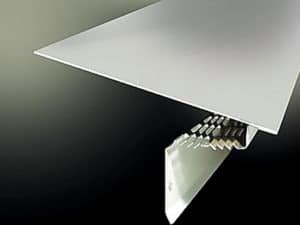
Along the roofline of Point Judith homes near Narragansett Town Beach, vented drip edge serves dual purposes—channeling rainwater away from fascia while allowing fresh air to enter the attic through a continuous intake strip. This is especially critical for coastal properties where salt exposure accelerates wood deterioration at the eave.
Vented drip edge replaces traditional drip edge with an engineered profile that includes a built-in ventilation channel. For Point Judith homes near Narragansett Town Beach, this means continuous intake airflow from eave to ridge without relying on individual soffit vents that can become blocked by debris, paint, or insulation. The component channels water off the roof deck and into the gutter system while a perforated strip allows air to pass into the soffit cavity and up through the attic. Coastal Cottages near seawall benefit from marine-rated materials that resist salt corrosion—a common failure point for standard aluminum components in shoreline communities. Pinnacle installs vented drip edge as part of complete ventilation systems, ensuring proper intake volume matches exhaust capacity for balanced airflow that prevents moisture accumulation and ice dam formation.
Roof Exhaust Fans installation provides Point Judith homes near Narragansett Town Beach with powered exhaust airflow that actively removes heat and moisture from the attic. Coastal properties benefit from enhanced airflow management that combats salt-air moisture infiltration and the humidity levels that accelerate roof deterioration along Rhode Island’s shoreline.
Installing roof exhaust fans on Point Judith homes near Narragansett Town Beach addresses the active side of attic ventilation, mechanically removing the hot, humid air that natural convection alone cannot manage during peak conditions. Electric exhaust fans mount through a weatherproofed roof opening and use thermostatic controls to activate when attic temperatures exceed set thresholds. Solar exhaust fans use photovoltaic panels to power their motors, providing cost-free operation that peaks during the hottest sunshine hours when demand is highest. For coastal properties where persistent humidity saturates attic spaces faster than passive systems can manage, powered exhaust provides the active moisture removal that prevents sheathing damage and mold growth. Pinnacle calculates CFM requirements based on your specific attic volume and configures fan placement for maximum heat and moisture removal with minimum energy expenditure.
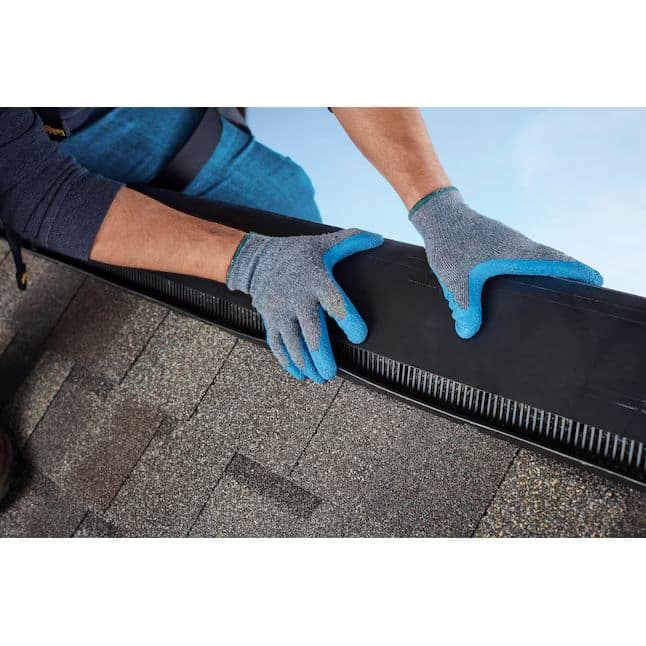
For coastal homes in Point Judith near The Towers (historic stone structure), ridge vents deliver continuous passive exhaust ventilation along the full length of the roof peak. The marine environment demands ventilation components that maintain performance despite salt exposure, high humidity, and the powerful storms that sweep through Rhode Island’s coastal communities.
Ridge vent installation provides Point Judith homes near Narragansett Town Beach with the most uniform exhaust distribution available in residential ventilation. Unlike point-source exhaust like box vents or fans that create localized airflow, ridge vents draw air equally from the entire attic space along the full ridge length. An opening cut along the roof peak allows warm air to exit naturally, while an engineered profile with integrated baffles prevents weather infiltration. Marine-rated ridge vent profiles with enhanced weather baffles resist the wind-driven rain coastal storms deliver, which is critical where standard profiles would allow water infiltration. Each installation begins with calculating the net free area your attic requires and verifying that ridge length provides adequate exhaust to balance intake ventilation across your Point Judith property.
For coastal homes in Point Judith near Block Island Sound, soffit vents deliver essential intake ventilation through the eave overhang that feeds the entire attic airflow system. The marine environment demands ventilation components that maintain performance despite salt exposure, high humidity, and the powerful storms that sweep through Rhode Island’s coastal communities.
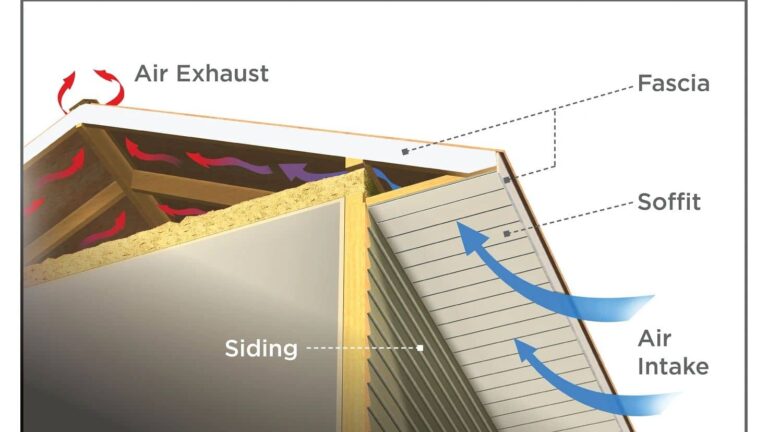
Soffit vents are the intake foundation of every balanced ventilation system protecting Point Judith homes near Narragansett Town Beach. Installed in the underside of the roof overhang, they allow fresh outdoor air to enter the attic at the lowest point of the roof system where it begins its upward journey toward exhaust vents at the ridge. Without adequate intake, even well-installed exhaust components cannot function effectively because there is no replacement air to draw through the attic space. Coastal homes face the additional challenge of salt-laden air entering through intake vents, requiring corrosion-resistant materials that maintain open airflow despite marine exposure and salt crystallization. Pinnacle installs soffit vents with proper baffles that prevent insulation from blocking the intake pathway, a critical detail that determines whether the system works as designed for Point Judith homeowners.
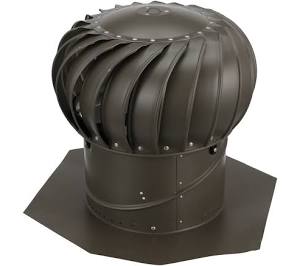
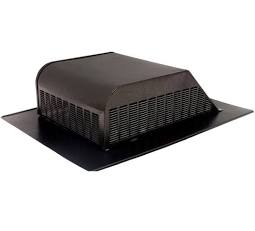
Roof Vents (Box Vents and Turbine Vents) installation provides Point Judith homes near Point Judith with targeted exhaust ventilation at specific points across the roof surface for localized heat and moisture removal. Coastal properties benefit from enhanced airflow management that combats salt-air moisture infiltration and the humidity levels that accelerate roof deterioration along Rhode Island’s shoreline.
Box and turbine roof vents offer Point Judith homeowners near Narragansett Town Beach versatile exhaust solutions adaptable to virtually any roof configuration. Where ridge vents need continuous ridge length, box and turbine vents work individually on hip roofs, short ridge sections, and complex multi-level rooflines common among Rhode Island Capes. Box vents provide baseline passive exhaust with each unit serving a calculated area of attic space. Turbine vents amplify this with wind-powered rotation that increases exhaust during conditions when ventilation demand is typically highest. Coastal wind patterns make turbine vents particularly effective, as consistent breezes power continuous exhaust that keeps salt-moistened attic air moving throughout the day. Pinnacle designs each Point Judith installation with manufacturer-specified spacing and airflow calculations that ensure complete attic coverage.
Choosing the right Point Judith ventilation combination depends on your roofline and exposure.
Point Judith homes facing Block Island directly benefit most from ridge vents with soffit intake—the ocean exposure demands maximum passive efficiency. Homes with complex rooflines or maritime-trade neighbors may need supplemental roof exhaust fans. We assess wind exposure, existing moisture problems, and your home’s unique coastal position before recommending the optimal combination.
QuietCool’s sealed-ductwork design prevents outside air from mixing with conditioned interior air—critical when that outside air carries salt particles. We’re an authorized QuietCool dealer, ensuring your system is installed to spec and serviced by factory-trained technicians familiar with coastal installations.
Your Point Judith ventilation system integrates intake, transport, and exhaust into one coordinated strategy.
Soffit vents supply outside air; ridge vents, box vents, or roof exhaust fans expel it. Whole-house fans accelerate this cycle, cooling your home while removing salt-laden humidity. Vented drip edge and proper flashing prevent coastal weather from entering at weak points. Each component must be sealed and angled correctly—we install nothing on guesswork.
We inspect your attic for existing moisture damage, check soffit and fascia condition, and map roof anatomy. Then we design a ventilation layout that maximizes passive airflow while sealing against salt-spray infiltration. Installation includes proper flashing, sealant, and spacing. Finally, we verify airflow and ensure all penetrations are sealed against Point Judith’s maritime weather.
The coastal climate in Point Judith creates persistent ventilation problems that many homeowners overlook until damage becomes visible. Salt-laden moisture migrating into attic spaces near The Towers (historic stone structure) accelerates corrosion of metal fasteners, promotes mold growth in sheathing, and degrades insulation performance—issues that proper ridge and soffit ventilation systems prevent.

Ventilation problems affecting Point Judith homes near The Towers (historic stone structure) range from obvious failures to subtle performance decline that homeowners notice only through rising energy costs or gradual comfort changes. Obvious failures include exhaust fans that stop working, visible damage to ridge vent caps, and soffit panels that have detached or deteriorated. Subtle problems are more common—salt corrosion gradually reducing exhaust capacity until the system can no longer manage moisture or temperature effectively. The most damaging problems often go undetected longest: inadequate original ventilation that was never sufficient for the home’s attic volume, or renovations that inadvertently blocked air pathways without compensation. Pinnacle’s comprehensive inspection of Point Judith Waterfront/beach-area homes checks every component, measures actual airflow performance, and identifies both obvious failures and hidden deficiencies that compromise your roof’s protection.
Point Judith’s salt air shortens ventilation component lifespans—unless properly installed.
Ventilation component lifespan for Point Judith homes near Point Judith varies by type, material, and environmental exposure. Ridge vents in high-grade polymer or aluminum typically serve 20 to 30 years—essentially matching the roof system they protect. Soffit vents provide comparable longevity with minimal maintenance—though salt exposure may shorten metal component life. Powered exhaust fans have mechanical components that typically need service or replacement within 10 to 15 years, with solar models often outlasting electric units due to simpler mechanics. QuietCool whole-house fans are engineered for 15 to 20 years of reliable operation. Box vents and turbine vents deliver 15 to 25 years of service, though turbine bearings may need attention before the housing shows wear. Pinnacle recommends inspecting all ventilation components during routine roof maintenance to catch aging before it compromises the airflow balance protecting your Point Judith home.


Replace Point Judith ventilation when corrosion, leaks, or attic moisture appear.
Ventilation components protecting Capes in Point Judith near Block Island Sound age at different rates depending on material, exposure, and workload. Ridge vents are typically the last components to need replacement, lasting decades when properly installed. Exhaust fan motors are the most likely to require replacement first, with signs including unusual noise, reduced airflow, or intermittent operation. Soffit vents and drip edge can be compromised by salt corrosion, paint buildup, or debris from coastal storms. When Pinnacle inspects your Point Judith home’s ventilation, we assess each component individually and in context of the whole system. Sometimes replacing a single failing component restores system-wide performance; other times, multiple aging components warrant comprehensive upgrade. Our recommendations prioritize the changes that will have the greatest impact on protecting your roof and improving your home’s comfort.
Pinnacle Roofing & Skylights serves Point Judith because we understand coastal roofing.
Our team understands Point Judith’s salt-air challenges and has installed marine-grade ventilation on hundreds of coastal properties. We’re an authorized QuietCool dealer with CertainTeed ShingleMaster PREMIER credentials—top 1% of contractors nationally. Our A+ BBB rating and NRCA/RIBA membership demonstrate commitment to professional standards. We use rust-resistant materials, marine-grade fasteners, and expert flashing techniques proven in Point Judith’s coastal environment. Every installation comes with comprehensive warranty and lifetime support.
Point Judith ventilation costs reflect coastal exposure and salt-resistant materials.
Ventilation costs for Point Judith homes vary based on system complexity, roof configuration, and the specific coastal conditions affecting your property near The Towers (historic stone structure). Factors include the number of intake and exhaust points needed, whether whole-house fan installation is included, the condition of existing soffit and ridge structures, and any salt-air-rated component upgrades required for coastal durability. Pinnacle provides detailed written estimates after a thorough on-site inspection, breaking down material and labor costs so you understand exactly what your ventilation investment covers. We also offer financing options through Synchrony Financial to make ventilation improvements accessible for Point Judith homeowners.
Storm-Damaged Roofs Require Fast Action
When you find storm damage on your roof in Rhode Island, swift action can be crucial. Contacting trusted roofing professionals like us for a thorough inspection. Our expert team will assess the damage and determine if roof repairs or roof replacement is recommended. With New England’s predictably unpredictable weather, it is important repairs happen quickly to prevent further loss.